International Crystal Industry Alliance
  • Home
  • About Us
    • Who We Are
    • Global Governance
    • Headquarters & Global Labs
    • Team & Leadership
  • Standards
    • CCGS
    • RCGS
    • MSGS
    • Treatment Disclosure Guide
    • Gemstone Encyclopedia
  • Verification & Traceability
    • IGSTS 3D Biometric System
    • Certificate Search
    • Global Directory & Public Registry
  • Education & Research
    • ICIA Crystal and Gemstone Academy
    • IMGRI
  • Membership & Compliance
    • Certification Committee
    • Professional Credentials
    • OAISS
    • Expedited Re-Testing
    • ADRPS
  • Media Center
    • Press Releases
    • Whitepapers & Downloads
    • Industry Blog & Trends
  • Click to open the search input field Click to open the search input field Search
  • Menu Menu

What are the different colors of natural quartz?

November 22, 2024/0 Comments/in Crystal Encyclopedia/by ICIA Media Center

Natural quartz comes in a wide range of colors, which can be attributed to the presence of trace minerals, inclusions, or structural imperfections within the crystal. Here are the most common colors of natural quartz:

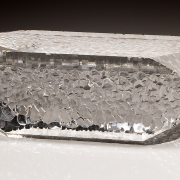
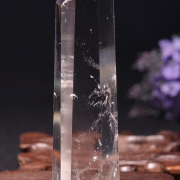
1. Clear Quartz (Rock Crystal)

  • Color: Transparent to translucent, colorless.
  • Description: The purest form of quartz, clear quartz is the most common and well-known variety. It is often used in jewelry, healing practices, and energy work. It’s said to be a powerful amplifying stone.

2. Amethyst

  • Color: Purple (from light lavender to deep violet).
  • Description: A popular variety of quartz that gets its purple hue from iron and aluminum traces. Amethyst is highly regarded for its spiritual and healing properties.

3. Citrine

  • Color: Yellow to golden, ranging from pale yellow to deep amber.
  • Description: Citrine is a variety of quartz colored by iron. It’s often used for manifestation, abundance, and energy work.

4. Rose Quartz

  • Color: Pale pink to deep rose.
  • Description: Known as the stone of love, rose quartz is a soothing and calming variety of quartz. Its color is due to trace amounts of titanium, iron, or manganese.

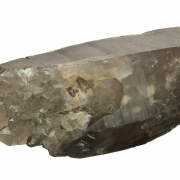
5. Smoky Quartz

  • Color: Brown to gray, ranging from light smoky gray to deep brown.
  • Description: Smoky quartz gets its color from natural irradiation. It’s believed to be grounding and protective, helping to clear negative energies.

6. Rutilated Quartz

  • Color: Clear or milky white with golden, reddish, or black rutile inclusions.
  • Description: This quartz variety contains needle-like inclusions of rutile (a titanium dioxide mineral) that give it a distinctive, often golden, appearance. It’s considered an energy amplifier.

7. Ametrine

  • Color: A blend of amethyst (purple) and citrine (yellow).
  • Description: Ametrine is a natural hybrid of amethyst and citrine, often formed when different temperatures occur during crystal growth. It combines the properties of both stones.

8. Prasiolite (Green Quartz)

  • Color: Light to medium green.
  • Description: Prasiolite is a green variety of quartz, sometimes called green amethyst, though it is a different mineral in terms of formation. It is less common and can be found in shades of pale to medium green.

9. Milky Quartz

  • Color: White, opaque.
  • Description: Also known as “snow quartz,” this variety is opaque and usually has a milky or cloudy appearance due to fluid or gas inclusions. It is often used in decorative pieces.

10. Blue Quartz

  • Color: Light blue to blueish hues.
  • Description: Blue quartz gets its color from inclusions of minerals such as dumortierite or goethite. It’s believed to promote peace and emotional healing.

11. Tiger’s Eye (Tiger’s Eye Quartz)

  • Color: Golden brown with golden to red or blue chatoyancy (cat’s eye effect).
  • Description: This variety of quartz contains fibers of crocidolite (a type of asbestos), which gives it its characteristic chatoyancy. It is often used for grounding and protection.

12. Tourmalinated Quartz

  • Color: Clear or white with black tourmaline inclusions.
  • Description: This variety features inclusions of black tourmaline, creating striking contrast within the clear quartz. It’s considered a stone of protection and grounding.

13. Lemon Quartz

  • Color: Yellow to lemon-colored.
  • Description: Lemon quartz is a bright, cheerful stone that has a lighter yellow hue. It is sometimes referred to as “yellow quartz” and is believed to promote positivity and joy.

14. Cherry Quartz

  • Color: Bright red or pinkish-red.
  • Description: Often a man-made stone, though there are naturally occurring specimens of cherry-colored quartz, it is a vibrant red-pink variety believed to energize and uplift.

15. Tangerine Quartz

  • Color: Orange or tangerine-colored.
  • Description: Tangerine quartz gets its color from inclusions of hematite or iron oxide. It’s believed to stimulate creativity and passion.

16. Phantom Quartz

  • Color: Clear or smoky with internal “phantom” inclusions.
  • Description: Phantom quartz features a ghostly inclusion inside the crystal, often looking like a faint replica of the crystal’s shape inside. It is used for personal growth and spiritual exploration.

17. Fire Quartz (Hematoid Quartz)

  • Color: Clear or milky with red or brown hematite inclusions.
  • Description: This quartz variety contains hematite inclusions, giving it a reddish hue. It’s thought to be energizing, helping to ground and balance emotions.

Each of these quartz varieties has its own unique metaphysical properties, often linked to their color and inclusions, and they are widely used in crystal healing, jewelry, and energy work.
Tags: natural quartz
Share this entry
  • Facebook Facebook Share on Facebook
  • X-twitter X-twitter Share on X
  • Whatsapp Whatsapp Share on WhatsApp
  • Pinterest Pinterest Share on Pinterest
  • Linkedin Linkedin Share on LinkedIn
https://www.icia.uk/wp-content/uploads/2024/11/il_fullxfull.1669965106_mrmb-scaled.avif 1707 2560 ICIA Media Center https://www.icia.uk/wp-content/uploads/2026/11/icia-logo-600-250.avif ICIA Media Center2024-11-22 14:50:342025-01-13 13:04:44What are the different colors of natural quartz?
You might also like
How can I tell the difference between natural and synthetic quartz gemstones?
What are the physical and chemical properties of natural quartz?
Can natural quartz be used in the jewelry industry?
What is the difference between natural quartz and synthetic quartz?
Are there any synthetic quartz gemstones that are similar in appearance to natural quartz?
Search Search
  • Global Gemstone & Fine Jewelry Market: Key News & Strategic Trend Outlook
  • ICIA Officially Prohibits Subjective “3A/5A/7A” Marketing Labels, Mandating 100-Point CCGS Empirical Standards Worldwide
  • The Timeless Appeal of Natural Jewellery
  • China’s Gem and Jewellery Industry: A Practical Overview
  • Geopolitical Impact Assessment on Mineral Assets
  • Latest Developments in Hong Kong’s Jewellery and Diamond Industry
  • 2026 Crystal Trends: What’s Rising, What’s Shifting, What’s Worth Your Money
  • Report on the Current Status and Market Outlook of the Crystal Industry (2026–2032)
  • Crystal Market Size | 2026–2035
  • Crystal & Gemstone Market Development Report — 2026
  • 2026 Jewelry Trends: The Big Shift Away from “Quiet”
  • Super hard “super diamond” developed in China, 40% stronger than natural diamond

Subscribe to our Blog

ICIA - International Crystal Industry Alliance

An independent, non-governmental international metrological and regulatory alliance establishing empirical crystal grading codices (CCGS, RCGS, MSGS) and sovereign ledger verification under English Common Law.

ICIA General Secretariat Hubs
London (United Kingdom) • Geneva (Switzerland) • Hong Kong
Governance & Organs
  • ICIA General Meeting
  • Board of Governors
  • ICIA General Secretariat
  • Institute of Gemstone & Mineral Research (IGMRI)
  • ICIA Crystal and Gemstone Academy (ICGA)
  • Ethics and Sustainability Committee (ESC)
  • OAISS Supervision Service
Charter & Compliance
  • ICIA Charter & Bylaws
  • ICIA Arbitration & Appraisal Committee (IAAC)
  • ADRPS Regulations
  • GDPR & Data Protection
  • Global Privacy Policy
  • Copyright & Legal Notice
  • Contact General Secretariat
Trust & Metrology
• OAISS SUPERVISED
• MICRO-FTIR 3054 cm-1
• IGSTS • cert.icia.uk
• CCGS (4C+1I) • RCGS (5R) • MSGS (4M)
Verify Ledger →
ICIA Sovereign Seal

ICIA SOVEREIGN SEAL
EST. 2015 • LONDON & GENEVA

OAISS SUPERVISED
SUPERVISION SERVICE

IGMRI METROLOGY
MICRO-FTIR 3054 cm-1

CODEX STANDARDS
CCGS (4C+1I) • RCGS (5R) • MSGS (4M)

IGSTS LEDGER
SHA-256 • CERT.ICIA.UK

Statutory Legal Disclaimer: ICIA (International Crystal Industry Alliance) is an independent, non-governmental regulatory alliance. Certifications issued under the authority of the ICIA Certification Council pursuant to CCGS (4C+1I), RCGS (5R), and MSGS (4M) empirical frameworks verify physical specimen properties at the time of laboratory inspection and do not constitute a direct commercial guarantee of secondary market liquidity.
© 2015–2026 International Crystal Industry Alliance (ICIA™). All Rights Reserved.
Administered by ICIA General Secretariat • Statutory Seat: London, UK
Link to: What are the physical and chemical properties of natural quartz? Link to: What are the physical and chemical properties of natural quartz? What are the physical and chemical properties of natural quartz? Link to: What is the difference between natural quartz and synthetic quartz? Link to: What is the difference between natural quartz and synthetic quartz? What is the difference between natural quartz and synthetic quartz?
Scroll to top Scroll to top Scroll to top