Fire Quartz
Fire quartz is a captivating variety of quartz distinguished by its fiery appearance, often due to inclusions of hematite or goethite. These inclusions create a mesmerizing play of light, resembling flickering flames within the quartz crystal. Also known as hematoid quartz or ferruginous quartz, fire quartz combines the properties of quartz with the grounding and energizing attributes associated with iron-based minerals.
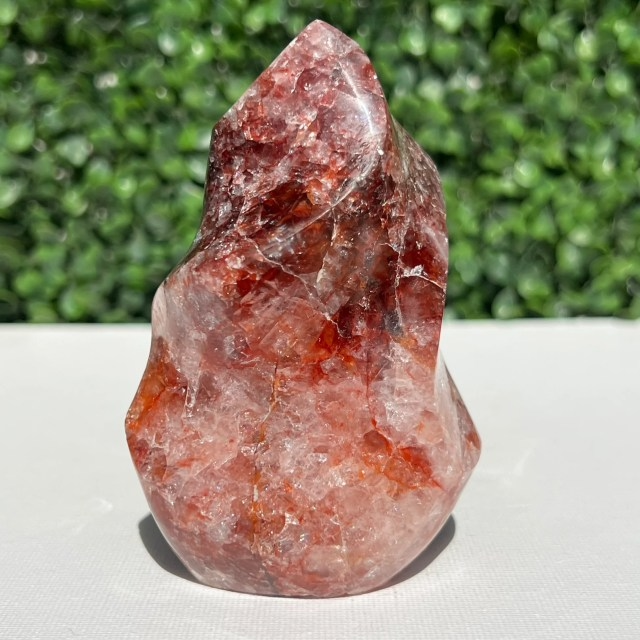
Fire Quartz Flame – The Crystal Society
Fire Quartz Crystal – Love Potion Crystals
Composition-wise, fire quartz primarily consists of silicon dioxide (SiO2), the chemical composition of quartz. However, what distinguishes fire quartz from regular quartz is the presence of iron oxide inclusions, predominantly hematite (Fe2O3) or goethite (FeO(OH)). These inclusions vary in color from red to brown, imparting the distinctive fiery hues to the quartz crystal.
In essence, fire quartz embodies the union of quartz’s amplifying properties with the grounding and energizing influence of iron-based minerals, offering a unique blend of metaphysical attributes and aesthetic allure.
Contents
- Formation and Geology
- Physical Properties
- Uses and Applications
Formation and Geology

Red Quartz Crystal– Fire Minerals
Fire quartz forms through a fascinating geological process involving the interaction of quartz with iron-rich minerals. Here’s a breakdown of how fire quartz is typically formed:
- Primary Formation of Quartz: Quartz, the main component of fire quartz, forms under various geological conditions, primarily through the crystallization of silica-rich fluids in igneous, metamorphic, and sedimentary environments.
- Introduction of Iron-Rich Minerals: During the formation of quartz, iron-rich minerals such as hematite or goethite may be present in the surrounding environment. These minerals contain iron oxide, which imparts the characteristic red to brown hues to the quartz crystal.
- Inclusions within Quartz: As quartz crystals grow, they may incorporate these iron-rich minerals as inclusions within their structure. The size, shape, and distribution of these inclusions determine the appearance of the fire quartz, creating the mesmerizing play of light reminiscent of flickering flames.
- Metamorphic Alterations: In some cases, fire quartz can also form through metamorphic processes where pre-existing quartz-rich rocks undergo changes due to heat, pressure, or fluid activity. During metamorphism, iron-bearing fluids can infiltrate the quartz-bearing rocks, introducing iron oxide inclusions and transforming them into fire quartz.
Geologically, fire quartz can be found in various locations around the world, particularly in regions with significant quartz deposits and iron-rich geological settings. Some notable locations include:
- Brazil: Brazil is a prominent source of fire quartz, with regions like Minas Gerais known for producing high-quality specimens with vivid colors and distinct patterns.
- Madagascar: Madagascar is another important source of fire quartz, offering specimens with a range of colors and inclusions, often characterized by their striking beauty and clarity.
- United States: Fire quartz can also be found in the United States, particularly in states such as Arkansas, where quartz deposits are abundant and often associated with iron-rich minerals.
- Namibia: Namibia is known for producing fire quartz specimens with unique formations and vibrant colors, contributing to the diversity of this gemstone in the market.
These are just a few examples, and fire quartz can be found in other regions as well, each contributing to the variety and allure of this captivating gemstone.
Physical Properties

Fire quartz, also known as hematoid quartz or ferruginous quartz, possesses physical properties that make it distinctive and visually appealing. Here are some of its key physical properties:
- Color: Fire quartz exhibits a range of colors, primarily due to the presence of iron oxide inclusions. These colors can include shades of red, brown, yellow, and orange, often with a fiery or translucent appearance.
- Transparency: Fire quartz crystals can vary in transparency from translucent to opaque. Inclusions within the quartz crystal can affect its transparency, with some specimens displaying a cloudy or smoky appearance.
- Luster: Fire quartz typically has a vitreous (glassy) luster when polished. The presence of iron oxide inclusions can sometimes give the surface a metallic sheen.
- Hardness: Like all varieties of quartz, fire quartz has a Mohs hardness of 7, making it relatively durable and suitable for use in jewelry and ornamental objects.
- Crystal Habit: Fire quartz crystals often form in the hexagonal crystal system, with prismatic or tabular habit. However, they can also occur as irregular masses or aggregates, depending on the specific geological conditions of their formation.
- Cleavage and Fracture: Quartz, including fire quartz, lacks true cleavage and typically exhibits a conchoidal fracture, meaning it breaks with smooth, curved surfaces.
- Specific Gravity: The specific gravity of fire quartz typically ranges from 2.65 to 2.75, indicating that it is slightly heavier than an equal volume of water.
- Streak: The streak of fire quartz is typically colorless or white, corresponding to the color of the quartz itself rather than the inclusions.
These physical properties contribute to the unique appearance and desirability of fire quartz as a gemstone and ornamental material. Its vibrant colors, combined with the durability and versatility of quartz, make it a popular choice for jewelry, decorative objects, and metaphysical purposes.
Uses and Applications

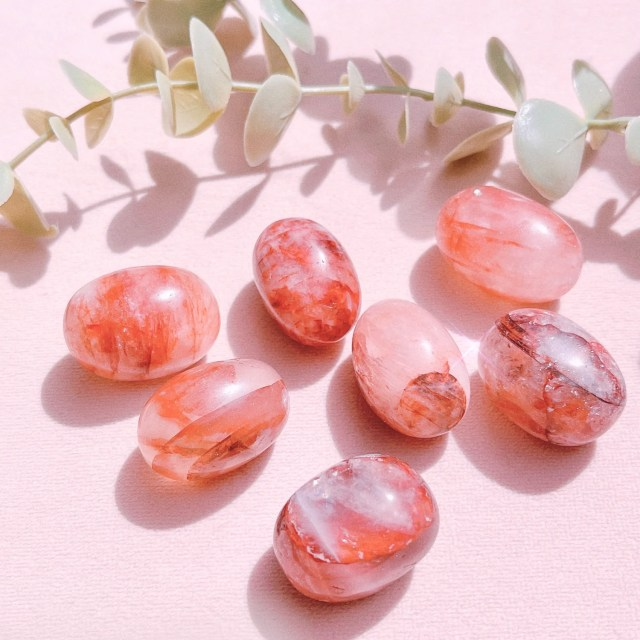
Red Hematoid Quartz – Sweet Honey Life
Fire quartz, with its striking appearance and metaphysical properties, finds various uses and applications:
- Jewelry: One of the most common uses of fire quartz is in jewelry making. Its vibrant colors and unique patterns make it an attractive choice for gemstone jewelry, including pendants, earrings, rings, and bracelets. Fire quartz can be cut into various shapes and sizes to showcase its beauty in different settings.
- Decorative Objects: Fire quartz is also used to create ornamental objects such as sculptures, carvings, and decorative bowls. Its captivating colors and natural patterns add a touch of elegance and sophistication to interior decor.
- Metaphysical Healing: In metaphysical practices, fire quartz is believed to possess powerful healing and energizing properties. It is thought to enhance vitality, strength, and courage while promoting balance and harmony within the body and mind. Fire quartz is often used in crystal healing sessions, meditation practices, and spiritual rituals.
- Amplifying Energy: Like other varieties of quartz, fire quartz is considered an amplifier of energy. It can amplify the properties of other stones and crystals when used in combination, making it a valuable tool for enhancing the effectiveness of crystal grids, layouts, and healing practices.
- Chakra Balancing: Fire quartz is associated with various chakras, depending on its color and energetic properties. For example, red fire quartz is linked to the root chakra, promoting stability and grounding, while yellow fire quartz is associated with the solar plexus chakra, enhancing confidence and personal power. Practitioners may use fire quartz to balance and align the chakras during energy work and meditation.
- Gifts and Collectibles: Due to its beauty and metaphysical significance, fire quartz is often given as a meaningful gift for special occasions or collected by enthusiasts. Whether in the form of jewelry, decorative pieces, or raw specimens, fire quartz makes a thoughtful and memorable gift for crystal enthusiasts and collectors alike.
Overall, fire quartz serves both aesthetic and spiritual purposes, offering beauty, inspiration, and healing energy to those who appreciate its unique qualities.