
OAISS: INSTITUTIONAL & ACADEMIC CERTIFICATION

The Official Academic & Institutional Specimen Standard (OAISS) — governing holotype mineral archiving, university research collections, sovereign museum acquisitions, and multi-spectral crystallography validation under the joint oversight of IGMRI and OA-COM.
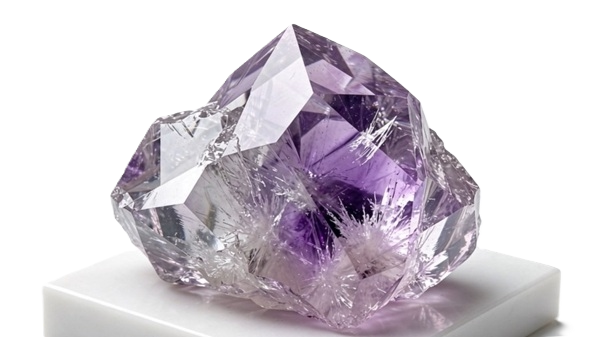

THE CUSTODIAL FRAMEWORK FOR ACADEMIC MINERALOGY

Natural history museums, university geology faculties, and state mineral repositories require archival standards fundamentally distinct from commercial trade. OAISS establishes the international benchmark for sovereign museum collections, cataloging holotype mineral specimens with peer-reviewed empirical proof.

Scientific Provenance

Holotype Archiving & Matrix Paragenesis

Under OAISS protocols, mineral specimens submitted for academic certification undergo rigorous crystallographic characterization. In collaboration with the ICIA Gemstone & Mineral Research Institute (IGMRI), the scheme verifies exact geological coordinates, paragenetic mineral associations, and crystal habit twinning geometry.

  • • Provenance Geochemistry: Quantitative trace element fingerprinting via LA-ICP-MS and EDXRF.
  • • Structural Non-Destruction: Zero mechanical sampling or damaging test methods permitted on academic holotypes.
  • • Historical Lineage Dossier: Archiving verified discovery dates, collection provenance chains, and peer-reviewed literature citations.

Diagnostic Tomography

3D Micro-CT Tomography & Structural Disclosure

Institutional acquisitions cannot rely on superficial visual inspection. OAISS mandates non-destructive high-resolution X-ray computed tomography (Micro-CT) to detect hidden internal matrix pins, non-native reconstructive cements, and concealed fractures.

  • • Matrix Integrity Slicing: Sub-millimeter internal density scans distinguishing natural matrix from fabricated epoxy fill.
  • • Repair Classification: Strict recording of [UR] Unrepaired, [RP] Native Repaired, and permanent disqualification of [AS] Assembled minerals.
  • • Cryptographic Ledger Minting: Archiving raw 3D tomography slices onto the IGSTS ledger on cert.icia.uk.


OAISS INSTITUTIONAL SPECIMEN MATRIX

The statutory classification structure governing academic research specimens and national museum holotypes.

TIER REF SPECIMEN STATUS DIAGNOSTIC CRITERIA & TESTING MANDATE ARCHIVAL REPOSITORY
OAISS-H1 Holotype Sovereign Specimen
Type Locality Mineral Record
Full LA-ICP-MS geochemistry, single-crystal X-ray diffraction (SC-XRD), complete Micro-CT volumetric scan, zero artificial alterations [NT/UR]. Sovereign state vaults, national natural history archives.
OAISS-A2 Academic Reference Curation
Peer-Reviewed Study Sets
Confocal Raman spectroscopy confirmation of all paragenetic mineral phases; full Micro-CT scan; strict disclosure of any stabilized host rock [ST]. University geology faculties, institutional research cabinets.
OAISS-M3 Exhibition Master Cluster
Public Museum Display
MSGS (5D) score >85; Micro-CT verification confirming absence of fabricated pins; native re-attachments clearly logged under [RP]. Public museum exhibition galleries, civic mineral pavilions.
OAISS-R4 Teaching & Morphological Unit
Educational Laboratory Series
Optical crystallographic habit indexing; FTIR verification of natural host state; basic geological coordinates verified. IGAI gemological academies, university teaching laboratories.

ACADEMIC AFFILIATION & LABORATORY PROTOCOLS

How academic institutions, accredited museums, and IGMRI research directorates interact within the OAISS framework.

PILLAR 01 • RESEARCH

Joint IGMRI Fellowships

University researchers accessing OAISS reference databases are eligible for MICIA Academic Fellowships, enabling cross-institutional research projects in London, Geneva, and Hong Kong.

PILLAR 02 • PROVENANCE

Type Locality Archiving

Direct collaboration with national geological surveys to archive holotype mineral specimens from historical, exhausted, or politically sensitive mining localities.

PILLAR 03 • SECURITY

ADRPS Institutional Immunity

Museums acquiring OAISS-certified specimens from accredited ASC consortia benefit from automatic ADRPS escrow underwriting against fraudulent repair concealment.


ANATOMY OF AN OAISS ACADEMIC DOSSIER

An OAISS Academic Specimen Dossier issued by IGMRI or an accredited regional OA-LAB provides comprehensive scientific documentation permanently accessible on cert.icia.uk.


Empirical Documentation

The Physical-Digital Archival Dossier

Each dossier includes high-resolution macroscopic photography, raw Raman/FTIR spectral data curves, 3D Micro-CT density profiles, and verified crystallographic indexing.

  • • Permanent Archival QR & NFC: Cryptographically embedded NFC chips linking to raw DICOM tomographic scan files.
  • • Grader & Curatorial Signatures: Verified digital signatures from accredited PCAS-MSA appraisers and IGMRI researchers.
  • • OA-COM Appellate Enforceability: Binding legal guarantee under Chapter VIII of the ICIA Codex.
OAISS SPECIMEN DOSSIER

Cert # ICIA-2026-OAISS-00914

HOLOTYPE ARCHIVE

  • Mineral Specimen: Smoky Quartz with Spessartine Garnet
  • Classification: OAISS-H1 Sovereign Holotype
  • Locality: Tongbei, Yunxiao Co., Fujian, China
  • Micro-CT Status: [UR] 100% Unrepaired Natural Contact
  • Diagnostic Lab: IGMRI European Center (Geneva)
LEDGER ANCHOR: cert.icia.uk/oaiss/00914

Apply for OAISS Specimen Certification

Curators, university mineralogy faculties, and accredited institutions can submit holotype specimens for comprehensive multi-spectral analysis and permanent ledger registration.

© 2015– International Crystal Industry Alliance (ICIA™). All Rights Reserved.
ICIA Secretary Bureau: 38 Hillwood Road, Tsim Sha Tsui, Hong Kong, China.