What is the difference between natural quartz and synthetic quartz?
Natural quartz and synthetic quartz have several differences in aspects such as formation process, physical and chemical properties, appearance, and value. Here’s a detailed comparison:

Formation Process
- Natural Quartz:
- Forms over long periods of time through natural geological processes. It typically crystallizes from silica-rich solutions present in groundwater, hydrothermal fluids, or within rock cavities and fractures in the Earth’s crust. For example, in pegmatite deposits, slow cooling of magma allows large and well-formed quartz crystals to grow. Different geological conditions like temperature, pressure, and the chemical composition of the surrounding environment influence the quality and characteristics of the resulting natural quartz.
- Synthetic Quartz:
- Is produced in a laboratory or industrial setting through artificial means. The most common method is the hydrothermal synthesis process. In this process, a nutrient material rich in silica (usually crushed natural quartz or silica powder) is placed in a high-pressure autoclave along with an alkaline solution and a seed crystal. Under carefully controlled high temperature (around 300 – 400 °C) and high pressure (around 1000 – 2000 atmospheres) conditions, silica dissolves in the solution and then crystallizes onto the seed crystal, gradually growing into synthetic quartz.
Physical Properties
- Crystal Structure:
- Natural Quartz: Has a more diverse range of crystal forms and may have unique growth patterns or inclusions that are formed during its natural growth process. It often shows a trigonal crystal system with a characteristic hexagonal prism shape and pyramidal terminations, but can also have irregularities or variations due to the complex natural environment.
- Synthetic Quartz: Generally has a more regular and uniform crystal structure. Since it grows under controlled laboratory conditions around a seed crystal, it tends to have a more consistent and predictable shape and internal structure, with fewer irregular inclusions compared to natural quartz.
- Hardness:
- Both natural and synthetic quartz typically have a Mohs hardness of around 7, so they are equally resistant to scratching by common materials in this regard.
- Transparency:
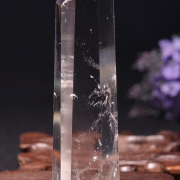
- Natural Quartz: Can vary greatly in transparency from highly transparent clear quartz to translucent or even opaque in some specimens due to the presence of various natural inclusions such as gas bubbles, mineral particles, or other impurities trapped during its formation.
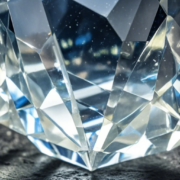
- Synthetic Quartz: Usually has higher transparency and fewer visible inclusions as the synthesis process aims to produce a relatively pure product. However, depending on the quality of the synthesis process and any accidental impurities introduced, there can still be some slight variations in transparency.
- Luster:
- Both exhibit a vitreous (glassy) luster on their surfaces, but natural quartz might have a more variable luster due to its natural variations and possible surface textures caused by the environment in which it formed.
Chemical Properties
- Chemical Composition:
- Natural Quartz: Mainly consists of silicon dioxide (SiO₂), but it often contains trace amounts of various impurity elements such as iron, titanium, aluminum, potassium, sodium, and germanium, which can give it different colors and affect its other properties.
- Synthetic Quartz: Is also primarily silicon dioxide, but the impurity levels can be more precisely controlled during the synthesis process. It can be produced to have very low impurity contents or can have specific elements deliberately added in controlled amounts to achieve certain desired properties, like enhanced piezoelectricity or specific optical properties.
- Stability:
- Both are chemically stable under normal conditions and are resistant to most common acids and alkalis. However, both will react with hydrofluoric acid. Natural quartz may have more variable chemical stability in some extreme natural environments over long periods compared to synthetic quartz, which is produced under controlled and relatively stable conditions.
Appearance
- Color:
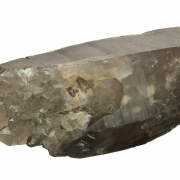
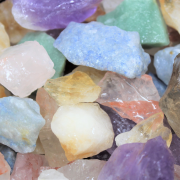
- Natural Quartz: Displays a wide range of colors including colorless (rock crystal), purple (amethyst), pink (rose quartz), yellow (citrine), brown, black (smoky quartz), green, etc., due to natural variations in impurity content and formation conditions. These colors can be unevenly distributed and may have unique color patterns or zoning within the crystal.
- Synthetic Quartz: Can also be produced in various colors, but the color is often more evenly distributed as it is usually achieved through controlled doping or treatment processes. For example, synthetic colored quartz may be made by adding specific metal ions during synthesis to obtain a consistent color throughout the crystal.
- Inclusions:
- Natural Quartz: Commonly contains inclusions that can range from tiny gas bubbles to visible mineral particles. These inclusions can be used to identify the origin and authenticity of the crystal and also add to its uniqueness and collectible value.
- Synthetic Quartz: Tends to have fewer and less noticeable inclusions, especially if the synthesis process is carefully controlled. However, some synthetic quartz may still have minor inclusions or growth striations that are characteristic of the synthetic process.
Value and Applications
- Value:
- Natural Quartz: High-quality, rare specimens with unique features such as large size, exceptional color, or unusual inclusions can have significant collectible value. Gem-quality natural quartz like amethyst, rose quartz, and citrine are also prized for jewelry making and are valued based on factors like color, clarity, and cut.
- Synthetic Quartz: Generally has a lower value compared to natural quartz in the collectibles market as it lacks the natural uniqueness and rarity. However, it is widely used in industrial applications due to its ability to be produced with consistent quality and specific properties. For example, synthetic quartz is crucial in the electronics industry for making quartz oscillators because it can be engineered to have excellent piezoelectric properties.
- Applications:
- Natural Quartz: Used in jewelry making (e.g., rings, necklaces, bracelets), as collectibles, and also has important industrial applications such as in optical instruments (lenses, prisms) and abrasives due to its hardness and optical properties. In addition, it plays a role in some spiritual and energy healing practices according to certain beliefs.
- Synthetic Quartz: Predominantly used in industrial applications where a high degree of purity, uniformity, and specific physical or chemical properties are required. This includes electronics (quartz oscillators, filters), optics (precision optical components), and in some high-tech manufacturing processes where consistent quality is essential.
In summary, while natural and synthetic quartz share some fundamental characteristics, their differences in formation, properties, appearance, and applications make them distinct in various contexts.