Tanzanite, the Jewel of Kilimanjaro
From the heart of a mystical and remote landscape, in the shadow of majestic Mount Kilimanjaro, comes a gemstone some professionals find more intriguing than any other. This precious material, with its deep blues and violets, has a past as rich and varied as its colors. A thousand times rarer than diamond, tanzanite is well known among gemstone enthusiasts, from its ancient, fiery birth to its place in the hearts of its owners’ collections.
Formation and Properties
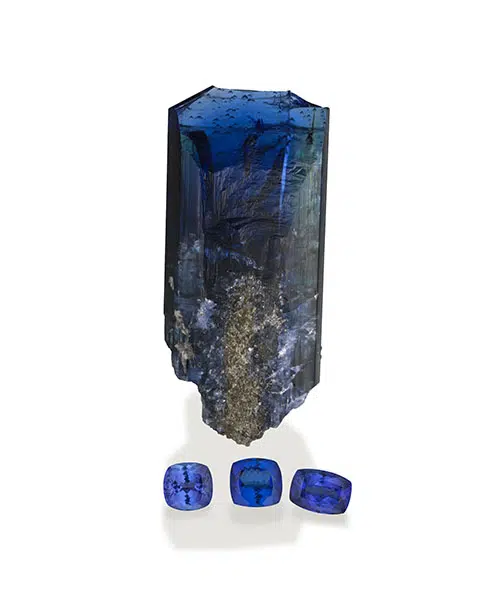
The story of tanzanite begins about 585 million years ago during the tumultuous times of Earth’s formation. Deep within the crust, under immense pressure and heat, a unique set of geological conditions fostered the creation of vanadium-rich zoisite crystal deposits. Powerful ancient forces of nature eventually developed them into the vibrant blue and violet gemstones we now know as tanzanite. Tanzanite ranks a 6.5 to 7 on the Mohs scale of hardness, making it a stone that must be worn carefully to avoid scratches.
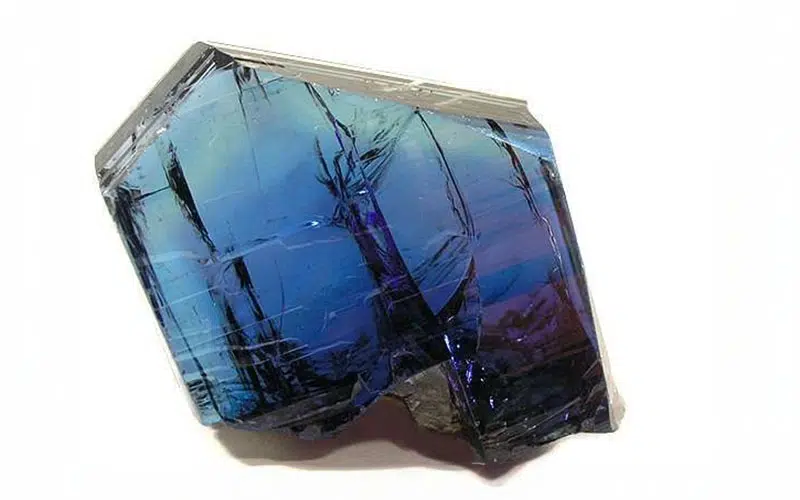
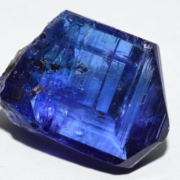
Natural unheated tanzanite, strongly trichroic, from the Merelani Mines | Credit: The Arkenstone
Appearance and Colors
Tanzanite is trichroic, meaning it shows three different colors when viewed from different directions: blues, violets, and even burgundy under incandescent light. This color-changing property, known as pleochroism, is one of the defining characteristics of Tanzanite. The beauty of tanzanite is not singular but multifold. Predominantly, it displays a mesmerizing blue, accented with hues of purple that can shift to lilac under different lighting. Some stones may even whisper softer blues or proclaim deep, saturated color. Each crystal is as unique as a fingerprint, a frozen moment of natural artistry.
The color of Tanzanite may be further enhanced by heat treatment. Most polished tanzanite gems on the market have been so-treated to make their blue-violet color even more vibrant. This treatment is permanent and does not affect the gemstone’s durability.
History, Myths, and Legends
The tale of tanzanite’s discovery is actually as recent as it is dramatic. It wasn’t until 1967 when a Maasai herdsman stumbled upon some sparkling stones in the Merelani Hills of northern Tanzania. Unaware of the treasure he had discovered, he shared the stones with a prospector named Manuel d’Souza, who initially thought they were sapphires. However, after scientific analysis, the world was introduced to a new gemstone named tanzanite, in honor of Tanzania, the only place on earth they have been found.
Local Maasai tribes believe the stones bring them good luck and prosperity, and have incorporated tanzanite into their rituals and as gifts to celebrate new life and significant achievements. Even today, tanzanite is often given to Maasai women after childbirth, as its believed to bring blessings and protection to both mother and child.
Countries of Origin
Although rumors and tales have suggested otherwise, the only verified source of tanzanite lies in Tanzania, within a small area of about eight square miles in the Merelani Hills near the city of Arusha. The unique rarity of its single location adds to the allure and value of tanzanite.
Tanzanite quickly gained popularity after Tiffany & Co. began marketing the gemstone in 1968. The company described Tanzanite as the most beautiful blue stone to be discovered in over 2,000 years.
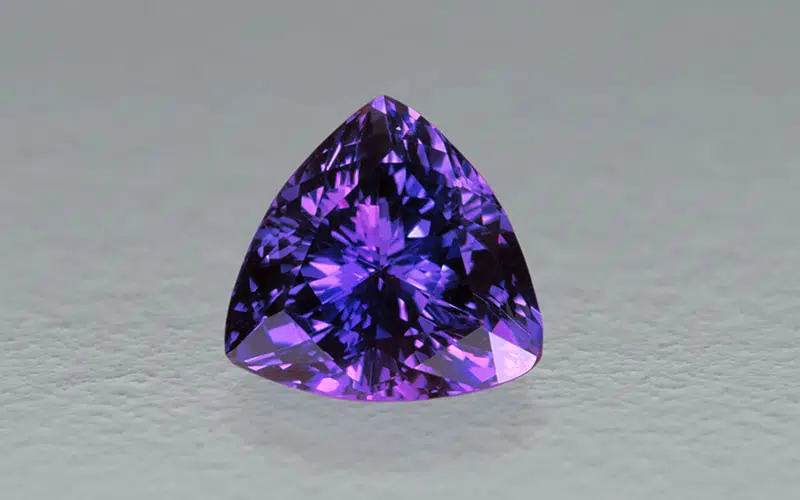
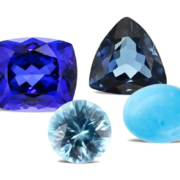
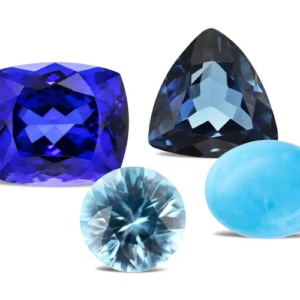
Today, Tanzanite is a popular and coveted gemstone, often used in jewelry for those seeking something beyond the traditional. In 2002, tanzanite was designated one of December’s birthstones, joining turquoise and zircon, offering a modern twist for the birthstone tradition. Tanzanite is as intriguing as it is beautiful. Its unique formation, stunning color, and rich history make it a fascinating subject of study for any gemologist.
Fun Facts
1,000 Times Rarer than Diamonds
Tanzanite is exceptionally rare, with experts estimating it is about 1,000 times rarer than diamond. Its limited source makes it a once-in-a-lifetime find, adding a mystique that’s nearly as dazzling as its colors.
20th-Century Discovery
Unlike gemstones that have been cherished for centuries, tanzanite was only discovered in 1967. While it’s one of the youngest members of the colored stone family it quickly won hearts worldwide.
The “Magic” of Color-Change
Tanzanite’s unique trichroic properties mean that, depending on the lighting, you see different colors. Natural sunlight brings out a blue shade, while fluorescent light reveals purple hues, and incandescent light can show flashes of burgundy. It’s like having several gems in one.
Birthstone Status
In 2002, tanzanite was added as a December birthstone, joining turquoise and zircon. This was a historical moment as it marked the first time the American Gem Trade Association added a gemstone to the birthstone list since 1912.
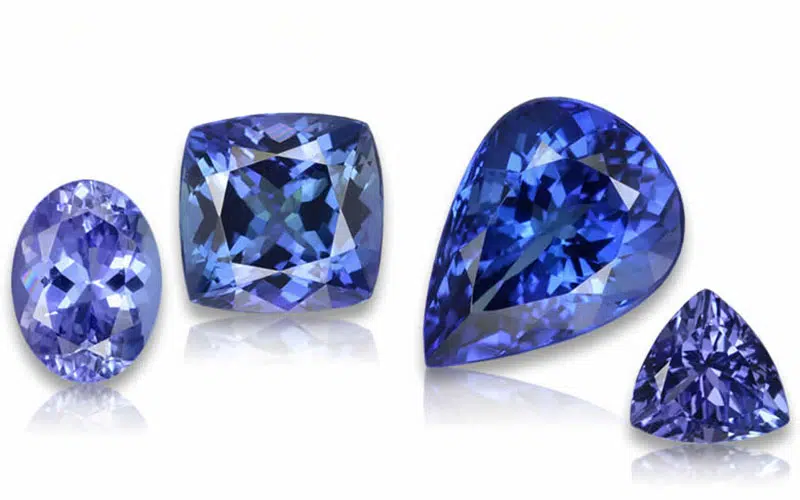
The story of tanzanite continues to be written, from its fiery formation to its recent discovery and cherishes place in the hearts of those who own this stunning gemstone. Those who touch a piece of tanzanite have connected with a rare part of the earth’s ancient history. Whether it’s a treasured part of an enthusiast’s jewelry collection, a symbol of blessing among the Maasai, or simply admired from afar, tanzanite is an extraordinary gem, with a story that is as enchanting and unique as its brilliant hues.