International Crystal Industry Alliance
  • Home
  • About Us
    • Who We Are
    • Global Governance
    • Headquarters & Global Labs
    • Team & Leadership
  • Standards
    • CCGS
    • RCGS
    • MSGS
    • Treatment Disclosure Guide
    • Gemstone Encyclopedia
  • Verification & Traceability
    • IGSTS 3D Biometric System
    • Certificate Search
    • Global Directory & Public Registry
  • Education & Research
    • ICIA Crystal and Gemstone Academy
    • IMGRI
  • Membership & Compliance
    • Certification Committee
    • Professional Credentials
    • OAISS
    • Expedited Re-Testing
    • ADRPS
  • Media Center
    • Press Releases
    • Whitepapers & Downloads
    • Industry Blog & Trends
  • Click to open the search input field Click to open the search input field Search
  • Menu Menu

Lazurite stone

November 26, 2024/0 Comments/in Crystal Encyclopedia/by ICIA Media Center

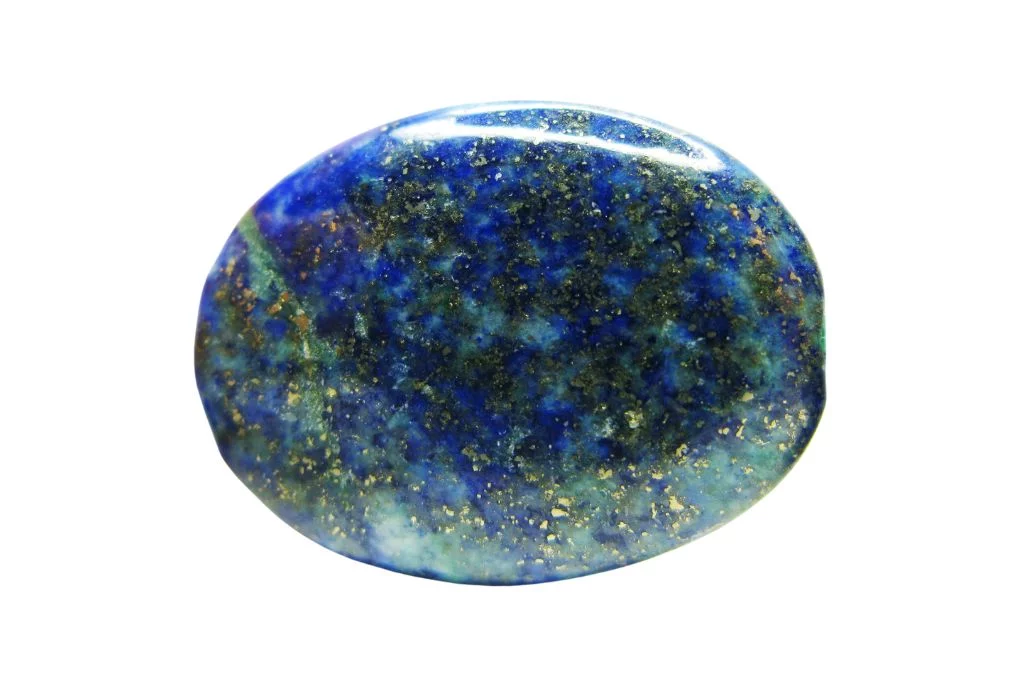
Lazurite is a deep blue silicate mineral that is the primary component of the famous gemstone lapis lazuli, prized for its striking color and historical significance. It has been cherished for millennia as a gemstone, pigment source, and decorative material.

Key Characteristics:

  1. Appearance:
    • Color: Ranges from vivid royal blue to lighter shades, often with white streaks (calcite) or golden flecks (pyrite).
    • Texture: Usually opaque with a vitreous to dull luster.
  2. Composition:
    • A feldspathoid silicate mineral containing sulfur, sodium, and aluminum.
    • Formula: (Na,Ca)₈[AlSiO₄]₆(S,SO₄,Cl)₂.
  3. Formation:
    • Found in metamorphic rocks, especially in limestone deposits that have been altered by contact with magma.
    • Notable sources include Afghanistan, Russia, and Chile.
  4. Historical and Cultural Significance:
    • Used since ancient times in jewelry, carvings, and as a pigment for ultramarine paint (especially during the Renaissance).
    • Associated with royalty, spirituality, and creativity in various cultures.
  5. Uses:
    • Jewelry: Often cut into cabochons, beads, or inlays for necklaces, bracelets, and rings.
    • Pigment: Historically ground into powder for the creation of the ultramarine pigment in art.
    • Decorative Items: Sculptures, inlays, and ornamental objects.
  6. Hardness and Care:
    • Hardness: 5–6 on the Mohs scale, making it relatively soft compared to other gemstones.
    • Care Tips:
      • Avoid exposure to acids, harsh chemicals, and prolonged water immersion.
      • Clean gently with a soft, damp cloth and avoid ultrasonic cleaners.

Would you like details about lapis lazuli jewelry, symbolism, or crafting with lazurite?
Tags: Lazurite stone
Share this entry
  • Facebook Facebook Share on Facebook
  • X-twitter X-twitter Share on X
  • Whatsapp Whatsapp Share on WhatsApp
  • Pinterest Pinterest Share on Pinterest
  • Linkedin Linkedin Share on LinkedIn
https://www.icia.uk/wp-content/uploads/2022/02/Lazurite-x-no-credit-needed.webp 683 1024 ICIA Media Center https://www.icia.uk/wp-content/uploads/2026/11/icia-logo-600-250.avif ICIA Media Center2024-11-26 04:35:172024-11-26 04:37:02Lazurite stone
You might also like
Lazurite stone – properties, virtues & benefits
Search Search
  • Global Gemstone & Fine Jewelry Market: Key News & Strategic Trend Outlook
  • ICIA Officially Prohibits Subjective “3A/5A/7A” Marketing Labels, Mandating 100-Point CCGS Empirical Standards Worldwide
  • The Timeless Appeal of Natural Jewellery
  • China’s Gem and Jewellery Industry: A Practical Overview
  • Geopolitical Impact Assessment on Mineral Assets
  • Latest Developments in Hong Kong’s Jewellery and Diamond Industry
  • 2026 Crystal Trends: What’s Rising, What’s Shifting, What’s Worth Your Money
  • Report on the Current Status and Market Outlook of the Crystal Industry (2026–2032)
  • Crystal Market Size | 2026–2035
  • Crystal & Gemstone Market Development Report — 2026
  • 2026 Jewelry Trends: The Big Shift Away from “Quiet”
  • Super hard “super diamond” developed in China, 40% stronger than natural diamond

Subscribe to our Blog

ICIA - International Crystal Industry Alliance

An independent, non-governmental international metrological and regulatory alliance establishing empirical crystal grading codices (CCGS, RCGS, MSGS) and sovereign ledger verification under English Common Law.

ICIA General Secretariat Hubs
London (United Kingdom) • Geneva (Switzerland) • Hong Kong
Governance & Organs
  • ICIA General Meeting
  • Board of Governors
  • ICIA General Secretariat
  • Institute of Gemstone & Mineral Research (IGMRI)
  • ICIA Crystal and Gemstone Academy (ICGA)
  • Ethics and Sustainability Committee (ESC)
  • OAISS Supervision Service
Charter & Compliance
  • ICIA Charter & Bylaws
  • ICIA Arbitration & Appraisal Committee (IAAC)
  • ADRPS Regulations
  • GDPR & Data Protection
  • Global Privacy Policy
  • Copyright & Legal Notice
  • Contact General Secretariat
Trust & Metrology
• OAISS SUPERVISED
• MICRO-FTIR 3054 cm-1
• IGSTS • cert.icia.uk
• CCGS (4C+1I) • RCGS (5R) • MSGS (4M)
Verify Ledger →
ICIA Sovereign Seal

ICIA SOVEREIGN SEAL
EST. 2015 • LONDON & GENEVA

OAISS SUPERVISED
SUPERVISION SERVICE

IGMRI METROLOGY
MICRO-FTIR 3054 cm-1

CODEX STANDARDS
CCGS (4C+1I) • RCGS (5R) • MSGS (4M)

IGSTS LEDGER
SHA-256 • CERT.ICIA.UK

Statutory Legal Disclaimer: ICIA (International Crystal Industry Alliance) is an independent, non-governmental regulatory alliance. Certifications issued under the authority of the ICIA Certification Council pursuant to CCGS (4C+1I), RCGS (5R), and MSGS (4M) empirical frameworks verify physical specimen properties at the time of laboratory inspection and do not constitute a direct commercial guarantee of secondary market liquidity.
© 2015–2026 International Crystal Industry Alliance (ICIA™). All Rights Reserved.
Administered by ICIA General Secretariat • Statutory Seat: London, UK
Link to: Color Change Sapphire Link to: Color Change Sapphire Color Change Sapphire Link to: Blood amber Link to: Blood amber Blood amber
Scroll to top Scroll to top Scroll to top