How to process natural crystal
The treatment methods of natural crystals mainly include two categories: optimization treatment and purification treatment. The optimization process is to improve the appearance and color of the crystal, while the purification treatment is to remove the negative energy in the crystal and restore its pure energy state. Here’s how to deal with it in detail:
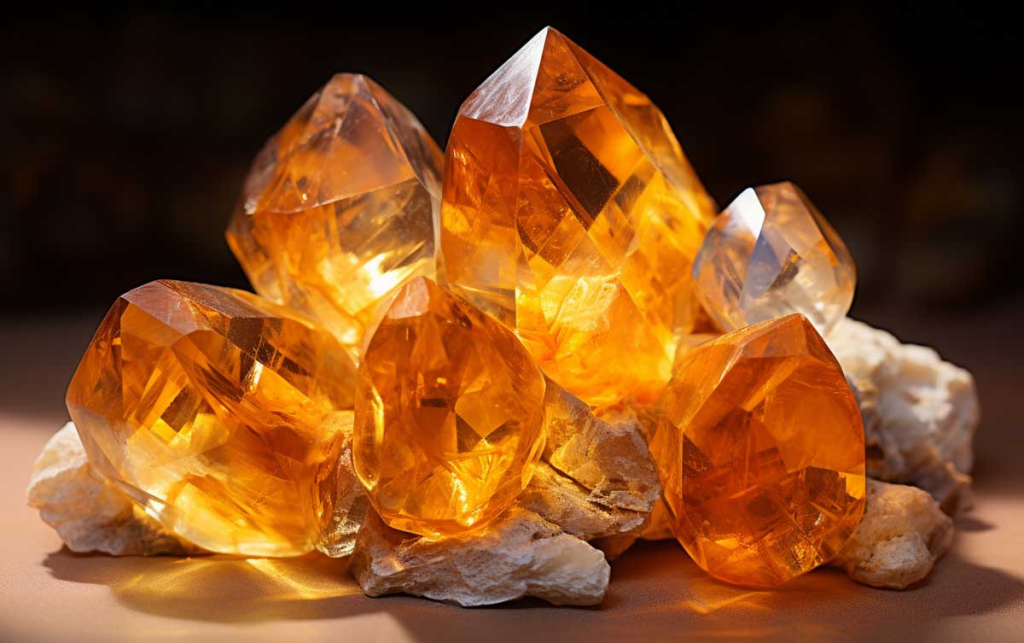
1. Optimized treatment method of natural crystal
Optimization is to enhance the aesthetics of crystals, and common methods include heat treatment, irradiation treatment, dyeing treatment, stitching treatment, and coating treatment310.
1. Heat treatment
- Principle: The color and transparency of the crystal are changed by heating. For example, amethyst can be turned into citrine or green crystal when heated.
- Process: The crystals are placed in a heating device with a controlled temperature and atmosphere (e.g., resistance box, muffle furnace) and the appropriate temperature (usually under oxidation, reduction or neutral atmosphere) is selected for processing.
- Effect: Improves color and clarity and makes crystals more aesthetically pleasing. Heat-treated crystals are considered natural and do not require special identification.
2. Irradiation treatment
- Principle: The use of radioactive rays to change the color of crystals. For example, colorless crystals can be irradiated to turn into smoky quartz (dark brown or black).
- Process: Further heat treatment is usually required after irradiation to stabilize the color.
- Effect: Irradiated crystals are left for a period of time before leaving the factory to ensure that the radioactive content is harmless to humans.
3. Dyeing
- Principle: The crystal is cracked by heating and quenching, and then the colored solution is immersed in the crack to make the crystal colored.
- Effect: The color of the dyed crystals is usually concentrated in the cracks, which can be observed with a magnifying glass. Dyeing is often used for hair crystals (e.g., titanium crystals, green ghosts), etc.
4. Flattening
- Principle: Glue the colorless crystal with the patterned crystal to increase the three-dimensional sense and beauty.
- Identification: Assembled crystals usually have obvious adhesive seams, and air bubbles or glue marks can be observed with a magnifying glass.
5. Coating treatment
- Principle: A colored film is plated on the surface of the crystal to produce a halo effect.
- Effect: Coated crystals shine brightly in the light, but scratches with a knife can leave marks3.
Second, the purification method of natural crystal
The purification process is to remove the negative energy in the crystal and restore its pure energy state. The following are common purification methods 81315:
1. Clean water purification method
- Steps: Soak the crystals in clean water for about 20 minutes and dry them with a clean cloth.
- Suitability: Suitable for most crystals, but care should be taken to avoid soaking fragile crystals for a long time.
2. Sea salt purification method
- Steps: Soak the crystals in saturated sea salt water for 24 hours, then rinse with water.
- Applicability: Suitable for crystals with strong energy or easy to absorb negative energy, but it is necessary to avoid soaking for a long time to avoid damaging the crystal.
3. Sunlight purification
- Steps: Expose the crystals to the sun for 2-4 hours.
- Applicability: Suitable for transparent or light-colored crystals (such as white crystal, citrine), but colored crystals such as amethyst are not suitable to avoid fading.
4. Moonshine purification method
- Steps: Place the crystals in the moonlight overnight.
- Applicability: Suitable for all crystals, especially sun-sensitive crystals such as moonstone.
5. Crystal cluster/geode purification method
- Procedure: Place the crystals in a natural crystal cluster or geode and let them sit for 24 hours.
- Applicability: Suitable for all crystals, the energy of crystal clusters and geodes can continuously purify crystals.
6. Smoke purification
- Steps: Wrap the crystals around the crystal for a few minutes with smoke from the burning of plant materials such as sage, cedar, etc.
- Applicability: Suitable for crystals that need deep purification.
3. Precautions
- Identification of Optimized Treatments: Stained, assembled, and coated crystals can be identified by looking at fissures, bubbles, or scratches with a magnifying glass.310
- Selection of purification method: Different crystals are suitable for different purification methods, for example, amethyst is not suitable for sunlight purification, and moonstone is not suitable for moonlight purification 813.
- Regular purification: It is recommended to purify the crystals every 1-3 months to keep their energy pure.
Through the above methods, natural crystals can be effectively optimized and purified, so that they remain beautiful and energetically pure.