Andesine
Andesine is a silicate mineral, a member of the plagioclase feldspar group. Plagioclase feldspars are a series of minerals that form a continuous series ranging from albite, which is sodium-rich, to anorthite, which is calcium-rich. Andesine falls in the middle of this series and is characterized by a roughly equal mix of sodium (Na) and calcium (Ca) in its composition.

The chemical formula for andesine is (Na,Ca)(Si,Al)_4O_8, indicating its composition includes sodium, calcium, silicon, aluminum, and oxygen. It is known for its intermediate composition between albite and anorthite.
In terms of its classification in the mineral world, andesine is categorized as a tectosilicate, which is a type of silicate mineral where the silica tetrahedra are interconnected in a three-dimensional network. This classification is part of the broader category of silicate minerals, which are the most abundant mineral group in the Earth’s crust.
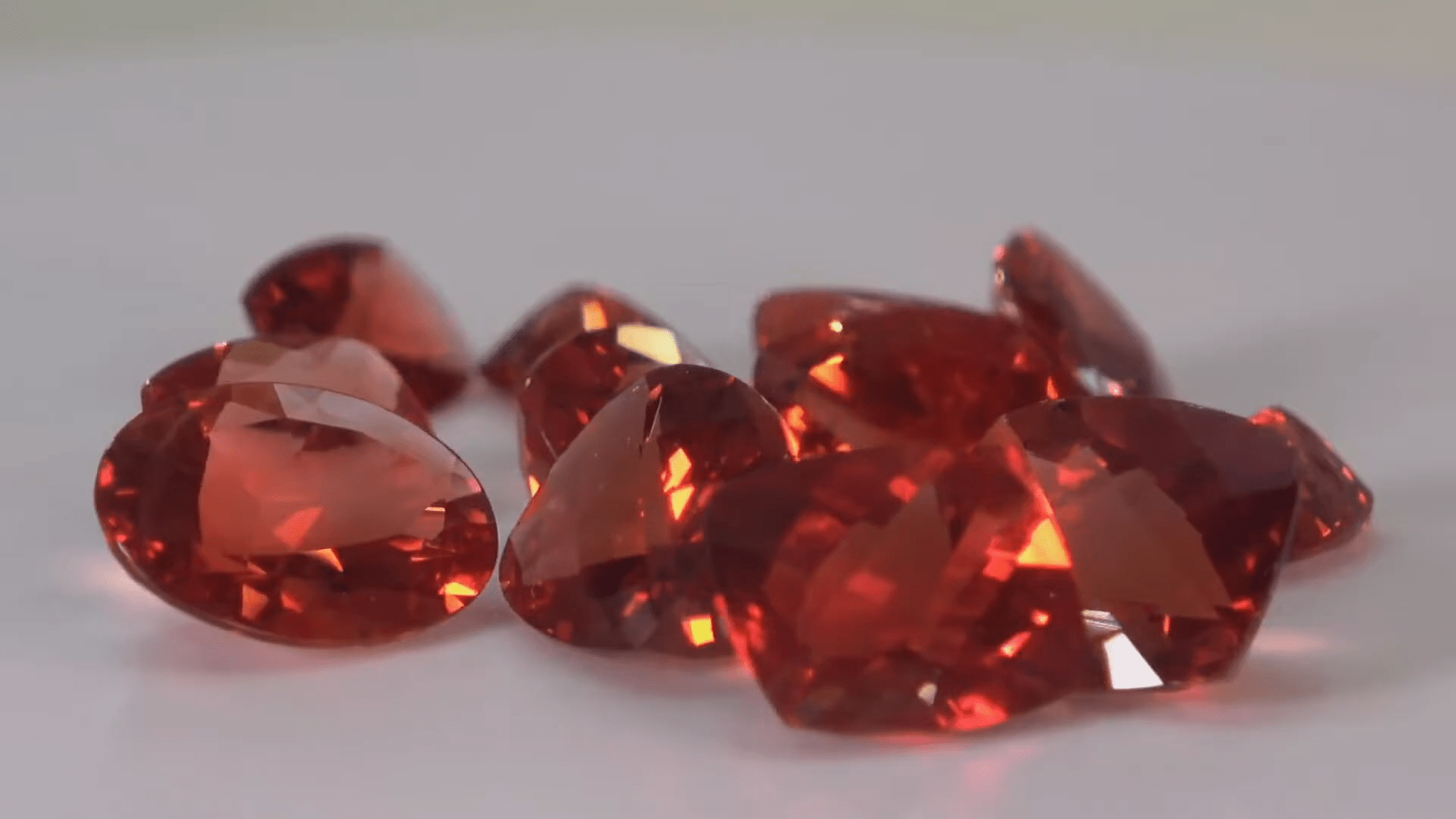
Andesine is typically found in intermediate to silica-rich igneous rocks, such as andesite (from which it gets its name), diorite, and granodiorite. It can also occur in some metamorphic rocks. The mineral is valued in the gemstone market for its range of colors, which can include red, green, yellow, and a champagne hue. Its appearance and properties make it an attractive material for jewelry and decorative purposes.
Contents
- Physical, Chemical and Optical Properties
- Physical Properties
- Chemical Properties
- Optical Properties
- Formation, Occurrence and Distributions
- Formation
- Occurrence
- Distributions
- Uses and Applications
- Industrial Uses
- Gemological Uses
- Other Applications
Physical, Chemical and Optical Properties

Andesine, as a member of the plagioclase feldspar group, exhibits a range of physical, chemical, and optical properties that are characteristic of this mineral family. Here’s a detailed look at these properties:
Physical Properties
- Hardness: Andesine, like other feldspars, falls in the range of about 6 to 6.5 on the Mohs scale of hardness. This indicates a moderate level of hardness, making it suitable for use in jewelry, though it requires care to prevent scratching.
- Cleavage: It typically exhibits two directions of perfect cleavage at nearly 90-degree angles, a common feature in feldspar minerals.
- Fracture: When broken, andesine shows a conchoidal to uneven fracture.
- Luster: The luster of andesine is typically vitreous (glass-like).
- Color: Its color can vary widely, including white, gray, green, yellow, red, and occasionally blue or purple.
- Streak: The streak of andesine is usually white.
- Density: It has a specific gravity ranging approximately from 2.65 to 2.68, which is considered average for silicate minerals.
- Transparency: Andesine can range from transparent to translucent.

Chemical Properties
- Chemical Composition: Andesine’s chemical formula is (Na,Ca)(Si,Al)_4O_8. This indicates a composition that includes sodium (Na), calcium (Ca), silicon (Si), aluminum (Al), and oxygen (O).
- Weathering: Like other feldspars, it can weather to form clay minerals and is often a significant component in the formation of soils.
- Alteration: It can alter to sericite (fine-grained muscovite) and other clay minerals under certain geological conditions.
Optical Properties
- Refractive Index: Andesine has a refractive index in the range of approximately 1.543 – 1.553. This property contributes to its brilliance when cut and polished for gemstone use.
- Birefringence: The birefringence, or the difference in refractive indices due to double refraction, is typically low in andesine.
- Optical Character: It is optically triclinic, meaning it has three axes of different lengths that are not at right angles to each other.
- Pleochroism: Pleochroism (the ability to show different colors when viewed from different angles) is typically weak or absent in andesine.
- Dispersion: The dispersion (the degree to which it splits light into its constituent colors) is relatively low compared to other gemstones.
In gemology, andesine is particularly appreciated for its unique color variations and moderate brilliance, making it a popular choice for various types of jewelry. However, its relative softness compared to more durable gemstones like diamonds or sapphires means it requires careful handling and setting.
Formation, Occurrence and Distributions

Andesine, as a member of the plagioclase feldspar group, forms through a variety of geological processes and is found in numerous locations worldwide. Here’s an overview of its formation, occurrence, and distribution:
Formation
- Igneous Rocks: Andesine primarily forms in igneous rocks. It crystallizes from magma in both intrusive and extrusive environments. In intrusive rocks, it is commonly found in granodiorites and diorites. In extrusive rocks, it is a typical constituent of andesites, from which it gets its name.
- Metamorphic Rocks: It can also be found in metamorphic rocks, particularly those formed under medium to high temperature and pressure conditions. In such environments, andesine can form through metamorphic processes involving the alteration of existing feldspar minerals or through the recrystallization of sediments.
Occurrence
- In Magmatic Bodies: Andesine is a common mineral in continental crust and is often associated with silica-rich igneous rocks. Its presence is indicative of intermediate to felsic magmatism.
- Volcanic Regions: It’s frequently found in volcanic areas, especially in lava flows and pyroclastic deposits associated with intermediate to felsic volcanism.
- Metamorphic Terrains: Andesine can also occur in metamorphosed igneous and sedimentary rocks, often as a result of regional metamorphism.
- Pegmatites and Hydrothermal Veins: Occasionally, andesine is found in pegmatites and hydrothermal veins, although it is less common in these environments compared to other feldspars.
Distributions
- Global Locations: Andesine is distributed globally, with notable occurrences in countries with significant volcanic and plutonic activities. Some of the prominent locations include parts of the Andes mountain range (South America), the Cascade Range (North America), Japan, and various regions in Europe and Africa.
- Specific Noteworthy Occurrences:
- In the United States, andesine has been found in localities like Colorado, Oregon, and California, often associated with volcanic rocks.
- In Canada, it’s present in the Canadian Shield and the Cordillera.
- Notable occurrences in Europe are found in Italy, Norway, and Scotland, often associated with granites and metamorphic rocks.
- In Africa, andesine is found in countries with significant ancient crystalline basement rocks, like Madagascar and Kenya.
- Gem-Quality Deposits: Gem-quality andesine, especially those with unique colorations, are found in fewer locations. These deposits are often the source of andesine used in jewelry.
The distribution and occurrence of andesine are closely tied to the geological history of the region, particularly in terms of tectonic activity and the history of magmatism and metamorphism. This wide distribution makes it a significant mineral for understanding geological processes in different environments.
Uses and Applications

Andesine, being a member of the plagioclase feldspar group, has a variety of uses and applications in both industrial and gemological contexts. Here’s an overview of its primary uses and applications:
Industrial Uses
- Ceramics and Glass Production: Feldspars, including andesine, are important components in the manufacture of ceramics and glass. They act as a flux, lowering the melting point of the mixture during the manufacturing process. This makes the production process more efficient and improves the strength and durability of the final product.
- Fillers and Abrasives: Ground feldspar, which may include andesine, is used as a filler and abrasive in various industrial applications. This includes use in paints, plastics, rubber, and adhesive compounds. Its abrasive quality is useful in cleaning and polishing applications.
- Geological Studies: Andesine, due to its presence in a variety of rock types, is often studied in the field of geology to understand magmatic and metamorphic processes. It’s valuable in petrology for identifying the conditions under which the host rock formed.
Gemological Uses
- Jewelry: Andesine is valued as a gemstone, particularly for its range of colors, which can include red, green, yellow, and a champagne hue. Its moderate hardness and attractive luster make it suitable for various types of jewelry, although it is not as hard as some other gemstones like diamonds or sapphires.
- Collector’s Mineral: Due to its diverse colorations and crystal habits, andesine is a popular mineral among collectors. High-quality crystals can be quite attractive and are sought after for display purposes.
Other Applications
- Architectural Uses: In some cases, andesine-bearing rocks (such as certain granites) are used in architecture and construction, particularly as decorative stones for countertops, tiles, and other architectural elements.
- Educational Tools: Samples of andesine are often used in educational settings, such as earth science and geology courses, to teach students about mineralogy and the classification of minerals.
While andesine is not as widely known or used as some other minerals or gemstones, its unique properties and appearance provide it with a niche in both industrial applications and as a gemstone. Its role in ceramics and glass production is particularly significant, underlining the importance of feldspar minerals in everyday industrial processes.