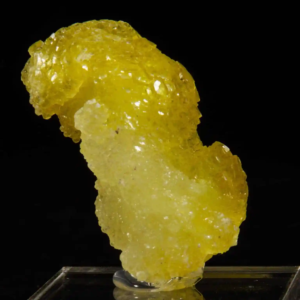
Yellow Calcite
Yellow Calcite is a beautiful, translucent variety of calcite, a widespread mineral composed of calcium carbonate (CaCO₃). Yellow Calcite is prized for its warm, sunny color and its gentle, uplifting energy. It is often used in metaphysical healing and decorative applications, but like many calcite varieties, it is soft and requires careful handling.
Characteristics of Yellow Calcite:
- Color: Yellow Calcite comes in shades ranging from pale yellow to golden yellow. The color can be soft and translucent, giving the stone a delicate, glowing appearance. It may occasionally have streaks or patterns of other colors, including white, orange, or even slight greenish tinges, which add to its natural charm.
- Transparency: Yellow Calcite is typically translucent to opaque, with high-quality specimens displaying a soft, glowing transparency. Its translucency enhances its visual appeal, as light passes through it and gives it a warm, radiant quality.
- Hardness: Yellow Calcite has a relatively low hardness of 3 on the Mohs scale. While this makes it easy to carve and shape, it also makes it relatively fragile and prone to scratching and damage. Care should be taken when handling or using it in jewelry or other decorative pieces.
- Luster: Calcite generally has a vitreous (glass-like) to pearly luster. When polished, Yellow Calcite can have a smooth, shiny surface that enhances its warm color and translucent quality.
- Crystal Structure: Yellow Calcite crystallizes in the rhombohedral system, typically forming prismatic or blocky crystals. It can also occur in masses, granular forms, or aggregates that are broken into smaller pieces. The crystals are usually transparent to translucent, and they often exhibit perfect cleavage, making them prone to breakage.
Formation and Occurrence:
Calcite, including Yellow Calcite, forms in a wide variety of geological environments, including sedimentary, metamorphic, and igneous rocks. It can also form in cave deposits (as stalactites and stalagmites) or hydrothermal veins. Yellow Calcite specifically tends to form in limestone or dolostone deposits, often in cavernous spaces or geodes.
Some common sources of Yellow Calcite include:
- Mexico: Mexico is well-known for its beautiful calcite deposits, including high-quality Yellow Calcite crystals.
- Pakistan and Afghanistan: These regions are also known for producing various calcite varieties, including yellow forms.
- United States: Certain areas, including parts of California, have been known to yield high-quality Yellow Calcite crystals.
Uses:
Yellow Calcite is used in a variety of decorative, metaphysical, and jewelry applications:
- Mineral Specimens: Yellow Calcite is often collected for its visual beauty, particularly when it occurs in large, well-formed crystals or as part of a geode. It can be cut into decorative pieces or left in its natural state for display.
- Jewelry: While Yellow Calcite is not commonly used in mainstream jewelry due to its softness, it can still be used in beaded necklaces, bracelets, pendants, and earrings, typically in softer designs that don’t subject the stone to rough wear. It is often set in silver or gold for a warm, radiant look.
- Carvings and Decorative Objects: Due to its softness and ease of carving, Yellow Calcite is frequently used in sculpture and carvings. It is often made into small decorative items like figurines, bowls, ornaments, and paperweights.
- Energy and Healing: Yellow Calcite is commonly used in crystal healing and energy work for its uplifting, cleansing, and empowering qualities.
Symbolism and Healing Properties:
Yellow Calcite is associated with the solar plexus chakra, the energy center that governs personal power, confidence, and self-esteem. As a result, it is considered a powerful stone for emotional healing and personal growth. Some of the metaphysical properties attributed to Yellow Calcite include:
- Emotional Healing: Yellow Calcite is said to help release negative emotions, such as fear, anxiety, and self-doubt, and promote emotional balance. It is thought to help lift the spirits and create a more positive, optimistic outlook.
- Mental Clarity and Focus: Yellow Calcite is believed to stimulate the mind and encourage mental clarity, making it a helpful stone for those who need to improve focus, decision-making, or mental processing. It can help dispel confusion and promote a clearer thought process.
- Energy Boost: Yellow Calcite is often seen as an energizing stone that helps to revitalize the body and mind. It is said to provide a boost in motivation, energy, and creativity, and to help overcome mental or physical fatigue.
- Personal Power and Confidence: This stone is thought to enhance self-esteem and personal power, helping individuals recognize their strengths and feel more confident in themselves. It is often used to build courage and determination, particularly in overcoming obstacles or achieving goals.
- Cleansing and Purification: Yellow Calcite is also believed to have strong cleansing and purification properties. It is said to help clear negative energy from the environment and can be used in meditation or energy work to purify the aura or energy field.
Value and Rarity:
Yellow Calcite is generally an affordable gemstone, especially compared to more valuable minerals like diamonds or sapphires. Because of its relatively low hardness, it is not commonly used in high-end jewelry, but it remains a popular stone for collectors, those interested in metaphysical practices, and decorative pieces.
The value of Yellow Calcite will depend on factors like its color, clarity, size, and form. High-quality, translucent specimens with deep, uniform yellow color may command a slightly higher price, especially for those used in jewelry or energy work.
Care and Maintenance:
Because Yellow Calcite is soft and can be easily scratched or damaged, it requires careful handling:
- Cleaning: Clean Yellow Calcite with warm soapy water and a soft cloth. Avoid harsh chemicals, as these can damage the surface of the stone. Ultrasonic cleaning is not recommended.
- Storage: Store Yellow Calcite separately from harder stones to prevent scratching. A soft pouch or padded jewelry box is ideal for protection.
- Avoid Extreme Conditions: Like all calcite, Yellow Calcite is sensitive to high heat and acidic substances, so it should be kept away from extreme temperatures and harsh chemicals to prevent damage.
Yellow Calcite is a radiant, uplifting stone that brings warmth, positivity, and clarity. It is commonly used for emotional healing, mental clarity, and personal empowerment. Whether you’re drawn to it for its energetic qualities or simply for its natural beauty, Yellow Calcite is a versatile and beneficial stone for many purposes.
Would you like to learn more about how Yellow Calcite can be used in specific healing practices or jewelry designs?