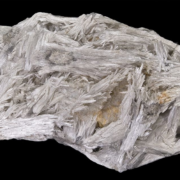
Tremolite stone – properties, virtues & benefits
Trémolite, a mineral species belonging to the amphibole family, is also known as Actinote in French and Actinolite in English. It was discovered by Swiss naturalist, geologist and physicist Horace-Bénédicte de Saussure in 1779, and featured in the second volume of his book Voyage dans les Alpes. Interestingly, Saussure noted that these stones have the ability to phosphoresce or glow when rubbed in the dark. Aside from their aesthetically appealing appearance, Tremolite also has many recognized virtues used in lithotherapy.
TREMOLITE CHARACTERISTICS
- Chakra: Heart.
- Properties: Emotional balance, healing, protection, purification.
- Astrology: Mercury.
- Zodiac: Virgo.
- Elements: Earth and Water.
- Colors: Light green, white, gray, brown.
- Hardness: 5-6 on the Mohs scale.
- Chemical Formula: Ca2(Mg,Fe2+)5Si8O22(OH)2.
- Associated god: /
TREMOLITE STONE – ITS HISTORY
The name Actinolite stone derives from its presumed place of discovery, the Val Tremola in the Swiss Alps near the St. Gotthard Pass, and was given by mineralogist J.G.A Höpfner. Chemically, it is closely related to actinote. The first description of this stone was made by Irish mineralogist Richard Kirwan in 1794. The name Actinolite comes from the Greek “aktis”, meaning ray, and “lithos”, meaning stone, in reference to the fibrous, radiated appearance of its crystals. The French appellation Actinote was proposed by Abbé René Just Haüy, co-founder of geometric crystallography and gemmology.
When present in quartz, Actinote is often referred to as “Thetis’ hair”. This appellation is due to the resemblance of the green iron-containing filaments to the seaweed hair of the Nereid Thetis, the Greek mythological goddess of the sea, who was the mother of Achilles.
TREMOLITE STONE – ITS ORIGIN AND COMPOSITION
Trémolite belongs to the silicate family and the amphibole subgroup, and forms a series close to Actinote. It represents the magnesian pole of this series, which makes it less colorful than Actinote. Sometimes almost white and very pure, it is called magnesian tremolite. Different iron contents are responsible for its green tones, ranging from very dark bottle green to shades of crystalline green, and from grayish green to blackish if it also contains chromium. Stone can also be found in the form of radiated, columnar, acicular, granular, caPillary, lamellar, compact microcrystalline, fibrous or asbestic aggregates. It crystallizes in orthorhombic and monoclinic systems in highly elongated prismatic crystals up to 15 cm in size.
Tremolite belongs to the group of double-chain inosilicates linked by calcium, magnesium or iron ions, and can be declined according to its iron content as Actinote or Ferroactinolite if it contains no magnesium. Its iron content determines the density of the stone’s green color and vitreous luster, as well as its weight. The stone is relatively heavy due to its iron content and the rest of its chemical composition. Its hardness is 5 to 6 on the Mohs scale, which means it can be scratched by a sharp knife blade, but not by a fingernail.
In terms of geology, Tremolite is a sedimentary rock composed mainly of dolomite and calcite, but it can also come from volcanic rocks by transformation of augite or olivine depending on temperature. It is found in countries such as Tanzania, the USA, Australia, Austria and France, notably in the Aures valley (Hautes-Pyrénées) and in Ariège.
.
TREMOLITE STONE – VERTIES AND PROPERTIES
Lithotherapy involves using stones to bring physical, mental and symbolic benefits, by harnessing their energy. The term “lithotherapy” comes from the combination of the Greek words “lithos” (stone) and “theraPia” (cure). Each type of stone possesses specific virtues that are captured by vibration. Tremolite is associated with the heart chakra and can help restore balance between the mental and physical. It can also help regain confidence, restore self-esteem and combat negative vibes from both within and without.
TERMOLITE ON THE PSYCHOLOGICAL LEVEL
The effect of Tremolite can have an impact on overall harmony and make it easier to make the right decisions, even during major dilemmas. This stone is recommended for those looking to change direction in their personal or professional lives, as it strengthens their judgment and capacity for discernment. It is also suitable for children, helPing to calm anxieties and fears, soothe emotions and bring a sense of serenity. It can also help children better manage their emotions and take a positive view of events.
TREMOLITE ON THE PHYSICAL LEVEL
On a physical level, Tremolite, associated with the heart chakra, contributes to the proper functioning of the essential triptych made up of the heart, kidneys and liver. It can help detoxify the metabolism, strengthen the immune system and rebalance the body, which can help protect the urinary system, prevent kidney stones and fight infections. By boosting moral strength and reducing stress and negative thoughts, Tremolite can help the body to serenely attend to its vital functions. It can therefore be recommended to convalescents to provide mental and physical strength.

TREMOLITE STONE – CLEAN AND RECHARGE
To clean and recharge tremolite stone, here are some common methods:
Cleaning:
- Rinse stone under running water to remove accumulated dirt and negative energies.
- Place tremolite stone in a bowl of salt water for a few hours or overnight to purify. Be sure to rinse the stone thoroughly afterwards.
- Smoke the stone with sage, palo santo or incense to cleanse it of negative energies.
Loading:
- Place the stone in the sun for a few hours to recharge it with solar energy.
- Place the stone on a rock crystal cluster, geode or salt bed for a few hours or overnight to recharge.
- Visualize the light energy enveloPing the tremolite stone to recharge it with the energy of intention.
It’s recommended to clean and recharge your tremolite stone regularly to maintain its effectiveness and beneficial properties.
WHERE DOES THE NAME TREMOLITE COME FROM?
The name tremolite was given to this stone in reference to the Tremola valley in the Swiss Alps, where it was first discovered in 1789. It was a Swiss mineralogist, Abraham Gottlob Werner, who named the stone after the valley. Since then, tremolite has been found in other parts of the world, but the name has remained the same.
WHICH CHAKRA DOES TREMOLITE ACT ON?
Tremolite stone is associated primarily with the heart chakra, which is located in the center of the chest. By working on this chakra, tremolite can help balance emotions, promote compassion and empathy, heal emotional wounds, boost self-confidence and self-esteem, and foster inner peace. Tremolite can also be used to stimulate the throat and third eye chakras to aid communication and mental clarity.
WHICH ASTROLOGICAL SIGN IS ASSOCIATED WITH TREMOLITE?
The astrological sign traditionally associated with tremolite stone is Virgo. Virgo is an earth sign that is often considered rational, practical and thoughtful. Tremolite can help people born under this sign to develop their intuition and emotional sensitivity, while remaining grounded and focused on their goals. Tremolite stone can also be beneficial for people with Virgo ascendants or with personal planets in Virgo in their natal chart.
TREMOLITE STONE SUMMARY
Tremolite stone is a mineral belonging to the amphibole family. It is mainly composed of magnesium and calcium silicate, and may also contain traces of iron, aluminum and titanium. Tremolite occurs as elongated crystals or fibers, generally white, gray or green in color.
.Tremolite is often used as a building material because of its strength and durability. However, inhalation of tremolite fibers can be hazardous to health, as it can cause resPiratory diseases such as asbestosis or lung cancer. For this reason, tremolite is classified as an asbestos-containing material and its use is regulated in many countries.