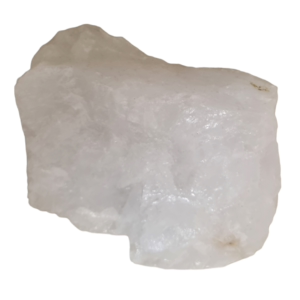
Thaumasite
Thaumasite is a rare and fascinating mineral known for its striking crystalline structure and unique chemical composition. It is a hydrated calcium silicate sulfate mineral and has significant interest both scientifically and as a collector’s item due to its rarity and beautiful appearance.
Key Features of Thaumasite:
- Appearance:
- Color: Typically colorless to white, though it can also appear in shades of light yellow, green, or even pink depending on impurities and environmental conditions.
- Texture: Thaumasite forms in fine crystals or as a fibrous mass. It has a distinctive vitreous or glassy luster, making it quite appealing in both natural and polished states.
- Crystallization: Crystals are typically prismatic or tabular, often forming aggregates that can be quite intricate.
- Composition and Properties:
- Chemical Formula: (Ca₃Al₄(SO₄)₂(CO₃)₂(OH)·12H₂O) (Calcium Aluminum Silicate Sulfate Carbonate Hydrate).
- Hardness: Ranges between 4 and 5 on the Mohs scale, making it relatively soft compared to many other minerals.
- Density: Thaumasite is quite dense, with a typical density range of 2.3–2.5 g/cm³.
- Transparency: Thaumasite can be translucent to opaque, depending on the specific formation and impurities.
- Sources:
- Thaumasite is relatively rare and can be found in hydrothermal veins, caves, and sedimentary environments.
- Known deposits have been discovered in various locations, including the United Kingdom, Canada, Australia, Morocco, and parts of the United States.
- Uses:
- Collector’s Item: Thaumasite is mainly valued by mineral collectors due to its rarity and distinctive crystallization. It is not commonly used in industry but can be found in private collections and museums.
- Research: The mineral has been studied in scientific fields, particularly geology and mineralogy, due to its unusual formation and chemical structure.
- Metaphysical and Healing Properties:
- Spiritual Growth: Thaumasite is said to support spiritual awakening, helping the individual connect with higher consciousness and gain clarity in one’s spiritual path.
- Emotional Balance: It is believed to aid in balancing emotions, promoting stability and calmness in moments of emotional turmoil.
- Mental Clarity: Thaumasite is thought to enhance mental clarity and insight, making it a beneficial stone for those who are seeking to improve focus and cognitive abilities.
- Chakra Alignment: Thaumasite is often associated with the crown chakra, aiding in connection to spiritual energies, and the third eye chakra, enhancing psychic abilities and intuition.
- Symbolism:
- Transformation and Growth: Thaumasite represents transformation and the expansion of consciousness, aiding in the shedding of old patterns and embracing new ways of thinking and being.
- Purification: Its cleansing properties are linked to the purification of both the physical and spiritual self.
Care and Maintenance:
- Durability:
- Due to its relatively soft nature, thaumasite should be handled with care to avoid scratching or chipping, especially when used in jewelry.
- Cleaning:
- Clean with a soft brush and mild soap in water. Avoid abrasive materials and harsh chemicals, as these may damage the surface or alter the mineral’s appearance.
- Storage:
- Store in a soft pouch or padded case to protect from scratches. Display cases with proper lighting can also enhance the beauty of thaumasite while keeping it safe from damage.
Rarity and Value:
- Abundance: Thaumasite is a rare mineral, and high-quality specimens are especially valued by collectors. However, its rarity means it can be difficult to find in jewelry or as a commercial product.
- Value: The value of thaumasite depends on factors such as crystal size, color, clarity, and overall quality. Specimens with well-formed crystals and minimal damage are the most sought after.
Interesting Facts:
- Name Origin: The name “thaumasite” comes from the Greek word “thauma,” meaning “wonder,” due to the mineral’s unique structure and formation.
- Geological Interest: Thaumasite forms in specific, often rare geological conditions, which makes it a subject of interest in studies of mineral formation.
- Fluorescence: Some specimens of thaumasite exhibit fluorescence under UV light, adding to their appeal for collectors.
How to Use Thaumasite:
- Spiritual Practices: Use thaumasite during meditation to deepen spiritual awareness or to enhance the clarity of intuition and inner guidance.
- Emotional Healing: Place thaumasite on the heart or third-eye chakra to support emotional healing and to encourage calmness during times of stress.
- Crystal Grids: Include thaumasite in crystal grids designed to promote spiritual growth, mental clarity, and emotional balance.
- Display: Thaumasite’s unique and intricate crystals make it a beautiful addition to mineral collections or home decor, where its energy can be appreciated visually and spiritually.