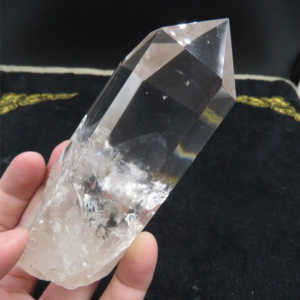
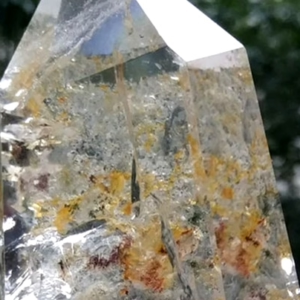
Blue quartz stone – properties, virtues & benefits
Blue Quartz stone is a semi-precious gem prized for its natural beauty and ability to bring peace and serenity to the wearer. Discover its properties and uses in our guide dedicated to this stone.


THE CHARACTERISTICS OF BLUE QUARTZ
- Chakra: Throat.
- Properties: Inner peace, communication, serenity, emotional healing.
- Astrology: Saturn.
- Zodiac: Aquarius, Pisces.
- Elements: Air, Water.
- Colors: Light blue to sky blue.
- Hardness: 7 on the Mohs scale.
- Chemical Formula: SiO2 (silicon dioxide).
- Associated god: None.
QUARTZ BLEU – ITS HISTORY
The origin of the name “quartz” is unclear, but one hypothesis is that it comes from the name of a Germanic miner called “quartz”. The Greek philosopher Theophrastus studied this stone in 300 BC and is considered the founder of mineralogy. In the Middle Ages, the name “quartz” was used to designate any crystal, but in the 16th century, the scholar Georgius Agricola restricted its use to name only true quartz. In 1907, mineralogist Otto Muegge discovered the existence of two different types of quartz: alpha quartz and beta quartz, which crystallize at different temperatures. Alpha quartz crystals are almost certain, while nothing is certain about beta quartz. Quartz was already used in prehistoric times to make weapons and flint tools. Later, it was discovered that quartz was also excellent for producing sparks and starting fires. Convex optical lenses were discovered in Mesopotamia around 4000 BC and were initially used to burn specific areas with sunlight. In 400 BC, quartz was discovered for its sharpness and used to create holes in parchment, as well as to produce cups and vases. The patricians of ancient Rome used quartz to cool their hands, hence the word “crystal” derived from the Greek word “krystallos” meaning “ice”, which describes the stone’s ice-like appearance. Quartz was used as an ornament in the Middle Ages for its beauty and variety of colors, as well as for making pottery and plaster. Today, it is mainly used in watchmaking due to its Piezoelectric properties, and is also commonly used in industry, jewelry and decoration.BLUE QUARTZ STONE – ITS ORIGIN AND COMPOSITION
Quartz is easily identified by its size and glassy appearance. Its crystals have a hexagonal prismatic base so well formed that they appear to be one. However, star quartz can have pyramids on both sides, which is called “bi-pyramidated” or “biterminated” quartz, and is caused by crystallization in a clay-like rock. Unlike conventional crystals, quartz can crystallize on a parent rock. The transparency of agate stone varies considerably, from completely transparent to completely opaque, allowing a wide variety of uses as pendants and earrings. Similarly, quartz colors can vary considerably depending on the different varieties in existence. On the Mohs scale, the hardness of quartz pearl is 7. Rose quartz is often used as a reference for determining the hardness of other stones, as it is widespread, with deposits almost everywhere in the world. To identify rose quartz, its regular density of 2.65 is sometimes used. Star quartz always leaves a white trace on porcelain and is not soluble in hydrochloric acid. There are several varieties of quartz, including the stone Quartz Bleu d’Espagne, which is colored by magniesioriebéckite inclusions. Studies suggest that Quartz Bleu d’Espagne is the only crystallized variety available in this color, although other specimens of varying quality can be found in Italy. The most common varieties include hawk’s eye, tiger’s eye and bull’s eye, with a particularly tyPical version from Pennsylvania in the USA featuring micro-inclusions that evenly color the blue quartz. Blue quartz is quite rare but affordable in terms of price and should not be confused with Celestine desPite their similar color. The largest blue quartz crystals are usually no larger than 2 or 3 cm and often take the form of bi-pyramids, such as hawk’s eye, bull’s eye and tiger’s eye. The blue quartz deposit is found almost worldwide, but is particularly common in Austria, Scandinavia, Africa, Brazil, Spain, the USA, India, Siberia and China. .
BLUE QUARTZ STONE – VERTIES AND PROPERTIES
BLUE QUARTZ ON THE PSYCHOLOGICAL LEVEL
Blue quartz is considered useful for combating sadness and inactivity by increasing the capacity for expression. Blue quartz stone jewelry is also known to purify and calm the aura, and are excellent amplifiers. Rolled stones of this stone are appreciated for symbolizing self-love and bringing serenity and relaxation, as well as promoting family harmony and dispelling fears. Round quartz beads can be used to adorn bracelets and help to refocus on oneself while remaining open to others.BLUE QUARTZ ON THE PHYSICAL LEVEL
Round beads of blue quartz stone can be very useful for protection against X-rays. Rolled stone bracelets are known for their soothing and calming effect on body and mind.
NATURAL BLUE QUARTZ STONE – CLEAN AND RECHARGE
Blue Quartz stone needs regular cleaning and recharging to maintain its optimal energetic properties. Here’s how to do it:Cleaning:
- Rinse stone with clear water to eliminate accumulated negative energies
- Wipe the stone with a soft cloth to dry
- You can also clean the stone with salt water, sage smoke or incense
Loading:
- Expose the Blue Quartz stone to direct sunlight or moonlight for a few hours to recharge it with energy
- You can also use a slab of rock crystal to recharge your stone by placing it on top for a few hours
- Meditation and positive intention can also be used to recharge the stone.