
International Crystal Industry Alliance
  • Home
  • About Us
    • Who We Are
    • Global Governance
    • Headquarters & Global Labs
    • Team & Leadership
  • Standards
    • CCGS
    • RCGS
    • MSGS
    • Treatment Disclosure Guide
    • Gemstone Encyclopedia
  • Verification & Traceability
    • IGSTS 3D Biometric System
    • Certificate Search
    • Global Directory & Public Registry
  • Education & Research
    • ICIA Crystal and Gemstone Academy
    • IMGRI
  • Membership & Compliance
    • Certification Committee
    • Professional Credentials
    • OAISS
    • Expedited Re-Testing
    • ADRPS
  • Media Center
    • Press Releases
    • Whitepapers & Downloads
    • Industry Blog & Trends
  • Click to open the search input field Click to open the search input field Search
  • Menu Menu

Phosphosiderite

November 24, 2024/0 Comments/in minerals/by ICIA Media Center

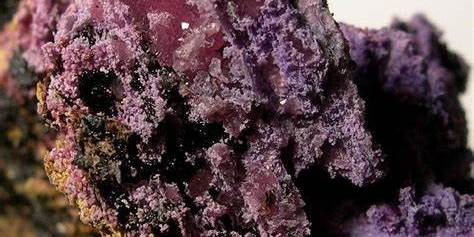
Phosphosiderite is a rare and beautiful mineral known for its stunning shades of purple and violet, often with hints of pink or lavender. It is a relatively lesser-known gemstone that belongs to the phosphate group of minerals, specifically a hydrated iron phosphate. Phosphosiderite is not only appreciated for its striking color but also for its metaphysical properties.

Characteristics of Phosphosiderite:

  1. Color:
    • Phosphosiderite’s most prominent feature is its vivid purple to violet color, sometimes with pinkish or lavender undertones. The color can range from soft, pastel shades to deeper, more intense purple hues, depending on the specific sample.
  2. Composition:
    • It is composed of hydrated iron phosphate, with the chemical formula Fe3(PO4)2(OH)3·3H2O. The iron content is responsible for its distinct colors and unique appearance.
  3. Transparency:
    • Generally translucent to opaque, depending on the quality and clarity of the individual specimen.
  4. Hardness:
    • Phosphosiderite is relatively soft with a hardness of 4.5 to 5 on the Mohs scale, making it less suitable for regular wear in jewelry but excellent for collectors and ornamental pieces.
  5. Luster:
    • It has a vitreous to pearly luster, giving it a subtle shine when polished.

Formation:

Phosphosiderite forms in secondary deposits in oxidized iron-rich environments, often in hydrothermal veins or as part of the weathering process of iron ore deposits. It can be found in association with other minerals such as limonite, hematite, and goethite.

Phosphosiderite crystals are typically short prismatic or tabular, and the mineral can also occur in massive or botryoidal (grape-like) forms.


Geographic Locations:

  • Brazil: One of the most well-known sources of phosphosiderite.
  • Chile: Another location where phosphosiderite has been found, though it is rarer.
  • Australia: Known to have deposits of this rare mineral as well.
  • Germany: Some older sources of phosphosiderite are found here, but it is now quite scarce.

Uses:

  1. Jewelry:
    • Due to its relatively soft nature, phosphosiderite is not commonly used in jewelry, but it may be cut into cabochons, beads, or small ornamental pieces. It is ideal for decorative purposes or collector’s items.
  2. Mineral Specimens:
    • Phosphosiderite is a favorite among mineral collectors due to its unique color and rarity. High-quality specimens with good clarity and vibrant color are highly valued.
  3. Metaphysical Properties:
    • Emotional Healing: Phosphosiderite is believed to be a stone of emotional healing, helping to alleviate stress, anxiety, and emotional blockages. It is thought to bring comfort and relief in times of emotional turmoil.
    • Spiritual Growth: This mineral is often associated with enhancing intuition and psychic abilities. It is believed to help open the third-eye chakra, promoting a deeper connection to spiritual insights.
    • Cleansing: It is also considered to have purifying properties, helping to cleanse the aura and remove negative energies.

Care and Maintenance:

  1. Cleaning:
    • Due to its relatively soft nature, phosphosiderite should be cleaned gently with a soft cloth and warm, soapy water. Avoid using harsh chemicals, ultrasonic cleaners, or steam cleaning methods.
  2. Handling:
    • Since it has a lower hardness, phosphosiderite should be handled with care to avoid scratching or chipping. It is best suited for display in a collection rather than for daily wear.
  3. Storage:
    • Store separately from harder gemstones to prevent scratching. If used in jewelry, ensure it is set in a protective setting to shield it from damage.

Rarity and Value:

Phosphosiderite is considered a rare gemstone, and high-quality specimens with vivid color and clarity can be quite valuable to collectors and mineral enthusiasts. Its relative softness and scarcity in the market contribute to its status as a unique and sought-after mineral, though it is not commonly found in mainstream jewelry.

Tags: Phosphosiderite
Share this entry
  • Facebook Facebook Share on Facebook
  • X-twitter X-twitter Share on X
  • Whatsapp Whatsapp Share on WhatsApp
  • Pinterest Pinterest Share on Pinterest
  • Linkedin Linkedin Share on LinkedIn
https://www.icia.uk/wp-content/uploads/2024/11/nhxaa7ar-png.avif 237 474 ICIA Media Center https://www.icia.uk/wp-content/uploads/2026/11/icia-logo-600-250.avif ICIA Media Center2024-11-24 09:45:122024-11-24 11:10:54Phosphosiderite
Search Search
  • Global Gemstone & Fine Jewelry Market: Key News & Strategic Trend Outlook
  • ICIA Officially Prohibits Subjective “3A/5A/7A” Marketing Labels, Mandating 100-Point CCGS Empirical Standards Worldwide
  • The Timeless Appeal of Natural Jewellery
  • China’s Gem and Jewellery Industry: A Practical Overview
  • Geopolitical Impact Assessment on Mineral Assets
  • Latest Developments in Hong Kong’s Jewellery and Diamond Industry
  • 2026 Crystal Trends: What’s Rising, What’s Shifting, What’s Worth Your Money
  • Report on the Current Status and Market Outlook of the Crystal Industry (2026–2032)
  • Crystal Market Size | 2026–2035
  • Crystal & Gemstone Market Development Report — 2026
  • 2026 Jewelry Trends: The Big Shift Away from “Quiet”
  • Super hard “super diamond” developed in China, 40% stronger than natural diamond

Subscribe to our Blog

ICIA - International Crystal Industry Alliance

An independent, non-governmental international metrological and regulatory alliance establishing empirical crystal grading codices (CCGS, RCGS, MSGS) and sovereign ledger verification under English Common Law.

ICIA General Secretariat Hubs
London (United Kingdom) • Geneva (Switzerland) • Hong Kong
Governance & Organs
  • ICIA General Meeting
  • Board of Governors
  • ICIA General Secretariat
  • Institute of Gemstone & Mineral Research (IGMRI)
  • ICIA Crystal and Gemstone Academy (ICGA)
  • Ethics and Sustainability Committee (ESC)
  • OAISS Supervision Service
Charter & Compliance
  • ICIA Charter & Bylaws
  • ICIA Arbitration & Appraisal Committee (IAAC)
  • ADRPS Regulations
  • GDPR & Data Protection
  • Global Privacy Policy
  • Copyright & Legal Notice
  • Contact General Secretariat
Trust & Metrology
• OAISS SUPERVISED
• MICRO-FTIR 3054 cm-1
• IGSTS • cert.icia.uk
• CCGS (4C+1I) • RCGS (5R) • MSGS (4M)
Verify Ledger →
ICIA Sovereign Seal

ICIA SOVEREIGN SEAL
EST. 2015 • LONDON & GENEVA

OAISS SUPERVISED
SUPERVISION SERVICE

IGMRI METROLOGY
MICRO-FTIR 3054 cm-1

CODEX STANDARDS
CCGS (4C+1I) • RCGS (5R) • MSGS (4M)

IGSTS LEDGER
SHA-256 • CERT.ICIA.UK

Statutory Legal Disclaimer: ICIA (International Crystal Industry Alliance) is an independent, non-governmental regulatory alliance. Certifications issued under the authority of the ICIA Certification Council pursuant to CCGS (4C+1I), RCGS (5R), and MSGS (4M) empirical frameworks verify physical specimen properties at the time of laboratory inspection and do not constitute a direct commercial guarantee of secondary market liquidity.
© 2015–2026 International Crystal Industry Alliance (ICIA™). All Rights Reserved.
Administered by ICIA General Secretariat • Statutory Seat: London, UK
Link to: Purple Iolite Link to: Purple Iolite Purple Iolite Link to: Purple Chalcedony Link to: Purple Chalcedony Purple Chalcedony
Scroll to top Scroll to top Scroll to top