
International Crystal Industry Alliance
  • Home
  • About Us
    • Who We Are
    • Global Governance
    • Headquarters & Global Labs
    • Team & Leadership
  • Standards
    • CCGS
    • RCGS
    • MSGS
    • Treatment Disclosure Guide
    • Gemstone Encyclopedia
  • Verification & Traceability
    • IGSTS 3D Biometric System
    • Certificate Search
    • Global Directory & Public Registry
  • Education & Research
    • ICIA Crystal and Gemstone Academy
    • IMGRI
  • Membership & Compliance
    • Certification Committee
    • Professional Credentials
    • OAISS
    • Expedited Re-Testing
    • ADRPS
  • Media Center
    • Press Releases
    • Whitepapers & Downloads
    • Industry Blog & Trends
  • Click to open the search input field Click to open the search input field Search
  • Menu Menu

Cryolite

November 26, 2024/0 Comments/in Crystal Encyclopedia/by ICIA Media Center

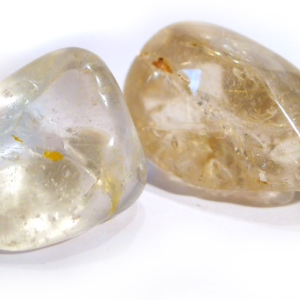
Cryolite is a rare mineral primarily composed of sodium, aluminum, and fluoride. Known for its pale white or translucent appearance, it was historically critical in aluminum production, though it is now mostly replaced by synthetic alternatives. Cryolite is fascinating both for its industrial significance and its unusual optical properties.


Key Features of Cryolite:

  1. Appearance:
    • Color: Typically colorless, white, or pale gray, though it may occasionally have a slight brownish tint due to impurities.
    • Transparency: Often translucent to transparent, with a glassy to waxy luster.
    • Crystal Form: Usually occurs in massive or granular forms, though well-formed crystals are rare.
  2. Composition and Properties:
    • Chemical Formula: Na₃AlF₆ (Sodium Aluminum Fluoride).
    • Hardness: Relatively soft, with a Mohs hardness of 2.5–3.
    • Density: It has a relatively low specific gravity (~2.95–3.0), making it lighter than many other minerals.
    • Optical Properties: Cryolite has a refractive index close to that of water, making it nearly invisible when submerged in water.
  3. Sources:
    • The most notable deposit of cryolite was in Ivittuut, Greenland, but it has been almost entirely mined out.
    • Smaller deposits have been found in countries like Canada, Russia, and Spain, but these are far less significant.
  4. Uses:
    • Industrial: Historically used as a flux in aluminum smelting via the Hall-Héroult process, cryolite reduced the melting point of aluminum oxide, making large-scale production feasible.
    • Gemology: Rarely used in jewelry due to its softness and scarcity, but it may appear in collections as a curiosity.
    • Collectors: Valued by mineral collectors for its rarity and historical importance.
  5. Metaphysical and Healing Properties:
    • Energy Clearing: Thought to cleanse negative energies and promote emotional balance.
    • Mental Focus: Believed to enhance clarity of thought and aid in problem-solving.
    • Spiritual Connection: Associated with aligning one’s intentions with higher truths, though its use in metaphysical practices is less common compared to other stones.
  6. Symbolism:
    • Transformation: Represents technological and industrial advancements due to its historical role in aluminum production.
    • Clarity and Purity: Its clear, translucent nature symbolizes simplicity and insight.

Care and Maintenance:

  1. Durability:
    • Cryolite is soft and easily scratched, making it unsuitable for most jewelry applications. Handle with care to prevent damage.
  2. Cleaning:
    • Use a soft, dry cloth to clean. Avoid water or harsh chemicals, as cryolite may react poorly to prolonged exposure.
  3. Storage:
    • Store in a padded container or separate compartment to protect it from scratches and chipping.

Rarity and Value:

  • Scarcity: Natural cryolite is extremely rare due to the depletion of the Greenland deposits, and most industrial uses now rely on synthetic cryolite.
  • Collector Appeal: Specimens from historical deposits, particularly Ivittuut, are highly prized and can be valuable to mineral enthusiasts.
  • Quality: The value of cryolite specimens depends on their size, transparency, and provenance.

Interesting Facts:

  1. Optical Camouflage: Cryolite’s refractive index is so close to that of water that it becomes nearly invisible when submerged, making it a mineralogical oddity.
  2. Aluminum Revolution: Cryolite played a key role in the development of the aluminum industry, which drastically altered modern manufacturing and technology.
  3. Unique Locale: The Ivittuut deposit in Greenland was the only significant natural source of cryolite, making it geologically unique.

How to Use Cryolite:

  1. Collections: Display cryolite as part of a mineral collection to showcase its rarity and historical importance.
  2. Education: Use cryolite specimens to illustrate geological and industrial advancements.
  3. Energy Work: For metaphysical users, place cryolite in meditation spaces to promote clarity and focus.

Would you like information on acquiring cryolite specimens or tips for displaying them in a collection?
Tags: Cryolite
Share this entry
  • Facebook Facebook Share on Facebook
  • X-twitter X-twitter Share on X
  • Whatsapp Whatsapp Share on WhatsApp
  • Pinterest Pinterest Share on Pinterest
  • Linkedin Linkedin Share on LinkedIn
https://www.icia.uk/wp-content/uploads/2026/11/icia-logo-600-250.avif 0 0 ICIA Media Center https://www.icia.uk/wp-content/uploads/2026/11/icia-logo-600-250.avif ICIA Media Center2024-11-26 09:09:142024-11-26 09:09:17Cryolite
Search Search
  • Global Gemstone & Fine Jewelry Market: Key News & Strategic Trend Outlook
  • ICIA Officially Prohibits Subjective “3A/5A/7A” Marketing Labels, Mandating 100-Point CCGS Empirical Standards Worldwide
  • The Timeless Appeal of Natural Jewellery
  • China’s Gem and Jewellery Industry: A Practical Overview
  • Geopolitical Impact Assessment on Mineral Assets
  • Latest Developments in Hong Kong’s Jewellery and Diamond Industry
  • 2026 Crystal Trends: What’s Rising, What’s Shifting, What’s Worth Your Money
  • Report on the Current Status and Market Outlook of the Crystal Industry (2026–2032)
  • Crystal Market Size | 2026–2035
  • Crystal & Gemstone Market Development Report — 2026
  • 2026 Jewelry Trends: The Big Shift Away from “Quiet”
  • Super hard “super diamond” developed in China, 40% stronger than natural diamond

Subscribe to our Blog

ICIA - International Crystal Industry Alliance

An independent, non-governmental international metrological and regulatory alliance establishing empirical crystal grading codices (CCGS, RCGS, MSGS) and sovereign ledger verification under English Common Law.

ICIA General Secretariat Hubs
London (United Kingdom) • Geneva (Switzerland) • Hong Kong
Governance & Organs
  • ICIA General Meeting
  • Board of Governors
  • ICIA General Secretariat
  • Institute of Gemstone & Mineral Research (IGMRI)
  • ICIA Crystal and Gemstone Academy (ICGA)
  • Ethics and Sustainability Committee (ESC)
  • OAISS Supervision Service
Charter & Compliance
  • ICIA Charter & Bylaws
  • ICIA Arbitration & Appraisal Committee (IAAC)
  • ADRPS Regulations
  • GDPR & Data Protection
  • Global Privacy Policy
  • Copyright & Legal Notice
  • Contact General Secretariat
Trust & Metrology
• OAISS SUPERVISED
• MICRO-FTIR 3054 cm-1
• IGSTS • cert.icia.uk
• CCGS (4C+1I) • RCGS (5R) • MSGS (4M)
Verify Ledger →
ICIA Sovereign Seal

ICIA SOVEREIGN SEAL
EST. 2015 • LONDON & GENEVA

OAISS SUPERVISED
SUPERVISION SERVICE

IGMRI METROLOGY
MICRO-FTIR 3054 cm-1

CODEX STANDARDS
CCGS (4C+1I) • RCGS (5R) • MSGS (4M)

IGSTS LEDGER
SHA-256 • CERT.ICIA.UK

Statutory Legal Disclaimer: ICIA (International Crystal Industry Alliance) is an independent, non-governmental regulatory alliance. Certifications issued under the authority of the ICIA Certification Council pursuant to CCGS (4C+1I), RCGS (5R), and MSGS (4M) empirical frameworks verify physical specimen properties at the time of laboratory inspection and do not constitute a direct commercial guarantee of secondary market liquidity.
© 2015–2026 International Crystal Industry Alliance (ICIA™). All Rights Reserved.
Administered by ICIA General Secretariat • Statutory Seat: London, UK
Link to: Clear Topaz Link to: Clear Topaz Clear Topaz Link to: Scolecite Link to: Scolecite Scolecite
Scroll to top Scroll to top Scroll to top