Apache Agate
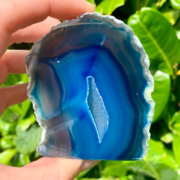
Apache Agate is a type of chalcedony, a form of microcrystalline quartz known for its vibrant colors and banded appearance. Its unique name derives from the Native American Apache tribe, a nod to its historical significance and the regions where it is commonly found, particularly in the southwestern United States. This semi-precious stone holds both aesthetic and geological value, and its formation is a fascinating process that spans millions of years, highlighting the dynamic processes within Earth’s crust.

Contents
- 1. What is Agate? A Geological Background
- 2. The Geology of Apache Agate
- 3. Formation of Apache Agate
- 4. Characteristics of Apache Agate
- 5. Apache Agate in Geological History and Human Use
- 6. Scientific and Educational Significance
- 7. Conclusion
1. What is Agate? A Geological Background
Agate belongs to the family of chalcedony minerals, characterized by finely grained silica with a microcrystalline structure. The defining feature of agate is its banding, a result of repetitive, cyclic deposition of minerals. These bands can vary widely in color and pattern, depending on the minerals and trace elements involved during formation.
In general, agate is a variety of quartz (SiO₂) that forms as nodules within volcanic rocks and sometimes in metamorphic rocks. Agate, including Apache Agate, is predominantly composed of silica but often contains trace amounts of iron, manganese, nickel, and other elements, which add to its color variations.
2. The Geology of Apache Agate

Apache Agate is most commonly found in arid desert regions, notably in southwestern states like Arizona, New Mexico, and Texas. These regions are known for their rich volcanic history, which provides the ideal environment for the formation of agate. The agate is often collected in the form of nodules within or near volcanic lava flows or as fragments within sedimentary deposits formed after volcanic eruptions.
Key locations for Apache Agate deposits include:
- Arizona’s Black Hills: This area is rich in volcanic rock formations from the Tertiary period, an epoch marked by extensive volcanic activity.
- New Mexico’s Gila National Forest: Known for its rhyolitic and basaltic lava flows, this area hosts agate deposits formed from silicic volcanic rocks.
- West Texas: Home to desert plains and remnants of ancient volcanic activity, where the mineral-rich soils contribute to the formation of unique agate types, including Apache Agate.
3. Formation of Apache Agate

Agate forms when silica-rich water infiltrates rock cavities, depositing layers of silica over time. As water evaporates, it leaves behind dissolved silica, which slowly crystallizes into chalcedony. The conditions for Apache Agate formation are typically found in volcanic environments where gas bubbles within cooling lava provide the cavities needed for agate to grow. Over millions of years, layers of silica and other trace elements accumulate, creating the characteristic bands seen in agate.
Several stages outline the formation process of Apache Agate:
- Stage 1: Volcanic Eruption and Formation of Cavities
- The initial stage involves a volcanic eruption that produces lava rich in silicate minerals. As the lava cools, gas bubbles become trapped within, creating cavities or vesicles.
- Stage 2: Silica-Rich Water Infiltration
- Rainwater and groundwater, carrying dissolved silica from the surrounding rocks, seep into the cavities within the lava rock. Over time, water flow brings different trace minerals, which settle and form distinctive banding.
- Stage 3: Layered Deposition and Crystallization
- Silica from the water crystallizes within the cavities, forming successive layers of chalcedony. Changes in water chemistry, temperature, and pressure alter the mineral composition, creating unique color variations and intricate banding patterns.
- Stage 4: Exposure and Weathering
- Geological uplift, erosion, and weathering expose the agate-filled rocks at the Earth’s surface. Apache Agate nodules are often released from their host rocks as erosion continues, making them accessible for collection.
4. Characteristics of Apache Agate

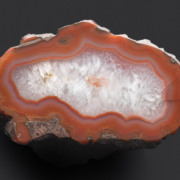
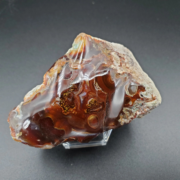
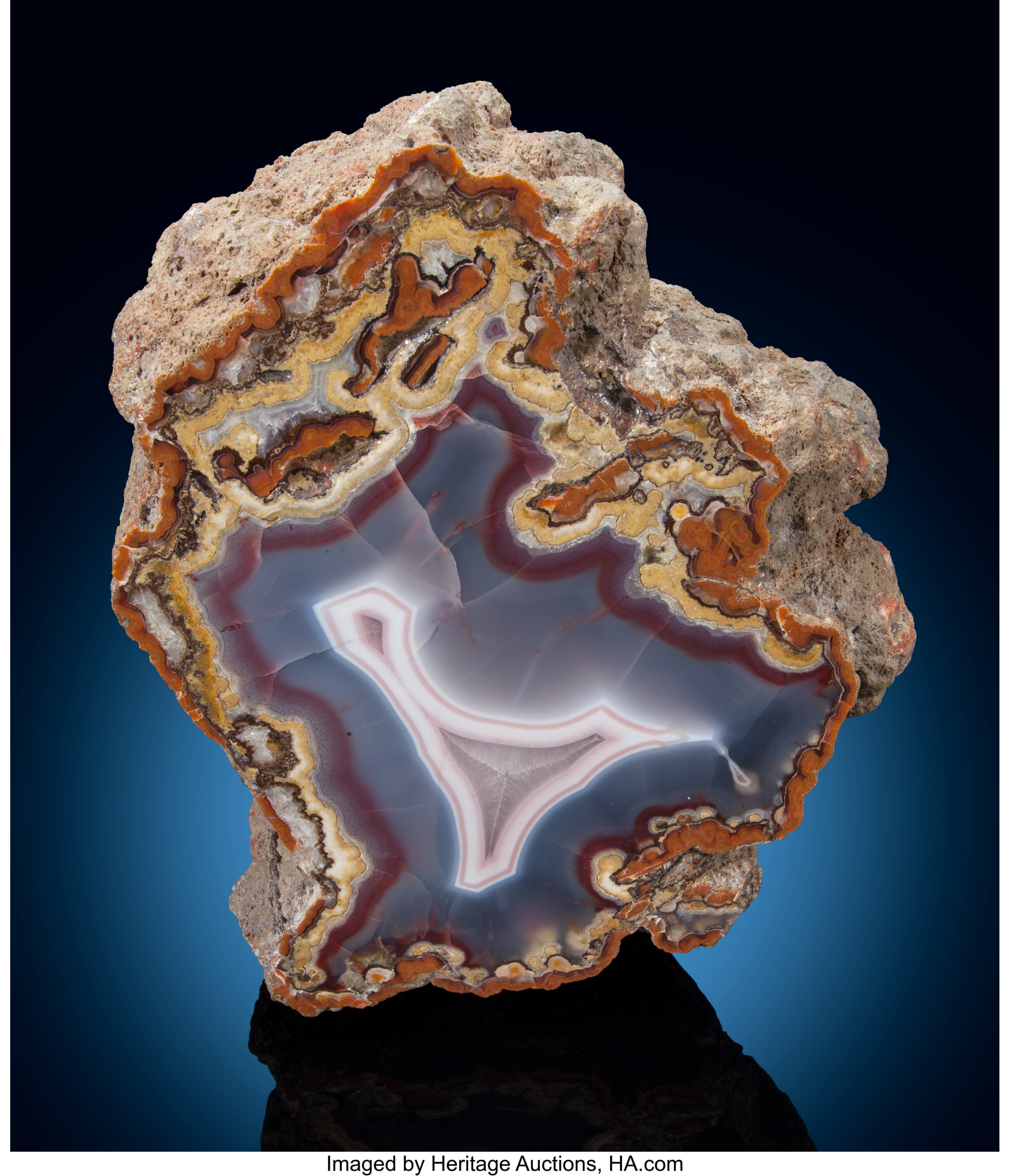
Apache Agate is noted for its earthy tones, with colors ranging from reddish-browns and deep blacks to milky whites and grays. The variety of colors comes from trace elements in the silica layers:
- Iron and Manganese produce red and brown hues.
- Nickel may add subtle greenish or blue tints.
- Titanium can contribute to bluish-gray tones.
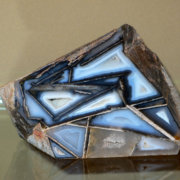
Its banding is often irregular and can range from fine lines to wide bands. Some specimens may even exhibit dendritic patterns, resembling tree branches, due to mineral impurities. These patterns make each piece of Apache Agate visually unique.
5. Apache Agate in Geological History and Human Use

Agate, including Apache Agate, has been prized for thousands of years by various cultures for its beauty and durability. Native American tribes, including the Apache, used agate and other local stones to create tools, ornaments, and amulets, believed to carry protective properties. Agate was also utilized in trade and held cultural significance, as stones were often used in rituals or crafted into symbolic items.
In modern times, Apache Agate is still valued in jewelry and art, often polished to reveal its bands and vibrant colors. Its physical hardness and ability to take a high polish make it ideal for beads, cabochons, and other decorative items.
6. Scientific and Educational Significance
Geologically, Apache Agate offers insights into the volcanic history of the southwestern United States. Studying agate formations helps scientists understand past volcanic activity and environmental conditions during the time of their formation. Apache Agate nodules can also provide clues about the mineralogy and chemistry of ancient volcanic systems, enhancing our understanding of the Earth’s geologic past.
In educational settings, agate, with its banding and varied colors, serves as an accessible example of mineral formation and sedimentary processes. Students of geology and mineralogy often study agates to understand concepts like mineral deposition, chemical precipitation, and crystallization in a visually engaging manner.
7. Conclusion
Apache Agate is more than just a strikingly beautiful mineral; it is a geological marvel formed over millions of years, symbolizing the Earth’s dynamic and creative forces. From its beginnings in volcanic rock to its emergence as a sought-after gemstone, Apache Agate encapsulates geological history and human culture, bridging the natural world with human appreciation for beauty and resilience.