Prase Opal
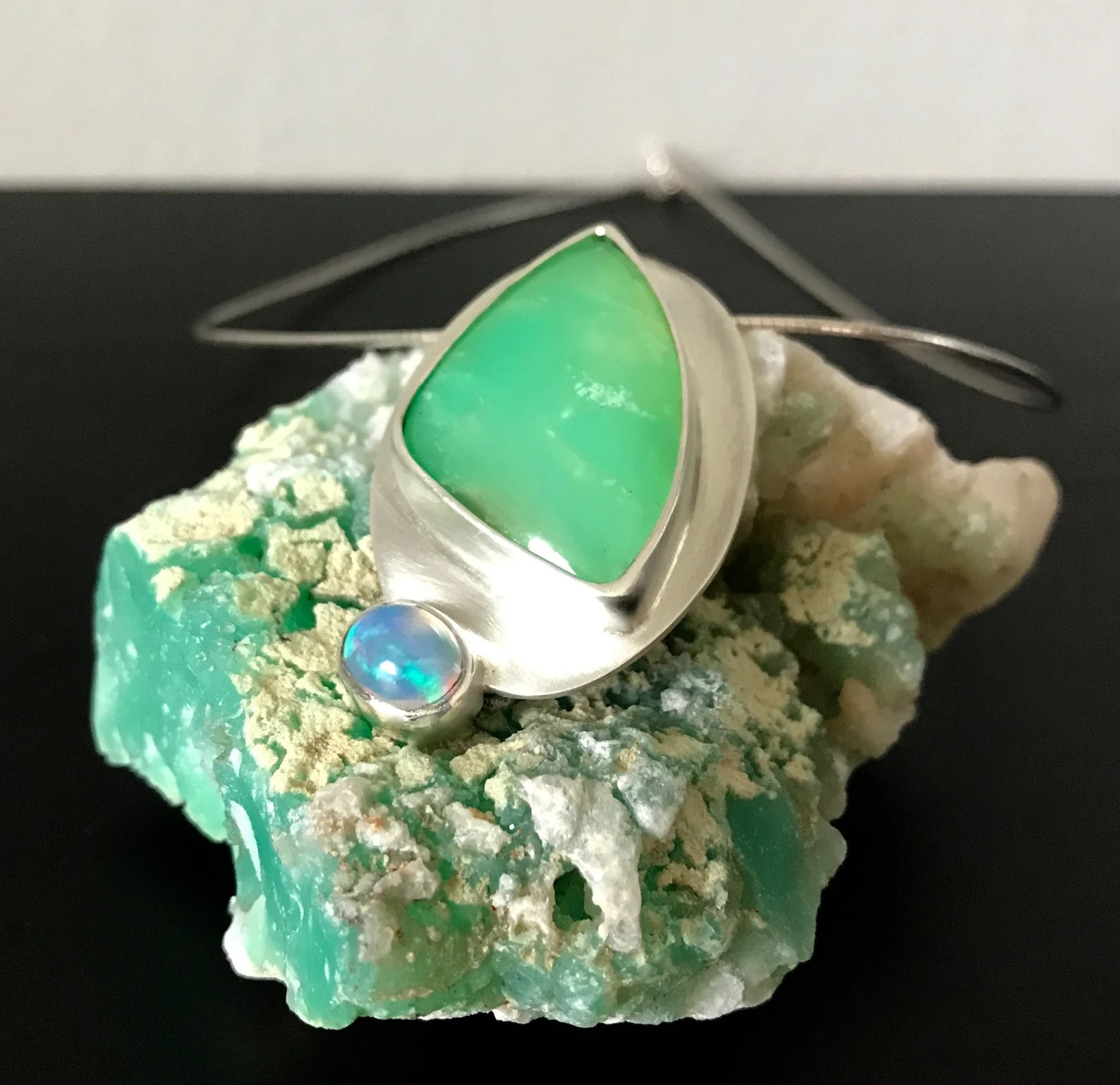
“Prase Opal,” also known as “Prase Green Opal,” is a type of opal characterized by its greenish coloration. It belongs to the wider family of opals, which are a group of mineraloids composed of hydrated silicon dioxide. Unlike other opals that often display a play of color caused by the diffraction of light, Prase Opal typically lacks this feature and is valued more for its soothing green hues.

The name “Prase” originates from the Greek word “prasinos,” meaning leek-green. This name aptly describes the stone’s color, which can range from light green to deep, almost forest-like shades.
Prase Opal is often used in jewelry making, although it is not as well-known or widely used as other varieties of opals like the fiery Ethiopian opal or the classic white opal from Australia. However, its unique green coloration and subtle beauty make it an appealing choice for those seeking something different in their gemstone collections.
In terms of metaphysical properties, Prase Opal is believed by some to possess calming and rejuvenating energies, similar to other green gemstones like jade or peridot. It is sometimes used in crystal healing practices for its purported ability to promote emotional balance and harmony.
Overall, Prase Opal is a fascinating gemstone that offers a distinct alternative to more commonly encountered opals, with its tranquil green tones and potential metaphysical properties adding to its allure.
Contents
- Types of Prase Opal
- Properties of Prase Opal
- Occurrence and Mining
- Uses of Prase Opal
Types of Prase Opal

Prase Opal, also known as Prase Green Opal, encompasses several distinct types and variations based on factors such as color, clarity, and origin. Some of the notable types of Prase Opal include:
- Light Green Prase Opal: This type of Prase Opal exhibits a pale green coloration, often with a translucent to semi-translucent appearance. It is prized for its delicate hue and is commonly used in jewelry settings where a subtle touch of green is desired.
- Deep Green Prase Opal: As the name suggests, this variety of Prase Opal displays a richer, deeper green color compared to its lighter counterparts. It can range from medium to dark green tones and is highly valued for its intense color saturation.
- Botryoidal Prase Opal: Botryoidal refers to a rounded, globular crystal habit. Botryoidal Prase Opal forms in clusters of small, spherical shapes, resembling a cluster of grapes. This type often displays a unique texture and can vary in color from light to dark green.
- Dendritic Prase Opal: Dendritic formations within Prase Opal resemble branching patterns or fern-like inclusions. These dendrites are often composed of other minerals, such as manganese or iron oxides, and create intricate natural designs within the gemstone.
- Moss Prase Opal: Moss Prase Opal features moss-like inclusions or patterns within the stone, giving it a distinctive appearance reminiscent of landscapes or forests. These inclusions can vary in color, ranging from green to brown, and add visual interest to the gemstone.
- Prase Opal with Matrix: Some Prase Opal specimens are found embedded within their host rock matrix, creating a striking contrast between the green opal and its surrounding material. The matrix can vary in composition and color, ranging from earthy browns to darker hues, enhancing the aesthetic appeal of the gemstone.
These are just a few examples of the diverse range of Prase Opal types available, each with its own unique characteristics and visual appeal. Collectors and enthusiasts often appreciate the variety within the Prase Opal family, as it offers options to suit different preferences and tastes.
Properties of Prase Opal

Prase Opal possesses a range of properties that contribute to its beauty and desirability as a gemstone. Here are some key properties:
- Color: Prase Opal typically exhibits shades of green, ranging from pale and subtle to deep and intense. The coloration is attributed to the presence of trace elements within the opal, such as nickel or chromium. The hue can vary depending on factors such as impurities and the opal’s formation process.
- Transparency: Prase Opal can vary in transparency, with some specimens being translucent to semi-translucent and others being opaque. This variation in transparency can affect the gemstone’s appearance and how light interacts with it.
- Luster: Prase Opal typically displays a vitreous (glassy) to waxy luster when polished. The luster contributes to the gemstone’s overall attractiveness and can enhance its visual appeal when used in jewelry or decorative items.
- Hardness: On the Mohs scale of mineral hardness, Prase Opal generally has a hardness ranging from 5.5 to 6.5. While not as hard as some other gemstones like diamonds or sapphires, Prase Opal is still durable enough for use in jewelry with proper care.
- Specific Gravity: The specific gravity of Prase Opal typically ranges from 1.9 to 2.3, which is relatively low compared to many other gemstones. This property can be useful in distinguishing Prase Opal from other materials and assessing its authenticity.
- Optical Properties: Prase Opal exhibits optical phenomena such as opalescence, which is the play of color or iridescence caused by the diffraction of light within the stone. While Prase Opal is not as well-known for opalescence as some other opal varieties, certain specimens may display this phenomenon to varying degrees.
- Cleavage: Prase Opal may exhibit conchoidal fracture, which means it breaks with smooth, curved surfaces akin to broken glass. This fracture type can influence the way the gemstone is cut and shaped during the lapidary process.
These properties collectively contribute to the unique appearance and appeal of Prase Opal, making it a sought-after gemstone for jewelry, lapidary work, and decorative objects. Additionally, Prase Opal’s metaphysical properties, such as its purported calming and balancing energies, add to its allure for those interested in crystal healing and alternative therapies.
Occurrence and Mining

Prase Opal is found in various locations around the world, with notable occurrences in several countries. The occurrence and mining of Prase Opal involve identifying deposits, extracting the gemstone from the earth, and processing it for use in jewelry and other applications. Here’s an overview of occurrence and mining:
- Brazil: Brazil is one of the primary sources of Prase Opal. The gemstone is found in regions such as Minas Gerais and Bahia. Brazilian Prase Opal often exhibits vibrant green hues and is highly valued for its color saturation and clarity.
- Australia: While Australia is renowned for its white and black opals, Prase Opal is also found in certain regions of the country. Queensland, in particular, is known for producing Prase Opal with green and blue-green colors. The opal fields of Australia are known for their rich diversity of opal types.
- United States: Prase Opal occurrences have been reported in various states across the United States, including Nevada, Oregon, and Idaho. These deposits may yield Prase Opal with a range of colors and characteristics, contributing to the gemstone’s availability in the market.
- Other Countries: Prase Opal is also found in other countries, albeit in smaller quantities. Locations such as Madagascar, Tanzania, Ethiopia, Peru, and Mexico have reported occurrences of Prase Opal, adding to the global supply of this gemstone.
Mining Prase Opal typically involves both small-scale and larger-scale operations, depending on the size and accessibility of the deposits. In some cases, opal mining may be conducted by individual miners or small groups using hand tools and machinery to extract the gemstone from underground veins or alluvial deposits. In other instances, commercial mining operations may employ more extensive equipment and techniques to extract opal-bearing rock from open-pit mines or underground workings.
Once mined, the Prase Opal-bearing rock is processed to extract the gemstone. This process may involve sorting, washing, and sometimes crushing the rock to release the opal. The extracted opal is then cleaned, cut, and polished to enhance its beauty and prepare it for use in jewelry, ornamental objects, or other applications.
Overall, the occurrence and mining of Prase Opal contribute to its availability in the gemstone market, offering gem enthusiasts and jewelry designers a unique and captivating material to incorporate into their creations.
Uses of Prase Opal

Prase Opal is a versatile gemstone that finds various uses in jewelry, lapidary art, and decorative objects. Here are some of its common applications:
- Jewelry: Prase Opal is frequently used in jewelry design, where it is fashioned into gemstone cuts such as cabochons, beads, and occasionally faceted stones. It can be set into rings, earrings, pendants, bracelets, and necklaces to create unique and eye-catching pieces. Prase Opal’s green coloration adds a refreshing and natural touch to jewelry designs, appealing to those who appreciate gemstones beyond traditional options like diamonds or sapphires.
- Carvings and Sculptures: Prase Opal’s relatively low hardness makes it suitable for carving and sculpting into intricate shapes and designs. Artisans may carve Prase Opal into figurines, ornamental objects, and decorative items, showcasing the gemstone’s natural beauty and unique characteristics.
- Beads and Rosaries: Prase Opal beads are popular among jewelry makers and collectors alike. These beads can be incorporated into necklaces, bracelets, and rosaries, adding a touch of green color and natural elegance to the jewelry piece.
- Lapidary Art: Lapidarists often work with Prase Opal to create custom gemstone cuts and designs. Through cutting, shaping, and polishing, lapidarists enhance the gemstone’s beauty and highlight its unique features, such as color variations and inclusions.
- Collectibles and Specimens: Prase Opal specimens, particularly those with exceptional color or unique formations, are sought after by mineral collectors and enthusiasts. These specimens may be displayed in collections, museums, or used for educational purposes to showcase the diversity of gemstones found in nature.
- Metaphysical and Healing Purposes: In alternative healing practices and metaphysical beliefs, Prase Opal is associated with qualities such as emotional balance, harmony, and spiritual growth. Some people believe that wearing or carrying Prase Opal can promote feelings of calmness, relaxation, and positivity.
- Home Décor: Prase Opal can be incorporated into home décor items such as ornamental bowls, vases, and decorative accents. Its natural green coloration adds a touch of earthiness and sophistication to interior spaces, enhancing the aesthetic appeal of the décor.
Overall, Prase Opal’s beauty, versatility, and metaphysical associations make it a desirable gemstone for a wide range of applications, from jewelry making to decorative arts and beyond. Its unique green hues and soothing energies continue to captivate gem enthusiasts and artisans worldwide.