Tiger Iron
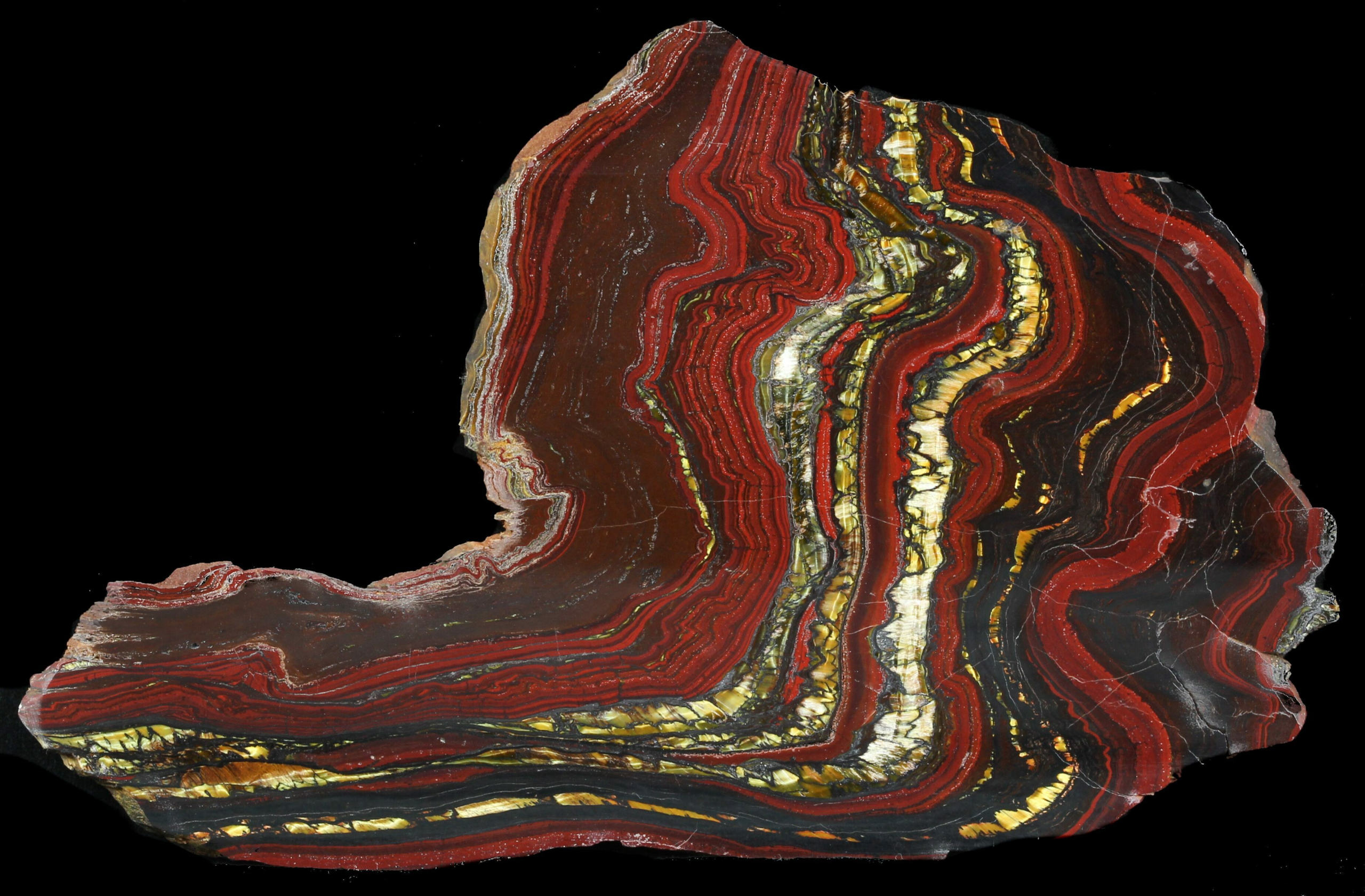
Tiger Iron is a metamorphic rock composed mainly of tiger’s eye, red jasper, and black hematite. It’s admired for its remarkable bands of color and lustrous finish, which make it popular in jewelry and ornamentation. The layers of golden tiger’s eye, dark hematite, and red jasper create a striking, multicolored appearance, each contributing unique reflective properties and textures. This stone is particularly noted for its durability and vibrant polish, which enhance its decorative appeal.

Historically, tiger iron was first discovered in Western Australia, one of the primary locations for its mining even today. The stone’s formation dates back over 2.2 billion years, arising from the deposition of materials in ancient sedimentary environments. These materials underwent significant geological processes, including compaction and mineralization, leading to the beautifully banded structure seen in tiger iron.
Tiger iron has also been known to carry cultural significance in various indigenous communities, often used in crafting and spiritual practices. Its discovery and subsequent utilization stretch back to ancient times, indicating its long-standing value and appeal. This stone not only encapsulates a geological journey through time but also embodies a rich historical tapestry, interwoven with the cultural narratives of the regions where it is found.
Contents
- Formation Process of Tiger Iron
- Typical Environments Where Tiger Iron is Found
- Physical and Chemical Properties
- Physical Properties
- Chemical Properties
- Occurrences and Locations
- Uses and Applications
Formation Process of Tiger Iron

Tiger Iron is formed from the banded iron formations (BIFs), which are originally sedimentary rocks. These BIFs comprise alternating layers of iron-rich minerals like hematite or magnetite, and silica (in the form of chert or quartz). Over millions of years, these BIFs undergo metamorphism—a process where rocks are transformed by extreme heat, pressure, or chemically active fluids. During this metamorphism:
- Silicification: The quartz or silica in the BIF transforms into the fibrous mineral known as tiger’s eye through silicification. This is facilitated by the dissolution of silica and its reprecipitation in the presence of iron, creating the fibrous and chatoyant (shimmering) texture typical of tiger’s eye.
- Jasper Formation: Alongside, chemical changes may lead to the formation of jasper, a microcrystalline form of quartz, which typically takes on a red coloration due to iron oxide impurities.
- Incorporation of Hematite: Hematite layers within the BIF may either remain intact or recrystallize, enhancing the iron-rich bands seen in tiger iron.
This combination of tiger’s eye, hematite, and jasper, under the influence of metamorphic processes, leads to the distinct, banded appearance of tiger iron, characterized by its striking layers of golden, red, and metallic gray.
Typical Environments Where Tiger Iron is Found
Tiger Iron is typically found in regions known for their ancient geological formations, particularly those dating back to the Precambrian era. These environments include:
- Ancient Sedimentary Basins: Areas that were once ancient lakes or seas where sediments rich in iron and silica could accumulate over time.
- Shield Areas: Regions like the Pilbara Shield in Western Australia, which is known for its extensive BIF deposits. These shield areas are portions of continents where ancient crystalline rocks are exposed at the surface, often hosting rich mineral deposits.
- Mining Areas: Modern extraction of tiger iron often takes place in mining areas specialized in iron and precious minerals. These areas are typically where the rock is exposed due to erosion or where it has been uplifted closer to the earth’s surface.
The presence of tiger iron is often indicative of a region’s rich geological past and the dynamic processes that the Earth has undergone. These environments, with their unique conditions, facilitate the creation of this beautifully layered metamorphic rock.
Physical and Chemical Properties

Tiger Iron exhibits a unique set of physical and chemical properties due to its composite nature. It is a metamorphic rock made up of tiger’s eye, red jasper, and hematite, each contributing distinct characteristics to the overall properties of the stone.
Physical Properties
- Appearance: Tiger Iron is renowned for its striking banded appearance with contrasting colors. The bands range from golden-yellow (tiger’s eye), deep red (jasper), to metallic gray or black (hematite), creating a vibrant, multi-textured surface.
- Hardness: The composite minerals in tiger iron contribute to its overall hardness, which varies within the range typical of its constituent minerals. Jasper and tiger’s eye have a hardness of about 6.5 to 7 on the Mohs scale, while hematite has a hardness of around 5.5 to 6.5.
- Density: The density of tiger iron also reflects its mixed composition, generally ranging between 4.5 to 5.3 grams per cubic centimeter, depending on the relative proportions of hematite, jasper, and tiger’s eye.
- Luster: Tiger Iron typically exhibits a silky to submetallic luster, with the luster of each component contributing differently—tiger’s eye provides a silky luster, hematite gives a metallic sheen, and jasper offers a more matte finish.
- Fracture and Tenacity: The rock tends to fracture in a splintery or uneven manner, consistent with the fracture properties of quartz-based minerals. It is generally considered to be quite tenacious, resisting breaking and chipping well.

Chemical Properties
- Composition: Chemically, tiger iron is predominantly silicon dioxide (SiO2), due to the quartz content in both tiger’s eye and jasper. The color variations are largely due to iron oxide impurities, which are more concentrated in the hematite and to a lesser extent in jasper.
- Stability: Tiger Iron is chemically stable under normal conditions. It is inert to many chemical reactions but can be affected by strong acids, which might dissolve the silica and alter the iron oxides.
- Reactivity: The individual minerals within tiger iron have varying reactivities. Hematite, being an iron oxide, is susceptible to oxidation under certain conditions, which can influence the surface appearance and structural integrity over time.
These physical and chemical properties make tiger iron a durable and visually appealing material, suitable for a variety of ornamental and jewelry applications, reflecting both its geological history and its aesthetic appeal.
Occurrences and Locations

Tiger Iron is predominantly found in regions known for their ancient geological formations and rich mineral deposits. This metamorphic rock, comprising tiger’s eye, hematite, and red jasper, originates from banded iron formations (BIFs) which have undergone significant geological changes over billions of years. Here are some key locations around the world where tiger iron is typically found:
1. Australia
Australia is one of the most significant sources of tiger iron, particularly in the Pilbara region of Western Australia. This area is part of the Pilbara Craton, which is known for its extensive and ancient geological history, dating back more than 2.5 billion years. The Pilbara region not only provides a perfect environment for the formation of BIFs but also for their transformation into tiger iron through geological processes like metamorphism.
2. South Africa
South Africa, especially the Northern Cape province, hosts environments similar to those of Western Australia, with old geological formations rich in iron and other minerals. Here, tiger iron can be found as part of the region’s BIFs, which are among the oldest geological formations on Earth.
3. India
In India, tiger iron occurrences are less well-documented but are believed to be associated with the iron ore regions, particularly in states known for significant mineral deposits like Odisha and Jharkhand. These areas have a history of extensive mining and contain older rock formations where metamorphic processes could have formed tiger iron.
4. USA
In the United States, tiger iron is not as commonly found as in Australia or South Africa, but there are occurrences of similar banded iron formations that could potentially include tiger iron. Regions with significant mining histories, such as the Lake Superior region and parts of Wyoming, are likely candidates for its presence.
5. Brazil
Brazil, with its vast mineral resources, also has areas with banded iron formations, particularly in the Iron Quadrangle (Quadrilátero Ferrífero) of Minas Gerais. This region is known for its rich deposits of iron ore and other minerals, making it a plausible location for tiger iron formation.
These locations are typically associated with ancient tectonic settings where sedimentary deposits rich in iron and silica could have been laid down and later metamorphosed. The presence of tiger iron in these areas is a testament to the complex geological history and the dynamic processes that have shaped the Earth’s crust in these regions.
Uses and Applications

Tiger Iron, with its striking appearance and physical durability, is used in various applications, blending aesthetic appeal with functional utility. Here are some of the primary uses and applications of tiger iron:
1. Jewelry and Ornamental Use
Tiger Iron is highly prized in the jewelry industry for its unique, vibrant bands of color and lustrous finish. It is often cut and polished to make cabochons, beads, and other decorative items. The contrast of colors and patterns makes each piece distinct, appealing to those looking for unique jewelry pieces.
2. Sculpture and Carving
Due to its hardness and ability to take a good polish, tiger iron is also used in sculpture and carving. Artists and craftsmen value the stone for its coloration and textural contrasts, which can enhance the visual impact of sculpted items such as small statues, figurines, and decorative carvings.
3. Metaphysical and Healing Properties
In the realm of crystal healing and metaphysical practices, tiger iron is believed to possess several healing properties. It is said to promote vitality and help in the healing of blood-related disorders and muscle issues. The stone is also thought to bring strength and stamina, making it popular among those who practice these alternative therapies.
4. Architectural Features
Tiger Iron can be used in architecture for features that require visual impact through natural stone. It is used in tiles, facing stone, and other decorative architectural elements where durability and beauty are both priorities.
5. Collector’s Item
Due to its unique beauty and the specific conditions required for its formation, tiger iron is a popular collector’s item among those who collect rocks and minerals. Its rich geological history adds to its allure as a specimen that captures a snapshot of Earth’s ancient environmental and geological processes.
6. Feng Shui and Decorative Art
In Feng Shui, tiger iron is used to bring energy, absorb negative energy, and transform it into positive energy. It is used in homes and offices to create balance and stimulate energy flow according to Feng Shui principles. Its striking appearance also makes it suitable for interior decor items like tabletops, bookends, and as part of inlay work.
These varied applications showcase tiger iron’s versatility, making it not only a stone of beauty but also of considerable utility in both artistic and practical domains.