K2 Stone
K2 Stone, also known as K2 Jasper or K2 Granite, is a unique and intriguing natural stone that has gained popularity in the gem and mineral community primarily for its striking appearance and interesting composition. It’s not a jasper or granite in the traditional sense, but it’s commonly referred to by these names because of its visual characteristics.
K2 – The Crystal Council
K2 Stone is found at the base of the K2 mountain, the second-highest mountain in the world, located on the China-Pakistan border. The stone was discovered relatively recently and has become sought after among collectors and jewelry makers. Its rarity and origin from such a notable and remote location add to its allure.
The stone is mined from the rocky, inhospitable terrains of the Karakoram Range. The extraction and transportation of this stone are challenging due to the extreme conditions and elevation, making it a rare find in the gem markets.
Contents
- Unique Appearance and Composition
- Geological Formation of K2 Stone
- Geology of the K2 Region
- Physical Properties of K2 Stone
- Uses of K2 Stone
- Jewelry and Ornamental Use
- Decorative Items
- Metaphysical and Healing
- Collecting
- Educational and Geological Studies
Unique Appearance and Composition

K2 Azurite (terrasolace.com)
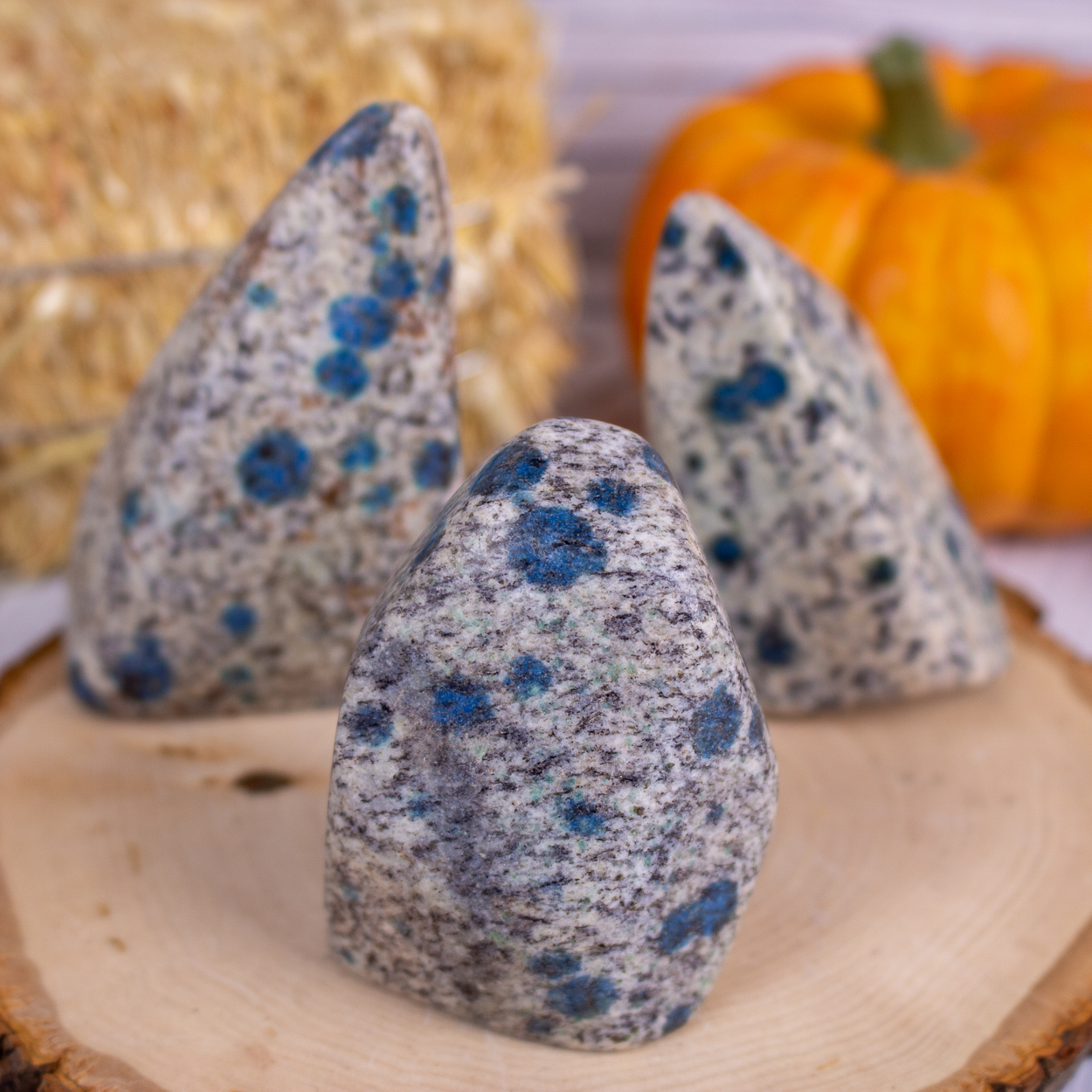
K2 Stone is primarily a bright white granite that features beautifully contrasting blue circles, which are azurite deposits. Azurite is a deep blue copper mineral known for its vibrant color and association with deep healing energies. The combination of the sturdy, granite background and the vivid, spherical azurite inclusions give K2 Stone its distinctive and eye-catching appearance.
The composition of the granite includes quartz, feldspar, and biotite, typical of granites, but it’s the azurite that truly defines its aesthetics. Occasionally, small specks of green malachite, another copper carbonate mineral, may also appear alongside azurite, though this is less common.
The unique patterning of azurite circles embedded in the granite matrix makes each piece of K2 Stone unique, with no two stones being exactly alike. This characteristic, coupled with its origin story, makes K2 Stone a favorite among those who appreciate the natural artistry of stones and minerals.
Geological Formation of K2 Stone

K2 Stone is a fascinating example of how unique geological conditions can lead to the formation of distinctly beautiful rock types. The formation process of K2 Stone involves several geological phenomena, primarily surrounding the interaction of granite and azurite.
- Granite Formation: The base rock of K2 Stone is granite, which is an igneous rock formed from the slow crystallization of magma beneath the Earth’s surface. Granite is composed mainly of quartz, feldspar, and mica, and it forms the bulk of the continental crust.
- Azurite Inclusions: The striking blue spots of azurite that characterize K2 Stone occur when copper-rich solutions infiltrate the cracks and cavities in the granite. Azurite, a copper carbonate mineral, precipitates from these solutions. The specific conditions that lead to the formation of azurite within this granite are relatively rare, which is why K2 Stone is such an uncommon material.
- Secondary Mineralization: This process involves the deposition of minerals from solutions that percolate through the rock’s porous sections after the rock itself has formed. In the case of K2 Stone, this secondary mineralization results in the azurite (and occasionally malachite) that forms distinctive, orbicular patterns against the white to gray background of the granite.
Geology of the K2 Region

The K2 region is part of the Karakoram Range, which is renowned not only for its towering peaks but also for its complex geological structure. The range is primarily composed of metamorphic and igneous rocks, reflecting a dynamic geological history marked by intense tectonic activities:
- Tectonic Activity: The Karakoram Range is situated at the convergent boundary between the Indian Plate and the Eurasian Plate. The ongoing collision of these plates leads to high degrees of mountain-building (orogeny), faulting, and folding, which in turn give rise to complex rock formations.
- Metamorphic and Igneous Rocks: The range features a variety of rock types, including schists, gneisses (both of metamorphic origin), and granites (igneous). This diversity is the result of multiple phases of tectonic deformation and magma intrusion, which have occurred over millions of years.
- Glacial Influence: The extensive glacial systems in the Karakoram not only shape the physical landscape but also affect the underlying geology. Glacial movements can expose and transport different rock types, contributing to the geological diversity and complexity of the region.
The combination of K2’s granite base and the unique conditions that lead to azurite formation is a remarkable testament to the geological diversity and activity in the Karakoram Range. This makes K2 Stone not only a beautiful natural artifact but also an interesting subject for geological study.
Physical Properties of K2 Stone

K2 Stone, while predominantly consisting of granite, is also characterized by its unique mineral inclusions, mainly azurite. Here’s an overview of its physical properties:
- Hardness: Granite, the primary component of K2 Stone, is a hard, dense rock. It typically rates 6-7 on the Mohs scale of mineral hardness, making it resistant to scratches and abrasion. The azurite inclusions, however, are softer, rating about 3.5-4 on the Mohs scale. This variance in hardness can affect the overall durability and wearability of the stone, especially in jewelry.
- Grain: Granite is known for its coarse-grained texture, with visible crystals of quartz, feldspar, and mica. The size of these grains can vary, but they generally contribute to granite’s rugged, granular appearance. K2 Stone retains this characteristic, although the presence of azurite adds unique, contrasting spots to the texture.
- Color and Patterns: The base color of K2 Stone is usually a light to medium gray or white, with striking, spherical azurite dots that are vivid blue. These patterns are random and vary from stone to stone, making each piece unique.
- Density and Porosity: Granite is relatively dense with low porosity, which makes it durable and resistant to weathering. This property is beneficial for uses in jewelry and decorative items, ensuring longevity and maintenance of appearance.
Uses of K2 Stone

K2 Stone Crystals & Gems
K2 Stone, with its distinctive appearance and intriguing metaphysical properties, is employed in various ways across different fields. Here are some of the primary uses of K2 Stone:
Jewelry and Ornamental Use
K2 Stone is highly prized in the jewelry industry due to its unique aesthetic appeal. The striking contrast between the vivid blue azurite and the white or gray granite makes it an attractive choice for:
- Pendants and Necklaces: The distinct patterns in each stone allow for unique, one-of-a-kind pieces that are particularly appealing in larger formats like pendants.
- Rings and Earrings: Although the azurite inclusions are softer and more prone to scratching, they can still be incorporated into rings and earrings with appropriate settings that protect the stone.
- Bracelets and Beads: Polished beads of K2 Stone are used in bracelets, often mixed with other stones to create appealing designs that capitalize on its metaphysical properties.
Decorative Items
Beyond jewelry, K2 Stone is also utilized in decorative applications where its unique visual characteristics can be showcased:
- Carvings and Figurines: The hardness of granite makes K2 Stone suitable for small sculptures or decorative carvings.
- Tiles and Mosaics: In interior design, K2 Stone can be used as an accent piece in tiles or mosaics for countertops, backsplashes, or flooring, adding a luxurious and unique element to home decor.
Metaphysical and Healing
K2 Stone is popular in the metaphysical community for its purported healing and spiritual properties:
- Meditation and Spiritual Practices: Many use K2 Stone as a tool for meditation, believing it aids in opening the third eye and enhancing intuitive thinking.
- Energy Healing: It is sometimes included in energy healing practices, such as Reiki or crystal healing, where it’s believed to help balance emotional states and facilitate clearer communication.
Collecting
Given its rarity and the specific conditions under which it forms, K2 Stone is a favorite among mineral collectors. Its connection to the formidable K2 mountain adds to its allure and desirability as a collectible item.
Educational and Geological Studies
In academic circles, K2 Stone is used as an example in geological studies to illustrate the interaction between different types of mineral formations within granite. Its formation provides insights into geological processes such as mineral infiltration and crystallization in igneous rocks.
These varied uses make K2 Stone a versatile and fascinating material, cherished not only for its physical beauty but also for its cultural and spiritual significance. Whether as a piece of jewelry, a focal point in home decor, or a tool in spiritual practices, K2 Stone captures attention and inspires admiration.