Pink tourmaline stone – properties, virtues & benefits
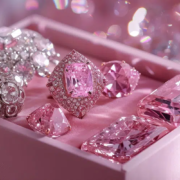
The Pink tourmaline stone is a semi-precious gem prized for its gentle beauty and ability to bring love and compassion into the wearer’s life. Discover its properties and uses in our complete guide to Pink tourmaline.
THE CHARACTERISTICS OF PINK TOURMALINE
- Chakra: Heart.
- Properties: Love, compassion, emotional healing, well-being.
- Astrology: Venus.
- Zodiac: Libra.
- Elements: Water, earth.
- Colors: Pink, red.
- Hardness: 7-7.5 on the Mohs scale.
- Chemical Formula: (Na,Li)Al1-3Al6(BO3)3Si6O18(OH)4.
- Associated god: /
TOURMALINE ROSE – ITS HISTORY
According to an ancient Egyptian legend, tourmalines are stones that traveled from the center of the Earth, crossing a rainbow to arrive where they are today. This legend explains the great variety and diversity of colors that characterize the tourmaline family. Each stone in this family is identified either by a color adjective (blue-green, green and Pink, etc.), by a name specific to its variety, or by a name referring to the place where it was found. Rubellite, a fine stone in this family, owes its name to its resemblance to ruby, one of the five gemstones. If you’d like to know more about tourmalines, you can refer to the page dedicated to the tourmaline stone.
TOURMALINE ROSE – ITS ORIGIN AND COMPOSITION
Rubellite is a variety of tourmaline that differs from Pink tourmaline in its composition, which is richer in manganese. This enables it to retain sparkling violet-red hues even under intense lighting, whereas Pink tourmaline becomes darker in these conditions. The finest rubellites have great clarity and sparkle due to their high copper content. They are available in hues ranging from Pink to red, often with a touch of violet. Ruby-colored rubellites are the most sought-after and expensive. Like ruby, rubellite has double refraction and is highly dichroic. Currently, the rarest, most sought-after and most expensive tourmalines are rubellite, paraiba tourmaline and chrome tourmaline.
.
The tourmaline family includes many varieties, each designated by a specific name or by the adjective of its color. Pink tourmaline is generally considered part of the rubellite variety, which range in color from Pink to red. Other Pink stones include dravite (light mahogany) and silerite (lilac-Pink to violet-blue). The term rubellite, for the most common Pink tourmaline, comes from the Latin “rubellus”, meaning reddish. Although Pink tourmaline is rarer and more expensive today due to growing demand, its color quality still allows it to replace Pink sapphire, which is more difficult to access. Pink tourmaline deposits are found mainly in Brazil, Madagascar, Tanzania, Namibia, Mozambique, Sri Lanka, Afghanistan, Niger, Elba, India, Burma, Italy, Angola, Australia and the USA. The finest varieties of Pink tourmaline are those found in Shimoyo, Mozambique.
ROSE TOURMALINE STONE – VERTIES AND PROPERTIES
Rubellite is a beneficial stone for relieving emotional wounds, particularly those originating in childhood. It helps to destroy destructive patterns through the heart chakra, enabling us to create new emotional patterns more suited to our evolution. Rubellite is also useful for tempering excessive emotions, understanding their causes and develoPing compassion for oneself and others. It is particularly recommended for calming relationships with the mother and maternal line.
Pink Tourmaline is a stone of unconditional love that can bring consolation and raise consciousness to better discern discordant thoughts. It calms thoughts about oneself and is therefore beneficial for boosting self-confidence and self-esteem. Pink Tourmaline also activates the heart chakra, strengthens cardiac and pulmonary capacities, calms the heart and soothes throat and pulse disorders. It can also help regenerate the skin.
This stone is ideally suited to children who are hyperactive or suffer from sleep disorders, thanks to its soothing, balancing energy. In addition, Rubellite is endowed with a maternal energy that is excellent for the heart chakra and creates feelings of peace and security. The softness of this stone contains the vibration of the Cosmic Mother and can help release energy blockages. Pink Tourmaline and Rubellite are complementary stones that can help dissolve anxiety and obsessive behavior.
TOURMALINE ROSE – HOW TO USE IT
There are various ways to use Pink Tourmaline to benefit from its soothing and healing virtues. Here are a few suggestions:
- Wear the stone: To enjoy its benefits throughout the day, you can wear Pink Tourmaline jewelry such as a necklace, bracelet or ring.
- Meditate with the stone: To help open the heart chakra and promote love and compassion, you can hold the stone in your hand during meditation.
- Place the stone in your environment: To create an atmosphere of peace and harmony in your bedroom or living room, you can place a Pink Tourmaline stone in your environment.
- Use the stone in energetic care: To relieve emotional tension, you can place the stone on the heart chakra or use it to perform energetic massages.
- List your intentions: To amplify the energy of your wishes, you can write your intentions on a Piece of paper and place it under the stone.
- Use the stone in combination with other stones: To create a powerful energetic synergy, you can combine Pink Tourmaline with other stones such as Rose Quartz, Citrine or Amethyst.
It’s important to regularly cleanse Pink Tourmaline to eliminate accumulated negative energies. You can purify it by placing it in salt water, smoking it with sage or recharging it in sunlight or moonlight.
ROSE TOURMALINE STONE – CLEAN AND RECHARGE
It’s important to regularly cleanse and recharge your Pink tourmaline stone to remove accumulated negative energies and restore its healing properties. Here are some common cleaning and recharging methods for your Pink tourmaline stone:
Cleaning:
- Water and salt: You can clean your stone by soaking it in salt water for several hours. Avoid this method if the stone has metallic inclusions.
- Fumigation: Using sage, or incense, pass the stone over the smoke to purify the stone’s energy.
- Earth: Burying the stone in the ground for a few days is also an effective method of cleansing negative energies.
Loading:
- Sunlight: Expose the Pink tourmaline stone to direct sunlight for a few hours to recharge.
- Moonlight: Place the stone in full moonlight overnight to recharge.
- Crystals: place the stone on a cluster of rock crystal or amethyst to recharge.
When working with Pink tourmaline stone, be sure to always clean and recharge it regularly so that it can offer you its best healing properties.
WHERE DOES THE NAME TOURMALINE ROSE COME FROM?
The name “tourmaline” comes from Sinhalese, a language spoken in Sri Lanka, where this stone had been mined for centuries. It is said that the Sinhalese called tourmaline “turamali”, meaning “stone of mixed colors”. Tourmaline is in fact a stone that can have several colors, such as green, blue, red and Pink, among others.
With regard to Pink tourmaline, the Pink color is due to the presence of manganese and lithium in the stone’s crystalline structure. It’s the combination of these two elements that gives tourmaline its soft, soothing Pink hue. Thus, the name “Pink tourmaline” refers to the stone’s color, which can vary from very pale Pink to intense Pink depending on the amount of manganese and lithium present.
WHICH CHAKRA DOES PINK TOURMALINE ACT ON?
Pink tourmaline is mainly associated with the heart chakra, which is the fourth chakra located in the center of the chest. This chakra is linked to love, compassion, inner peace and harmony. By working on the heart chakra, Pink tourmaline can help release emotional blockages, bring unconditional love and improve personal relationships.
WHICH ASTROLOGICAL SIGN IS ASSOCIATED WITH PINK TOURMALINE?
The astrological sign associated with Pink tourmaline is Libra. People born under this sign are often very sensitive to harmony and balance in their relationships and their lives in general. Pink tourmaline is a stone that can help Librans connect with their heart chakra, cultivate unconditional love and strengthen emotional and loving relationships.
ROSE TOURMALINE STONE SUMMARY
Pink tourmaline stone is a variety of tourmaline, a multi-colored semi-precious stone. Pink tourmaline is pale to intense Pink in color, sometimes with violet highlights. This stone is associated with the heart chakra and is considered a stone of love and compassion. It is also used in lithotherapy to promote emotional healing and relieve stress and anxiety. Pink tourmaline is often used in jewelry for its aesthetic and sPiritual properties.