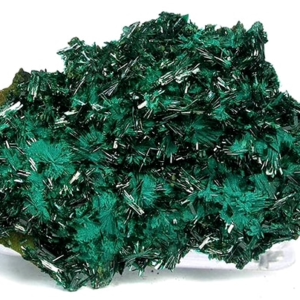
Augite – properties, virtues & benefits
Discover augite stone, a fascinating mineral with green and black hues, belonging to the pyroxene family. Found in magmatic and metamorphic rocks, it is distinguished by its crystalline structure and unique properties. Explore the mysteries of augite and its role in the study of geology.
AUGITE CHARACTERISTICS
- Chakra: Root.
- Properties: Protection, emotional balance.
- Astrology: Saturn.
- Zodiac: Capricorn.
- Elements: Earth.
- Colors: Green, black, brown.
- Hardness: 5-6 (Mohs scale).
- Chemical Formula: (Ca,Na)(Mg,Fe,Al,Ti)(Si,Al)2O6.
- Associated god: Hephaestus (Greek mythology).
AUGITE – HIS HISTORY
This rock has an ancient history dating back to antiquity and is known by the Latin name “augites”, derived from the Greek “augē” meaning “lustre” or “shining”. Abraham Gottlob Werner, a German mineralogist, first described it in 1792. Augite belongs to the pyroxene family and is composed mainly of calcium, magnesium, iron and aluminum silicate. It is often found in volcanic and plutonic rocks, as well as in meteorites. This rock has physical properties that are useful for a variety of applications, including construction, metallurgy and ceramics. It is also used as an ornamental stone and for jewelry creation due to its dark color.
AUGITE – ITS ORIGIN AND COMPOSITION
This mineral is widely distributed in the Earth’s crust and can be found in various rock types, such as eruptive rocks, moon rocks and meteorites. It is often associated with basic and ultrabasic magmatic rocks, as well as high-temperature metamorphic rocks.
Augite crystals vary in size and shape, ranging from several centimeters in length and width to smaller sizes. The weight of this stone depends on its size and density, which generally varies from 3.2 to 3.6 g/cm³. Consequently, the weight of a 1-carat (0.2 gram) Augite stone would be around 0.64 to 0.72 grams, while a 10-carat (2 gram) stone would weigh around 6.4 to 7.2 grams. However, the exact weight depends on the size and shape of the stone.
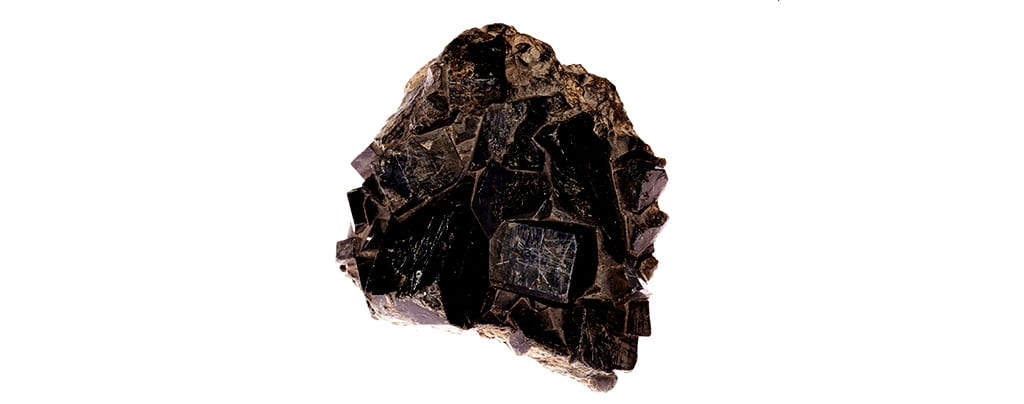
Augite belongs to the category of pyroxenes, which are characterized by their chain-like crystalline structure. It occurs as dark green to black prismatic crystals and is found in a variety of rock types, including basalts and gabbros. This stone is relatively dense and hard, with a hardness of 5.5 to 6 on the Mohs scale, and has interesting optical properties, such as strong double refraction and birefringence. Because of these properties, it is often used in gemology for the manufacture of jewelry and sculptures, as well as in geology for the study of the composition of igneous and metamorphic rocks.
Augite chemistry is complex and it can form a continuous series with other pyroxenes such as diopside and hedenbergite. Passage terms to aegyrin can also be formed by sodium assimilation. Alteration of augite to green hornblende is a common phenomenon. Augite crystals can reach up to 10 cm in length, and can present a variety of facies, from elongated to stocky, square to octagonal in cross-section. Single or multiple macles on {100} and more rarely on {001} are also known. Large crystals originate from basalts and volcanic tuffs, and have been found in various parts of the world, including Italy, Germany, Canada and Sweden. In France, the volcanoes of the Massif Central have also yielded fine specimens.
AUGITE – VERTUS ET PROPRIÉTÉS
Lithotherapy is a practice that uses stones to bring physical, mental and symbolic benefits by harnessing their strength and energy. The term “lithotherapy” is derived from the Greek words “lithos” (stone) and “theraPia” (cure), and is based on the principle that stones possess specific virtues that can be captured by their vibration. Each category of stone is considered to have distinct properties and is used for therapeutic purposes.
PSYCHOLOGICAL ASPECTS OF AUGITE
Augite is a black to brown stone known for its psychologically beneficial properties. It is considered a protective and supportive stone, which can help bring mental clarity and emotional stability. This stone is also reputed to relieve feelings of anxiety and stress, bringing a sense of calm and serenity. It is considered a stone of liberation that can help clear emotional blockages and encourage self-expression. In addition, it can boost self-confidence and the ability to make informed decisions by reducing doubts and uncertainties.
Augite is also known as a stone of reflection and introspection that can stimulate imagination and creativity. It can help balance emotions and bring a sense of inner peace. All in all, this stone is invaluable for those seeking to improve their psychological well-being by providing mental clarity, emotional stability and serenity, while encouraging self-expression and creativity.
PHYSICAL AUGITY
Augite is mainly composed of calcium, magnesium and iron silicate, giving it unique physical properties that are beneficial to health. This stone is known for its healing properties on muscle and joint pain, in addition to stimulating blood circulation and regulating the nervous system. It can relieve headaches, menstrual pain and stomach aches, while helPing to strengthen the immune system by stimulating the adrenal glands and white blood cell production. Athletes can also benefit from this stone, as it can improve their physical performance by increasing stamina and reducing muscle cramps.
To reap its benefits, we recommend carrying the stone with you or placing it in the room where you spend the most time. However, it’s important to clean the stone regularly by placing it in a bowl of salt water for a few hours, then drying it and storing it in a peaceful place. This ritual helps you to reconnect with the stone on a deeper sPiritual level and benefit from its healing properties. The stone can also be recharged by the moon or the sun. For deep purification, expose the stone to the sun for 1-2 hours. A whole night under moonlight is necessary to enjoy its regenerative benefits.

AUGITE STONE – CLEAN AND RECHARGE
To clean and recharge the augite stone, follow these simple steps:
- Cleaning:
- Place the augite stone under cold running water for a few minutes to eliminate accumulated negative energies. Avoid hot water, as it may damage the stone.
- If you prefer, you can also clean the stone with a slightly dampened soft cloth.
- Reloading:
- Expose the augite stone to natural sunlight or moonlight for several hours. Sunlight and moonlight will help recharge the stone’s energy.
- You can also place the augite stone on an amethyst geode or quartz cluster to recharge it.
- Purification:
- To enhance the stone’s purification, you can place it in a bowl or abalone shell with sage, palo santo wood or incense. Light the sage or incense and let the purifying smoke envelop the stone.
After these steps, your augite stone will be cleaned, recharged and ready to use again. Remember to repeat this process regularly to keep the stone’s energy at its optimum level.
WHERE DOES THE NAME AUGITE COME FROM?
The name “augite” comes from the ancient Greek “auge” (αὔγη) meaning “brightness” or “brilliance”. The name was chosen because of the vitreous luster and brilliant appearance of augite crystals. The stone was first described in 1794 by German mineralogist Abraham Gottlob Werner, who gave it the name in reference to its distinctive optical properties.
WHICH CHAKRA DOES AUGITE ACT ON?
Augite acts primarily on the root chakra, also known as Muladhara in Sanskrit. This chakra is located at the base of the sPine and is associated with stability, security and connection with the Earth. By working on this chakra, augite can help reinforce a sense of grounding and emotional balance, while providing protection from negative energies.
WHICH ASTROLOGICAL SIGN IS ASSOCIATED WITH AUGITE?
Augite is primarily associated with the astrological sign of Capricorn. Capricorn is an earth sign, ruled by the planet Saturn, and is generally associated with discipline, perseverance and stability. The augite stone, by strengthening the root chakra and bringing a sense of grounding, can be particularly beneficial for people born under this sign, helPing them connect to the Earth and maintain emotional balance.
AUGITE STONE SUMMARY
Augite is a semi-precious stone belonging to the pyroxene family, a group of silicate minerals. It has a monoclinic crystal structure and a color that generally varies from black to dark green, although some variants can show brown or even purple hues. This stone is mainly composed of calcium, magnesium and iron silicate, with other elements such as aluminum, chromium and titanium.
Augite forms mainly in basic and intermediate igneous rocks, such as basalts, gabbros and andesites. It is also found in metamorphic rocks and, more rarely, in meteorites. The main augite deposits are found in Africa, Asia, Europe and North America.
.
Because of its hardness and heat resistance, augite is used in a variety of industrial applications, notably as an abrasive and in the manufacture of refractory materials. It is also studied by geologists and mineralogists due to its presence in terrestrial and extraterrestrial rocks.
In lithotherapy, augite is associated with protective and vital energy-boosting properties. It is believed to help overcome difficulties, strengthen willpower and encourage perseverance. However, it’s important to note that these claims are not supported by scientific evidence and should be viewed with caution.