Black Tourmaline or Schorl: Properties, Uses and Virtues
Black Tourmaline or Schorl: A Mysterious Gem!
Black Tourmaline or Schorl, a form of tourmaline characterised by its intense black colour, possesses an aura of mystery and attraction. Embark on a journey to immerse yourself in the geological processes shaping the Schorl, admire the natural splendour of its raw crystals, discover their worldwide occurrences and appreciate their significance throughout history.
Unveil the metaphysical properties and diverse variations of black tourmaline, while learning about its robustness and maintenance requirements.
Navigate the complex landscape of enhancements and synthetic alternatives to protect the authenticity of your Schorl gem.

Tourmaline Noire Schorl: Table of contents
- Geological Formation of Black Tourmaline or Schorl
- Tourmaline Noire Brut ou Schorl Brut – Beauté à l’État Brut Révélée
- Sources – The Worldwide Scope of Black Tourmaline or Schorl
- Historical Significance of Black Tourmaline or Schorl – Through the Ages
- Metaphysical properties of Black Tourmaline or Schorl – Illuminating energies
- Varieties of Black Tourmaline or Schorl
- Colours of Black Tourmaline or Schorl
- Durability and Wearability of Black Tourmaline or Schorl
- Enhancing Black Tourmaline or Schorl – Preserving Natural Beauty
- Synthetic Black Tourmaline or Synthetic Schorl – La Nature en Laboratoire
- Imitations of Black Tourmaline or Schorl – Discerning the Genuine
- Caring for Black Tourmaline or Schorl – Preserving Natural Beauty
Geological Formation of Black Tourmaline or Schorl
Black Tourmaline or Schorl emerges from the depths of the Earth’s crust through complex geological transformations within metamorphic environments. Often found in pegmatites, hydrothermal veins or granites, the interaction of heat, pressure and specific mineral interactions gives rise to the captivating deep black hue of Schorl.
Rough Black Tourmaline or Rough Schorl – Raw Beauty Revealed
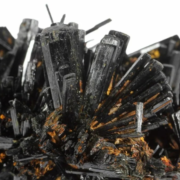
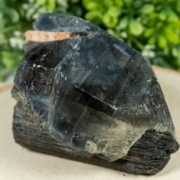
The appeal of raw black tourmaline crystals lies in their raw, unaltered beauty. Characterised by their prismatic shapes with striations, these crystals captivate gem lovers and geologists alike. The deep black hue of Schorl, often with a glassy sheen, adds to the bewitching charm of these rough specimens.
Sources – The Worldwide Scope of Black Tourmaline or Schorl
Black Tourmaline is found in various regions across the globe, including India, Sri Lanka, Myanmar and Madagascar. Each location contributes distinct variations to the Schorl’s dark appeal, making it a stone of fascination for collectors and spiritual seekers the world over.
Historical Significance of Black Tourmaline or Schorl – Through the Ages
The historical significance of Schorl, a deep black variety of tourmaline, is rooted in its use as both ornamental and mystical throughout different cultures and periods.
In ancient times, black tourmaline was often used for its aesthetic appeal. Archaeological findings suggest that ancient civilisations, including the Egyptians, Greeks and Romans, used Schorl to create decorative objects, amulets and jewellery.
Its deep black hue was thought to have protective and magical properties, making it a popular choice for amulets and talismans. These historical artefacts highlight the widespread recognition of the Schorl’s visual appeal and symbolic significance.
One notable example is the use of Schorl in ancient Chinese culture. Historical records and archaeological digs have revealed that black tourmaline or Schorl was highly prized for its ability to protect against negative energies and enhance spiritual well-being.
It was often carved into amulets, beads and figurines, serving as a form of personal protection and spiritual connection. These discoveries underline the role of the Schorl not only as a decorative gemstone, but also as a symbol of spiritual significance.
In addition, historical accounts from different regions, such as medieval Europe and various ancient civilisations, offer insights into the cultural meanings attributed to the Schorl.
Many of these accounts mention the use of Schorl in amulets and protective jewellery, underlining its widespread popularity and importance across diverse societies.
Today, black tourmaline continues to play an important role in the world of gemstones, attracting a wide range of individuals, from collectors and jewellery enthusiasts to those seeking its metaphysical properties. Its deep black colour and unique properties contribute to its enduring popularity and relevance in various aspects of modern society.
Metaphysical properties of Black Tourmaline or Schorl – Illuminating energies
Schorl is renowned for its metaphysical properties, often associated with grounding, protection and energy purification. It is believed to create a protective shield against negative energies and promote emotional stability, making it a sought-after tool for spiritual practices and holistic healing.
Varieties of Black Tourmaline or Schorl
Black Tourmaline has no varieties to speak of. However, it is part of the Tourmaline species along with Elbaite and Dravite.
Colours of Black Tourmaline or Schorl
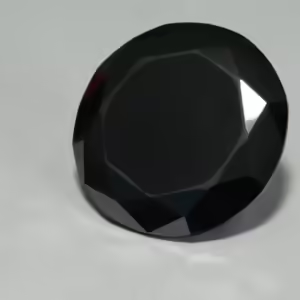
Schorl’s unique appeal lies in its deep black hue, which exudes a sense of mystery and strength. This intense black hue is characteristic of black tourmaline, making it a distinctive and highly sought-after gemstone. Its transparency can vary from semi-translucent to opaque.
Durability and Wearability of Black Tourmaline or Schorl
Black Tourmaline has exceptional durability, with a hardness of 7 to 7.5 on the Mohs scale, ensuring its resilience in a variety of jewellery settings. Its enduring beauty and robustness make it a precious stone that can stand the test of time.
Enhancing Black Tourmaline or Schorl – Preserving Natural Beauty
Black Tourmaline generally undergoes minimal enhancements, as its natural beauty is greatly valued and its presence abundant.
However, light treatments such as polishing can be applied to improve its shine and overall appearance. It is important to prioritise natural integrity when considering improvements.
Synthetic Black Tourmaline or Synthetic Schorl – La Nature en Laboratoire
Although possible, it is highly unlikely that you will come across synthetic Schorl due to its affordability and abundance, as the process is expensive and reserved for rare and precious stones.
Imitations of Black Tourmaline or Schorl – Discerning the Genuine
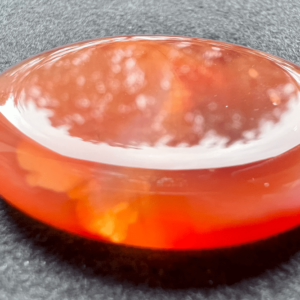
Given the popularity of black tourmaline, it is crucial to be vigilant against imitations or falsely represented stones. Other dark materials such as glass, plastic, resin or dyed stones could be mistaken for Schorl, but reputable sellers and gemological expertise can guarantee the authenticity of your Black Tourmaline gem.
Caring for Black Tourmaline or Schorl – Preserving Natural Beauty
Caring for black tourmaline jewellery involves gentle cleaning with a soft brush and mild soapy water.
Avoid exposing it to aggressive chemicals and extreme temperatures, and store it separately to avoid scratches.
By following these care guidelines, you can preserve the enchanting appeal of your Schorl gem for generations to come.