Sodalite: Properties, Use and Virtues
Sodalite: Properties, Use and Virtues
Sodalite, a stone with bewitching hues, has charmed gem lovers with its natural beauty. Let’s delve into the mysteries of its geological formation, explore its historical significance and delve into its fascinating mystical properties.

Sodalite: Table of contents
- Sodalite geological formation
- Rough Sodalite – Raw Beauty Revealed
- Sources – The Global Scope of Sodalite
- Historical Significance of Sodalite – Through the Ages
- Metaphysical properties of Sodalite – Illuminating energies
- Varieties of Sodalite
- Sodalite colors
- Durability and portability of Sodalite
- Sodalite Enhancements – Preserving Natural Beauty
- Synthetic Sodalite – Nature in the Laboratory
- Imitations of Sodalite – Discerning the Authentic
- Sodalite care – Preserving natural beauty
Sodalite geological formation
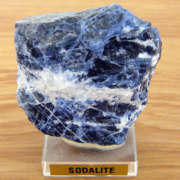
Sodalite, a mineral belonging to the tectosilicate group, is formed under specific geological conditions. Mainly composed of sodium, aluminum, silicon and chlorine, Sodalite often emerges in silica-rich rocks such as granite. Its appearance is the result of metamorphic and igneous processes, creating crystals in shades of blue, often studded with white veins of calcite.
Sodalite may be present in Lapis lazuli.
Rough Sodalite – Raw Beauty Revealed
Sodalite’s true splendor is often revealed in its raw, uncut state. Its deep shades of blue, sometimes embellished with white, create a natural visual spectacle. As a polycrystalline material, Sodalite adopts no specific crystalline form, offering an infinite variety of captivating patterns.
Sources – The Global Scope of Sodalite
Sodalite deposits are found around the world, with major sites in Brazil, Canada, Namibia and Russia. Each region contributes to the stone’s color palette and characteristics, making Sodalite a gem of global importance.
Historical Significance of Sodalite – Through the Ages
Sodalite has often shared history with lapis lazuli, as it was often difficult at the time to distinguish between the two, especially as sodalite is often one of the components of lapis lazuli. This confusion is understandable given the limited knowledge of mineralogy in ancient times and the reliance on visual similarities.
So let’s take a closer look at the perceived history of sodalite.
Ancient Egypt :
Sodalite entered history with its use by the ancient Egyptians. Considered a sacred stone, it was often cut to create amulets and ornamental objects. The Egyptians believed in its protective powers, placing it alongside the deceased to accompany them into the afterlife.
Ancient Greece:
Ancient Greece also welcomed Sodalite into its gemstone pantheon. Associated with the goddess Athena like many blue and violet stones, Sodalite was considered a stone of wisdom and intelligence. Greek thinkers wore it as a talisman on their intellectual quests, believing it stimulated deep thought.
Victorian era :
The 19th century saw a revival of the gemstone craze, and Sodalite was no exception. With its soothing shades of blue, it was prized in jewelry design, symbolizing inner peace and harmony.
Ère Contemporaine :
Today, Sodalite continues to captivate gem lovers and lithotherapy practitioners alike. It is said to have calming properties, helping to balance emotions and promote mental clarity. Some consider it to be an authentic communication stone, stimulating self-expression and strengthening interpersonal bonds.
Throughout the ages, Sodalite has retained its reputation as a stone of serenity and wisdom. Its historical journey reveals a stone that, although discreet, has left a lasting imprint on the precious gem landscape, recalling its essential role in the history of mankind.
Metaphysical properties of Sodalite – Illuminating energies
Sodalite is revered for its metaphysical properties, which promote mental clarity, concentration and inner peace. It is thought to stimulate intelligence, encourage authentic communication and provide calming energy. Some consider it a stone of meditation, helping to open doors to spiritual understanding.
Varieties of Sodalite
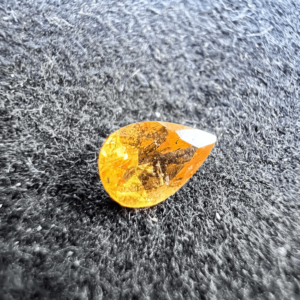
Hackmanite is a variety of sodalite. Varieties from Canada and Greenland can vary from pink to purple, then fade in the sun. Stones from Myanmar and Afghanistan, on the other hand, are greyish, turning pink and purple in the sunlight. This optical effect is called tenebrescence.
Sodalite colors
Sodalite’s color nuances are a soothing symphony of blues and whites, creating a captivating visual aesthetic. Sodalite’s chromatic palette generally ranges from light to dark blue, with intermediate shades. These shades of blue can be intensified by white veins or inclusions, usually composed of calcite.
Durability and portability ofSodalite
With a hardness of 5.5 to 6 on the Mohs scale, Sodalite is relatively resistant, although it may need care to avoid scratches and damage. Nevertheless, it remains a popular choice for jewelry and decorative objects.
Sodalite Enhancements – Preserving Natural Beauty
Sodalite, prized for its haunting blue color and historical significance, is generally appreciated in its natural state, untreated and unenhanced.
It can, however, be subjected to some of the same processing families as Lapis Lazuli, namely:
Waxing or oiling: From time to time, sodalite can be treated with wax or oil to enhance its shine and softness. This treatment can help fill slight surface imperfections and improve the gem’s overall appearance. However, waxing or oiling is considered a temporary improvement, and the effects may fade over time.
Stabilization: Some sodalite specimens, particularly those of lower quality or softer structure, may undergo stabilization to improve their durability. Stabilization involves impregnating the gemstone with a transparent resin or other substances to strengthen it and prevent damage. This treatment can also improve the saturation of stone colors.
Dyeing: The dyeing of sodalite is observed on the market. Dyeing involves the use of artificial coloring agents to modify or enhance the color of the gemstone. Sodalite shade can have more intense or artificial blue hues, and it is essential that sellers disclose any treatment to maintain transparency and ensure informed buying decisions.
Synthetic Sodalite – Nature in the Laboratory
Unlike some gemstones, synthetic Sodalite is not commercially available. However, imitation versions of Sodalite are often created using composite materials and resins to reproduce the distinctive appearance of natural stone.
Imitation versions of Sodalite aim to faithfully reproduce its blue shades and white calcite inclusions. These artificial reproductions can be used to make jewelry and decorative objects, offering a more affordable alternative to natural Sodalite.
Imitations of Sodalite – Discerning the Authentic
Tinted sodalite, sodalite reconstituted from pieces, or even glass replicas can be presented as genuine sodalite. Buyers should be wary of these imitations and seek transparent information from sellers.
It is unlikely, but possible, to find low-quality lapis lazuli sold as sodalite.
Sodalite care – Preserving natural beauty
Taking care of Sodalite jewelry is crucial to preserving its brilliance. Avoid exposure to aggressive chemicals, clean gently with a soft brush and soapy water, and avoid contact with harder materials to avoid scratching.
Sodalite, with its soothing shades of blue and rich history, remains a beloved gemstone, linking past and present through its timeless beauty.