International Crystal Industry Alliance
  • Home
  • About Us
    • Who We Are
    • Global Governance
    • Headquarters & Global Labs
    • Team & Leadership
  • Standards
    • CCGS
    • RCGS
    • MSGS
    • Treatment Disclosure Guide
    • Gemstone Encyclopedia
  • Verification & Traceability
    • IGSTS 3D Biometric System
    • Certificate Search
    • Global Directory & Public Registry
  • Education & Research
    • ICIA Crystal and Gemstone Academy
    • IMGRI
  • Membership & Compliance
    • Certification Committee
    • Professional Credentials
    • OAISS
    • Expedited Re-Testing
    • ADRPS
  • Media Center
    • Press Releases
    • Whitepapers & Downloads
    • Industry Blog & Trends
  • Click to open the search input field Click to open the search input field Search
  • Menu Menu

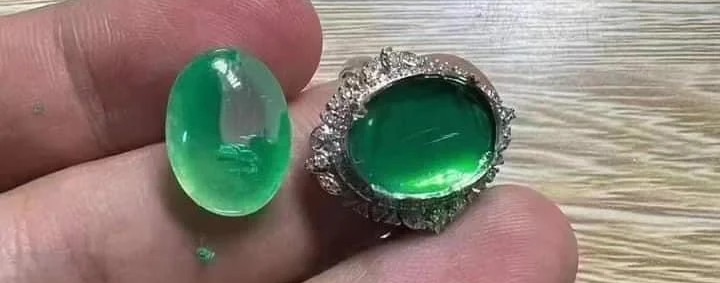
What are the main methods of making fake jade?

January 2, 2025/0 Comments/in Blog/by ICIA Media Center

Artificial Treatment

  • Production of B-jadeite:
    • Acid washing: Select low-grade jadeite raw materials with loose texture and many variegated colors, and soak them in a concentrated acid bleaching solution for several hours to months to remove impurities and perform yellowing removal treatment, so that the background color is pure and the purpose of no brownish-yellow or grayish-black variegated colors is achieved.
    • Gluing: After the acid washing and bleaching process destroys the jadeite structure, colorless epoxy resin is injected under high pressure and vacuum to reinforce the jadeite structure and also play the role of filling gaps, brightening, and polishing. In addition, there are also cases of backfilling lead glass, oil, wax and other substances.
  • Production of B+C-jadeite: Dyeing agents are added during the acid washing and gluing steps in the production process of B-jadeite, and they are processed together. It is also called bleached, glued and dyed jade.
  • Production of C-jadeite: Usually, the heating method is used. The white jadeite is heated to a certain temperature and then placed in a dyeing agent such as ammonium dichromate solution to dye the white jadeite green or other colors, and green or purple are common.

Imitation

  • Glass imitation jadeite: The glass is dyed green and artificial textures are added to imitate jadeite. Because the refractive index of glass is relatively high, these imitations usually have bright luster and transparency, but glass jadeite has no real abrasion resistance and corrosion resistance and can be identified by a simple scratch test.
  • Plastic imitation jadeite: It is generally made of resin or polymer and is formed by dyeing and shaping. Resin jadeite usually has lower hardness and weight, and the color is often bright, but the texture and luster are not as good as real jadeite. By observing the surface texture and using a simple hardness test, plastic jadeite can be easily distinguished.
  • Crystal imitation jadeite: It is made by dyeing and treating natural crystals and is very similar to real jadeite in appearance, but their physical and chemical properties are completely different. Crystal jadeite is usually heavier and has different refractive index and corrosion resistance from jadeite. By checking the gloss and using a simple density test, crystal jadeite can be identified.

Artificial Synthesis

  • Solid-phase sintering method: The raw materials of the synthetic jadeite precursor are mixed and sintered at high temperature. It is easy to cause incomplete conversion of the jadeite itself, resulting in black or dark cores. The synthesized jadeite is pea green or purple-pink, with a blocky structure, a certain sense of granularity, large and dense pores, and a jagged fracture.
  • Sol-gel method: A stable transparent sol system is formed in the solution through a series of chemical reactions and then a gel is formed. After drying, grinding and sintering, the precursor material of jadeite can be obtained. This method can improve the uniformity of jadeite components and the sintering temperature is low, but its raw materials may be harmful to the human body and the preparation time is very long. The synthesized jadeite is dark green, completely melted into a blocky structure, with a large number of pores inside and a conchoidal fracture.
  • Chemical synthesis method: First, a variety of required raw materials are chemically reacted to obtain a single jadeite precursor, and then the jadeite precursor is sintered at high temperature under high-pressure environment to obtain jadeite with high crystallinity. Its preparation process is relatively simple, which can reduce energy consumption and improve the crystallinity and transparency of synthetic jadeite.
Tags: making fake jade
Share this entry
  • Facebook Facebook Share on Facebook
  • X-twitter X-twitter Share on X
  • Whatsapp Whatsapp Share on WhatsApp
  • Pinterest Pinterest Share on Pinterest
  • Linkedin Linkedin Share on LinkedIn
https://www.icia.uk/wp-content/uploads/2025/01/d4hk9b1i-png.avif 283 720 ICIA Media Center https://www.icia.uk/wp-content/uploads/2026/11/icia-logo-600-250.avif ICIA Media Center2025-01-02 01:31:522025-01-03 09:14:48What are the main methods of making fake jade?

Search Search
  • Global Gemstone & Fine Jewelry Market: Key News & Strategic Trend Outlook
  • ICIA Officially Prohibits Subjective “3A/5A/7A” Marketing Labels, Mandating 100-Point CCGS Empirical Standards Worldwide
  • The Timeless Appeal of Natural Jewellery
  • China’s Gem and Jewellery Industry: A Practical Overview
  • Geopolitical Impact Assessment on Mineral Assets
  • Latest Developments in Hong Kong’s Jewellery and Diamond Industry
  • 2026 Crystal Trends: What’s Rising, What’s Shifting, What’s Worth Your Money
  • Report on the Current Status and Market Outlook of the Crystal Industry (2026–2032)
  • Crystal Market Size | 2026–2035
  • Crystal & Gemstone Market Development Report — 2026
  • 2026 Jewelry Trends: The Big Shift Away from “Quiet”
  • Super hard “super diamond” developed in China, 40% stronger than natural diamond

Subscribe to our Blog

ICIA - International Crystal Industry Alliance

An independent, non-governmental international metrological and regulatory alliance establishing empirical crystal grading codices (CCGS, RCGS, MSGS) and sovereign ledger verification under English Common Law.

ICIA General Secretariat Hubs
London (United Kingdom) • Geneva (Switzerland) • Hong Kong
Governance & Organs
  • ICIA General Meeting
  • Board of Governors
  • ICIA General Secretariat
  • Institute of Gemstone & Mineral Research (IGMRI)
  • ICIA Crystal and Gemstone Academy (ICGA)
  • Ethics and Sustainability Committee (ESC)
  • OAISS Supervision Service
Charter & Compliance
  • ICIA Charter & Bylaws
  • ICIA Arbitration & Appraisal Committee (IAAC)
  • ADRPS Regulations
  • GDPR & Data Protection
  • Global Privacy Policy
  • Copyright & Legal Notice
  • Contact General Secretariat
Trust & Metrology
• OAISS SUPERVISED
• MICRO-FTIR 3054 cm-1
• IGSTS • cert.icia.uk
• CCGS (4C+1I) • RCGS (5R) • MSGS (4M)
Verify Ledger →
ICIA Sovereign Seal

ICIA SOVEREIGN SEAL
EST. 2015 • LONDON & GENEVA

OAISS SUPERVISED
SUPERVISION SERVICE

IGMRI METROLOGY
MICRO-FTIR 3054 cm-1

CODEX STANDARDS
CCGS (4C+1I) • RCGS (5R) • MSGS (4M)

IGSTS LEDGER
SHA-256 • CERT.ICIA.UK

Statutory Legal Disclaimer: ICIA (International Crystal Industry Alliance) is an independent, non-governmental regulatory alliance. Certifications issued under the authority of the ICIA Certification Council pursuant to CCGS (4C+1I), RCGS (5R), and MSGS (4M) empirical frameworks verify physical specimen properties at the time of laboratory inspection and do not constitute a direct commercial guarantee of secondary market liquidity.
© 2015–2026 International Crystal Industry Alliance (ICIA™). All Rights Reserved.
Administered by ICIA General Secretariat • Statutory Seat: London, UK
Link to: The 2025 Annual Meeting of the ICIA was successfully held Link to: The 2025 Annual Meeting of the ICIA was successfully held The 2025 Annual Meeting of the ICIA was successfully held Link to: Are artificial diamonds worth investing in? Link to: Are artificial diamonds worth investing in? Are artificial diamonds worth investing in?
Scroll to top Scroll to top Scroll to top