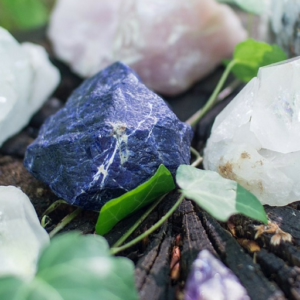
Stibnite
Stibnite is a fascinating mineral, known for its striking appearance and its important use as a source of antimony (Sb). Here’s a detailed overview of stibnite:
1. General Information
- Chemical Formula: Sb₂S₃
- Stibnite is primarily composed of antimony (Sb) and sulfur (S).
- Crystal System: Orthorhombic
- Color: Typically, stibnite is silvery-gray to steel-gray, with a metallic luster. It may have a slight blueish or greenish tinge under certain lighting conditions.
- Hardness: 2–2.5 on the Mohs scale, making it quite soft.
- Specific Gravity: 4.6–4.7, which is relatively dense for a mineral.
2. Appearance and Formation
- Crystal Habit: Stibnite forms in prismatic crystals, often in needle-like or columnar shapes. The crystals can grow up to several centimeters in length and may sometimes appear as radial, fibrous, or sheaf-like aggregates.
- Luster: Stibnite has a metallic luster, giving it a shiny, reflective surface.
- Transparency: It is an opaque mineral, meaning light does not pass through it.
Stibnite crystals often form in hydrothermal veins where hot, sulfur-rich fluids interact with antimony-bearing rocks. This typically occurs in volcanic or geothermal environments.
3. Occurrence and Locations
- Stibnite is found in hydrothermal deposits, particularly in sulfide-rich veins and hot spring environments.
- Notable Occurrences:
- China: One of the largest producers of stibnite and antimony, with extensive deposits.
- Bolivia: Known for its stibnite-rich veins.
- United States: Occurrences in Nevada, Alaska, and California.
- Other countries: Stibnite can also be found in Russia, Mexico, and parts of Europe.
4. Uses of Stibnite
- Antimony Ore: Stibnite is the primary ore of antimony. Antimony is used in a variety of applications, including:
- Flame retardants: In materials like plastics, textiles, and paints.
- Alloys: Antimony is added to lead to improve its strength and durability in applications like batteries and soldering.
- Semiconductors: Antimony compounds are used in the manufacture of semiconductor devices.
- Pharmaceuticals: Some antimony compounds are used in medicine, particularly as treatments for parasitic diseases.
- Crystal Collecting: Due to its distinctive metallic luster and intricate crystal formations, stibnite is also collected as a specimen by mineral collectors.
5. Chemical Properties and Reactions
- Sulfidation: Stibnite is a sulfide mineral, which means it contains sulfur. When exposed to oxygen or acidic conditions, it may oxidize and form other compounds, such as antimony oxides.
- Reactivity: It is not reactive in a typical way with acids, but can react under certain conditions to release sulfur dioxide (SO₂) gas.
6. Industrial Significance
- Mining: Stibnite is mined primarily for its antimony content. It has been used throughout history for various industrial applications, especially in the production of fireproof materials, lead-acid batteries, and alloys.
- Environmental Concerns: The mining of stibnite for antimony can lead to environmental contamination, particularly through the release of toxic antimony compounds. The element can also be hazardous to human health in large quantities, so proper precautions are necessary during its handling and extraction.
7. Healing and Metaphysical Properties
In metaphysical and crystal healing circles, stibnite is believed to have the following properties (though these claims are not scientifically proven):
- Transformation: Stibnite is thought to promote personal transformation, helping individuals release old, limiting beliefs and embrace new opportunities.
- Cleansing: Some believe it helps clear negative energy and encourages spiritual purification.
- Focus: Stibnite is said to support mental clarity and focus, making it useful for people needing to stay concentrated or work through difficult mental tasks.
However, stibnite is toxic when inhaled or ingested, and it should not be used for healing purposes without caution, especially if it’s in its natural form, as it may contain toxic antimony.
8. Care and Maintenance
Stibnite is a soft mineral with a hardness of 2–2.5, making it quite fragile and prone to scratching or breaking. To care for stibnite:
- Avoid handling frequently or exposing it to rough surfaces that could scratch it.
- Store stibnite specimens in a soft-lined box or display case to protect them from damage.
- Clean gently using a soft brush or cloth, and avoid using harsh chemicals or cleaning solutions that could damage its metallic luster.
9. Environmental and Safety Concerns
Because antimony is toxic and can pose environmental risks, it is important to handle stibnite with care. When mining or processing stibnite:
- Proper disposal of waste materials containing antimony compounds is necessary to prevent soil and water contamination.
- Wear protective gear such as gloves and masks to avoid inhaling dust or particles that could be harmful.
Summary
Stibnite is a sulfide mineral with a striking metallic luster and needle-like crystals, primarily composed of antimony and sulfur. It is the main source of antimony, used in various industrial applications, especially flame retardants, alloys, and semiconductors. However, due to its toxicity, it should be handled with care. Stibnite also has a place in mineral collections, prized for its unique crystal forms. When working with stibnite, it is important to take appropriate safety precautions due to the potential hazards associated with antimony.