Gemstones exhibit brilliant colors due to a combination of their chemical composition, crystal structure, and interactions with light. Here are the primary factors contributing to their vivid hues:
1. Chemical Composition
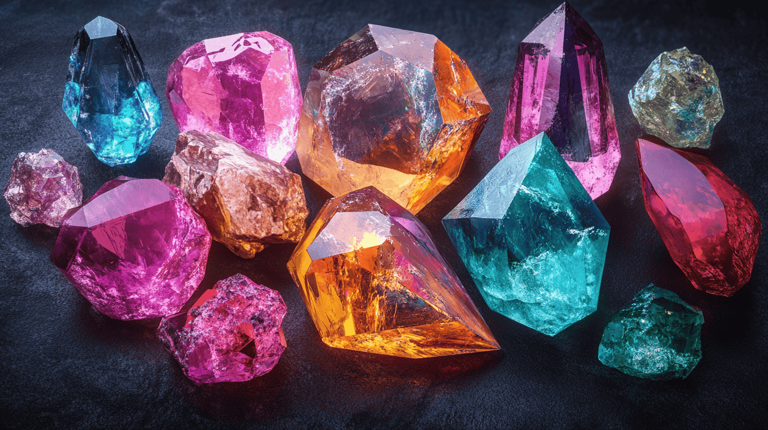
- Trace Elements: Impurities or trace elements in a gemstone’s structure are key to its color. For example:
- Chromium creates the green of emeralds and the red of rubies.
- Iron gives blue-green tones to aquamarine and yellow to citrine.
- Titanium and iron together create the blue in sapphires.
- Base Mineral: The base chemical structure also determines the potential colors a gemstone can exhibit. For instance, beryl can be green (emerald) or blue (aquamarine) depending on the trace elements.
2. Crystal Structure
- The arrangement of atoms in a gemstone affects how light interacts with the stone, influencing color.
- Some gemstones exhibit pleochroism, where they show different colors when viewed from different angles due to the way their crystal structure splits light.
3. Interaction with Light
- Absorption of Light (Color Centers): Gemstones absorb certain wavelengths of light, and the colors we see are the wavelengths that are transmitted or reflected. For example:
- Rubies absorb green and blue light, allowing red light to dominate.
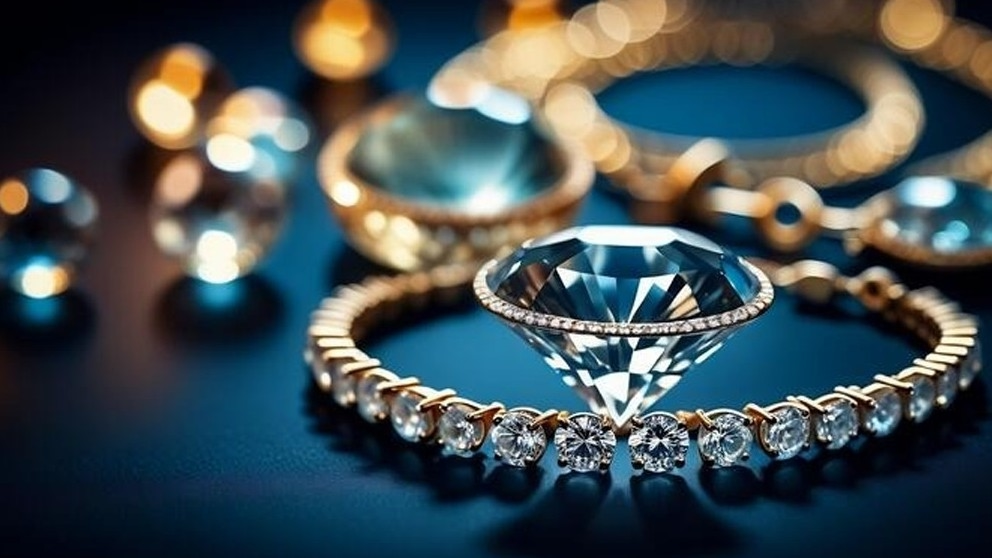
- Dispersion (Fire): The gemstone’s ability to split white light into its spectral colors, as seen in diamonds, enhances brilliance.
- Interference and Diffraction: In some stones, like opals, microscopic structures diffract light into a play of colors.
4. Phenomena
- Fluorescence: Some gemstones, such as diamonds or rubies, glow under UV light due to their response to specific wavelengths.
- Chatoyancy: “Cat’s eye” effect seen in certain stones due to parallel fibrous inclusions.
- Asterism: Star-like reflections in stones like star sapphires, caused by aligned inclusions or structural defects.
5. Enhancements and Treatments
- Gemstones are sometimes treated (e.g., heat treatment, irradiation) to intensify their colors or remove undesirable tones, enhancing their brilliance.
Together, these factors give gemstones their stunning range of vibrant and captivating colors.