Watermelon Tourmaline
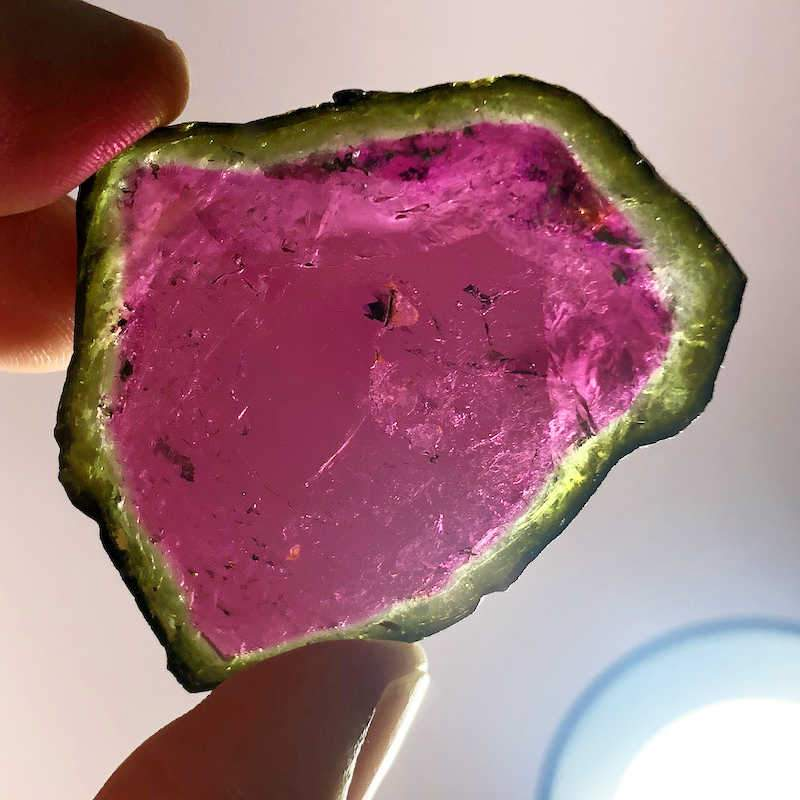
Watermelon tourmaline is a strikingly beautiful variety of the mineral tourmaline, renowned for its distinctive color gradient that resembles a slice of watermelon. This gemstone is highly prized for its unique appearance, which combines vibrant pink, green, and sometimes white hues in a single crystal.

Contents
- Formation and Composition
- Mineralogical Properties:
- Color Zoning
- Sources of Watermelon Tourmaline
- Cutting and Faceting
- Healing and Metaphysical Properties
- Uses in Jewelry
- Care and Maintenance
- Value and Rarity
- Imitations and Treatments
- Conclusion
Formation and Composition
Watermelon tourmaline is a part of the larger tourmaline family, a complex group of boron silicate minerals that come in a wide range of colors. It forms in pegmatites—coarse-grained igneous rocks that are often rich in rare elements. The characteristic watermelon appearance is due to the concentration of different elements during crystal formation.
Tourmaline is categorized as a cyclosilicate, which means its crystal structure is arranged in ring-like formations of silicate tetrahedra. These tetrahedra are interconnected by various other elements, such as lithium, aluminum, iron, magnesium, sodium, and calcium, among others. The presence of different trace elements causes tourmaline’s diverse colorations.
For watermelon tourmaline, the core of the crystal is typically pink or red due to manganese impurities, while the outer layer is green because of chromium or vanadium. The transition from pink to green mimics the appearance of a watermelon slice, complete with “rind” and “flesh.”

Mineralogical Properties:
- Chemical Formula: (Na,Ca)(Li,Mg,Al,Fe)₃Al₆(BO₃)₃Si₆O₁₈(OH,F)₄
- Crystal System: Hexagonal (Trigonal)
- Mohs Hardness: 7–7.5
- Density: 3.06 g/cm³
- Luster: Vitreous
- Cleavage: None, with conchoidal fracture
Color Zoning

The unique feature of watermelon tourmaline is its vivid color zoning, where the crystal exhibits different colors from the center to the outer edges. The inner section is usually pink or red, while the outer portion is green. Occasionally, a white or colorless zone is observed between the pink and green, representing a transition from one elemental composition to another during the crystal’s growth.
This zoning is often caused by changes in the environment during the stone’s formation. The pink coloration is linked to manganese-rich conditions, while the green layer forms later, when the environment becomes richer in chromium or vanadium. These two phases represent a shift in the chemical conditions of the crystal’s growth.
Sources of Watermelon Tourmaline

Watermelon tourmaline is found in several parts of the world, with Brazil being the most notable source. Other significant locations include Afghanistan, Madagascar, Nigeria, and the United States, particularly in California and Maine.
Brazil, especially the state of Minas Gerais, is renowned for producing high-quality watermelon tourmaline. The pegmatite mines in this region yield a wide variety of tourmalines, including some of the most vividly colored watermelon specimens.
Cutting and Faceting

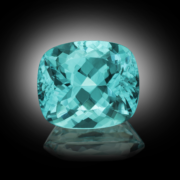
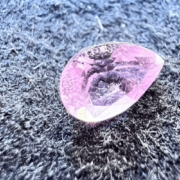
Watermelon tourmaline is most often cut in slices to showcase its stunning color zones. Lapidaries take great care in selecting the best angles and cuts to emphasize the natural gradient from pink to green. The most prized stones exhibit a sharp contrast between the colors with minimal blending. However, faceting the stone to preserve this balance can be challenging, as inclusions and natural fractures are common in tourmaline crystals.
In its raw form, watermelon tourmaline crystals are often long and columnar, making them ideal for cutting into slices or cabochons. Slices of watermelon tourmaline are highly sought after for their ability to display the entire color spectrum within a single cut.
Healing and Metaphysical Properties
Metaphysical and healing properties associated with watermelon tourmaline, like many gemstones, are not backed by scientific evidence. These beliefs are rooted in alternative wellness practices and spiritual traditions, which vary widely across cultures. Scientifically, tourmaline’s value comes from its unique mineral composition, beautiful coloration, and rarity, but any claims of emotional or physical healing should be considered more symbolic or psychological than based on scientific research.

Commonly Believed Benefits:
- Emotional Healing: Watermelon tourmaline is believed to help release emotional stress, soothe the heart, and encourage a sense of calmness and peace. It’s often recommended for people dealing with anxiety, heartbreak, or emotional turbulence.
- Balance and Harmony: The stone is thought to balance masculine and feminine energies, promoting harmony within oneself and in relationships.
- Creativity and Inspiration: Some wear watermelon tourmaline to stimulate creativity and out-of-the-box thinking. Its vibrant colors are thought to inspire joy, vitality, and a positive outlook on life.
- Spiritual Growth: Watermelon tourmaline is believed to foster a deep sense of spiritual growth by aligning the heart chakra, facilitating emotional release, and promoting self-awareness.
While these metaphysical properties are widely discussed in crystal healing communities, they are not scientifically proven and should be viewed as part of alternative wellness practices.
Uses in Jewelry

Watermelon tourmaline’s vivid colors make it a popular choice for jewelry, especially in rings, necklaces, earrings, and pendants. Sliced tourmaline, showcasing its natural pink and green color zones, is particularly fashionable, offering a visually stunning piece that stands out. Faceted watermelon tourmaline is less common but equally desirable, often used in more intricate jewelry designs.
Due to its relatively high hardness (7–7.5 on the Mohs scale), watermelon tourmaline is durable enough for everyday wear, although care should still be taken to protect it from scratches and impacts. The stone’s value is determined by the intensity and clarity of the colors, with stones that display vibrant, well-defined pink and green zones fetching the highest prices.
Care and Maintenance

Tourmaline, including the watermelon variety, requires gentle care to maintain its beauty. Although it has a decent hardness, tourmaline can still fracture if dropped or hit. Ultrasonic cleaners and steamers should be avoided, as they can cause damage to the crystal structure, especially in stones with inclusions.
To clean watermelon tourmaline, it is best to use warm, soapy water and a soft brush. Rinse the stone thoroughly after cleaning to remove any soap residue. It’s also recommended to store tourmaline separately from other gemstones to prevent scratches.
Value and Rarity

Watermelon tourmaline is considered more valuable than many other types of tourmaline due to its unique coloration and rarity. The price of watermelon tourmaline can vary significantly based on the quality of the color zoning, clarity, and size. Stones with vibrant, well-defined color transitions are more valuable than those with faint or poorly defined zones.
The rarity of large, high-quality watermelon tourmaline makes it a sought-after stone in both the gemstone market and the metaphysical community. As a result, prices can range from a few hundred to several thousand dollars per carat, depending on the stone’s characteristics.
Imitations and Treatments

As with many gemstones, watermelon tourmaline can be imitated or enhanced through treatments. Some stones are artificially irradiated to improve their color, while others might be dyed to resemble natural watermelon tourmaline. It’s important to purchase from reputable dealers and ask for certificates of authenticity to ensure you’re buying a genuine, untreated gemstone.
Synthetic watermelon tourmaline is also available, though it lacks the same metaphysical value and rarity as natural stones. These synthetic stones are created in laboratories and are primarily used for decorative purposes in costume jewelry.
Conclusion
Watermelon tourmaline is a captivating gemstone that combines beauty, rarity, and a rich cultural history. Its stunning pink-to-green color zoning makes it an eye-catching choice for both collectors and jewelry enthusiasts. Whether you’re drawn to its metaphysical properties or simply appreciate its aesthetic charm, watermelon tourmaline remains one of nature’s most remarkable gemstones.
Beyond its visual appeal, the emotional and spiritual significance attributed to watermelon tourmaline adds another layer of fascination for those who explore the world of crystals and healing stones. Whether worn as jewelry or kept as part of a crystal collection, watermelon tourmaline continues to be a beloved and sought-after gem.