Synthetic quartz crystals
Definition and basic situation
Synthetic crystal is a crystal material made by artificially simulating the growth environment and conditions of natural crystal, using chemical, physical and other methods. It has a high similarity with natural crystals in terms of chemical composition and crystal structure, but the formation process is done by human intervention and in a laboratory or factory environment, and is not naturally generated after a long geological process like natural crystals.
Manufacturing Method:
- Hydrothermal method: This is one of the more common methods of synthesizing crystals. Some silicon-rich raw materials (such as quartz sand, etc.) are placed in a special autoclave, mineralizing agents (such as sodium hydroxide, etc.) are added, and the siliceous raw materials are dissolved in solution and then crystallized by controlling the high temperature (usually around 300°C-600°C) and high pressure (generally 1000-1500 atmospheres) environment, and slowly grow to form crystal crystals. For example, in industrial production, the hydrothermal method can be used to produce synthetic crystals of relatively uniform quality in batches for subsequent processing.
- Flux method: The quartz raw material is mixed with a specific flux, heated and melted, and then the crystal crystals are precipitated and grown from the melt by means of slow cooling. However, this method is relatively less common in the production of synthetic crystals than the hydrothermal method.

peculiarity
- Physical Properties:
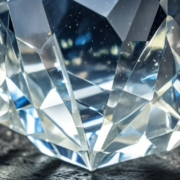
- High transparency: Most synthetic crystals have good transparency, crystal clear appearance, and high-quality natural crystals are very similar in appearance to transparency, which can be used to make optical lenses, decorations, etc. For example, some synthetic crystals are processed into watch crystals, which use their high transparency to make the dial visible.
- Moderate hardness: Its Mohs hardness is about 7, which is comparable to natural crystal, which allows it to be cut, polished, carved and other processing techniques, and can be made into a variety of exquisite jewelry or handicrafts.
- Stable optical properties: synthetic crystal has relatively stable refractive index, birefringence and other optical properties, and is widely used in the field of optical instruments, such as synthetic crystal materials will be used in the production of optical components of some microscopes and telescopes.
- Chemical properties: The chemical composition is mainly silicon dioxide (SiO₂), which has good chemical stability and strong corrosion resistance to acids, alkalis and other chemicals, so it can be used in industrial application scenarios in different chemical environments, of course, it can also maintain stable appearance and performance for a long time, and as a jewelry material for daily wear, there is no need to worry about being easily damaged by chemicals.
Difference from natural crystals
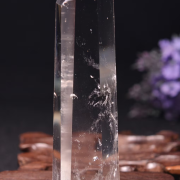
- Internal characteristics: natural crystals will contain a variety of natural inclusions in the formation process, such as gas-liquid inclusions, mineral inclusions, etc., and the shape and distribution of these inclusions are often irregular; Synthetic crystals, on the other hand, are relatively “clean” inside, and even if there are inclusions, they are usually artificially added, showing a more regular shape and distribution characteristics, such as adding some colorants to create synthetic crystals with specific colors and uniform inclusions for decorative purposes.
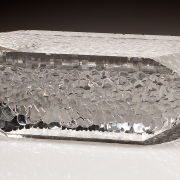
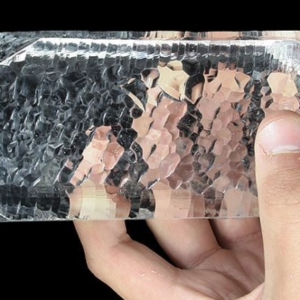
- Growth texture: The growth texture of natural crystal generally has natural continuity and irregularity, and there may be texture characteristics formed in natural states such as bending and twisting; The growth texture of synthetic crystals can sometimes be seen in a more regular and parallel phenomenon, especially the crystals synthesized by some specific processes, and its growth textures have the regular characteristics left by artificial manufacturing.
Fields of application
- Jewelry industry: Because its cost may be lower than that of natural crystal, and it can be artificially controlled to produce products of various colors (such as pink, purple, etc.) and high purity, it is widely used in the production of low-end crystal jewelry, such as crystal necklaces, bracelets, earrings and other jewelry, to meet the public’s demand for beautiful and affordable jewelry.
- Optical instrument field: With stable optical properties, synthetic crystal is widely used in the manufacture of optical lenses, prisms and other components, like in some high-precision optical measuring instruments, laser equipment, synthetic crystal made of optical components can help accurately refract and reflect light, to ensure the normal use of the instrument and measurement accuracy.
- In the electronics industry, its good piezoelectric properties (the characteristic of generating electric charges when subjected to pressure) make synthetic crystals an important material for the manufacture of electronic components such as quartz crystal oscillators, which are widely used in mobile phones, computers and other electronic products to ensure the stable clock signal and other functions of these products.
In short, synthetic crystals have important application value in many industries, and with the continuous development of technology, their performance and quality are also continuously improving, and the application range is expected to be further expanded.