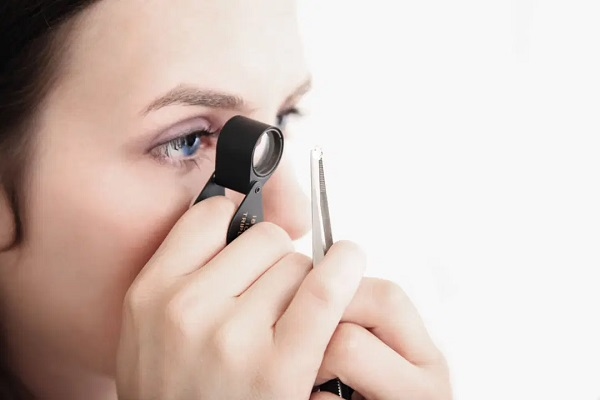
Gem Identification

November 28, 2024 by ICIA

Current Status

Not Enrolled

Price

Free

Get Started

Practice identifying more than 60 species of gemstones, distinguishing natural from laboratory-grown gems and detecting gem treatments. You will carry out testing procedures and techniques on sets of practice stones. Additionally, the course covers how – and when – to use gemological laboratory services and how to use gem identification skills to protect your business from costly mistakes. Includes the Gem Identification Lab Manual PDF and instructional videos.

To complete this course, you must have access to gem tweezers (non-locking), a daylight-equivalent light source (5500k – 6500k), a pinpoint incandescent light source, a gemological binocular microscope minimum 10x and 30x (darkfield illumination), a gem cloth, a refractometer with removable magnification piece, white light source and polarizing filter, refractive index (RI) liquid 1.81, an optic figure sphere, a dichroscope (calcite preferred), a polariscope, and a spectroscope. 
International Crystal Industry Alliance Sovereign Seal

ICIA SOVEREIGN SEAL
LONDON • GENEVA • HONG KONG

IACC
INSTITUTIONAL SUPERVISION

IERC
MICRO-FTIR (3054 cm¹) • 785 nm RAMAN

IGMRI
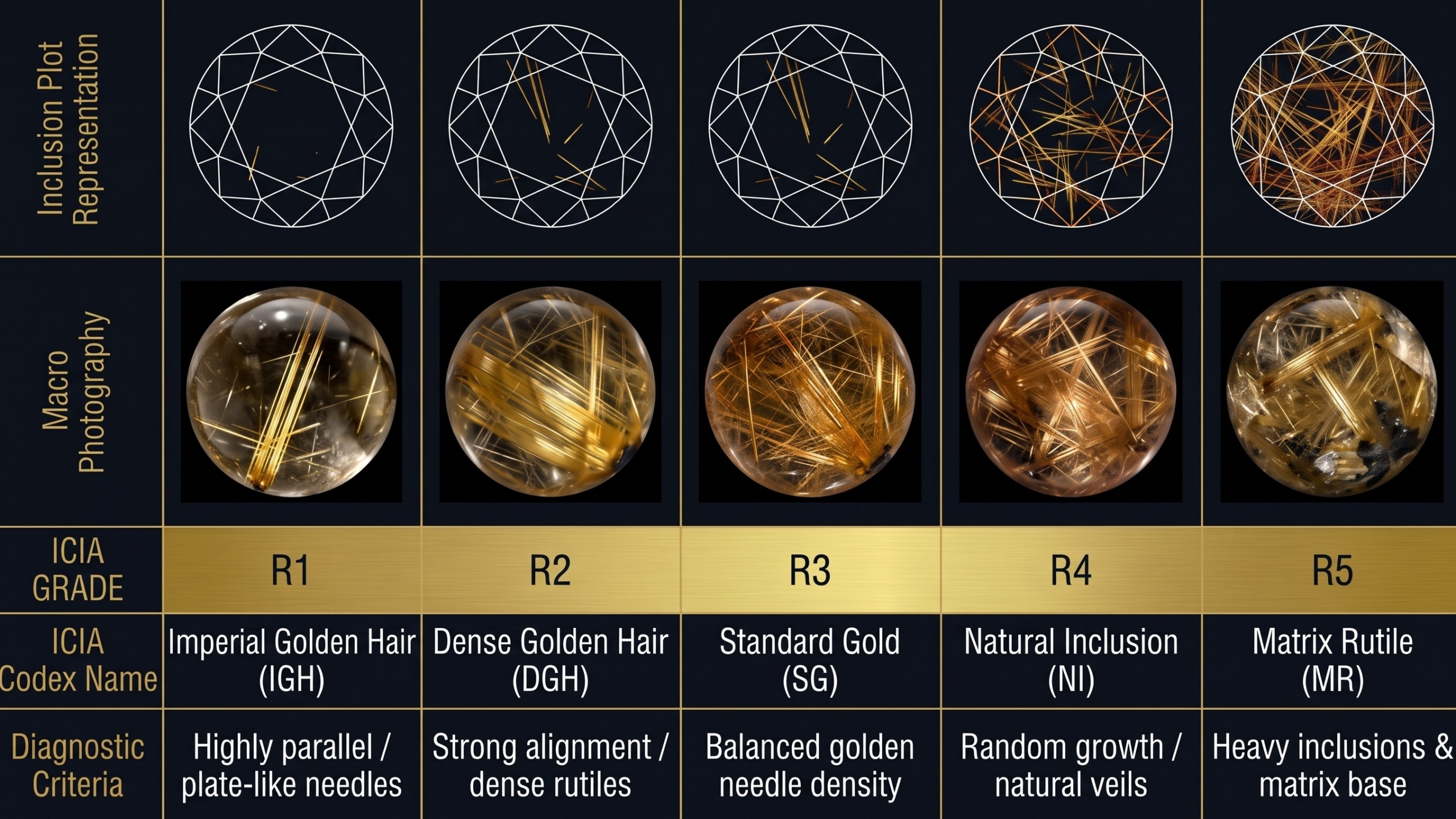
CCGS (4C+1I) • RCGS (5R) • MSGS (4M)

Disclaimer: The International Crystal Industry Alliance (ICIA) is the Independent Crystal Grading Standards Alliance—a non-governmental standards body. Quantitative grading frameworks—CCGS (4C+1I), RCGS (5R), and MSGS (4M)—are codified by IGMRI under IERC and issued by ICC. Dossiers verify physical, mineralogical, and spectroscopic properties at the time of laboratory inspection. Certification does not guarantee secondary-market liquidity, uninterrupted provenance, or legal origin status, and does not replace independent buyer re-testing.
© 2015–2026 International Crystal Industry Alliance (ICIA™). All Rights Reserved.
Administered by ICIA Secretariat • Permanent Seats: London • Geneva • Hong Kong