Colored Stones: All About Peridot
Whether you’re an August baby, a gemstone enthusiast, a jewelry lover, or simply curious about this stunning green beauty, peridot has a great story. From its formation deep within the Earth’s mantle to its place as adornment in jewelry pieces worldwide, let’s discuss some details about this beautiful gem.

Formation and Basics
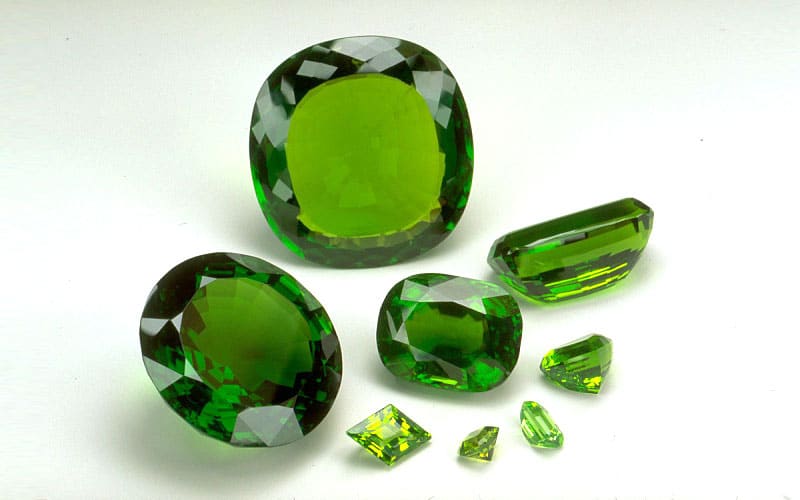
Peridot, pronounced as ‘pear-a-doe’, is a gemstone that is known for its vibrant, olive-green hue. It is the birthstone for August and is also the gemstone that celebrates the 16th wedding anniversary. The name ‘Peridot’ is derived from the Arabic word ‘faridat’, which means ‘gem’. Unlike many other gemstones that come in a variety of colors, Peridot is one of the few gemstones that exist in only one color, green. However, the intensity and tint of the green color can vary depending on the amount of iron present in the crystal structure.

Peridot shares a special distinction with diamond, the King of Gemstones: Among all gem varieties, only peridot and diamond formed deep within the Earth’s mantle. Diamonds formed under extreme pressure and high temperatures, around 90 to 120 miles below the Earth’s surface, or deeper. Peridot also formed in the mantle, around 20 to 55 miles below the surface, as a result of plate tectonics. These two gemstones are “deep-earth” cousins.
Hardness and Appearance
The color of Peridot ranges from yellowish-green to brownish-green, but the most valued color is a dark olive-green. The gemstone is transparent to translucent and has a vitreous or glassy luster. It is also known as ‘evening emerald’ because its sparkling green hue looks brilliant in the evening light. Peridot is a gem variety of the mineral olivine and is found in the earth’s mantle, brought to the surface by volcanic activity.
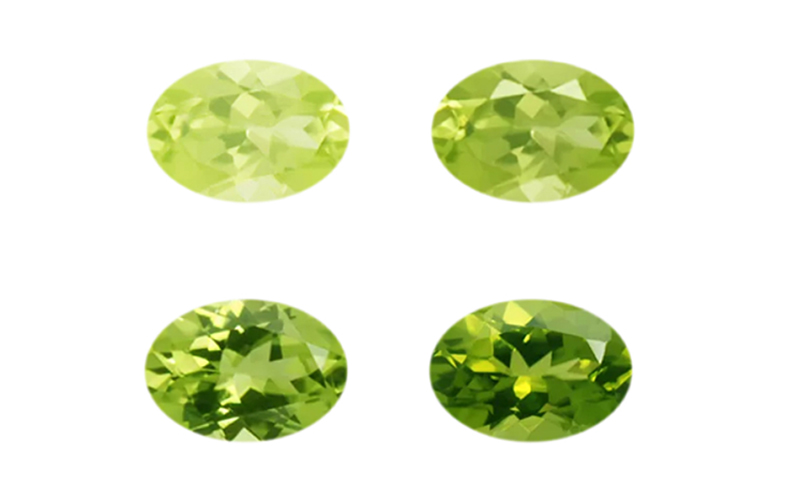
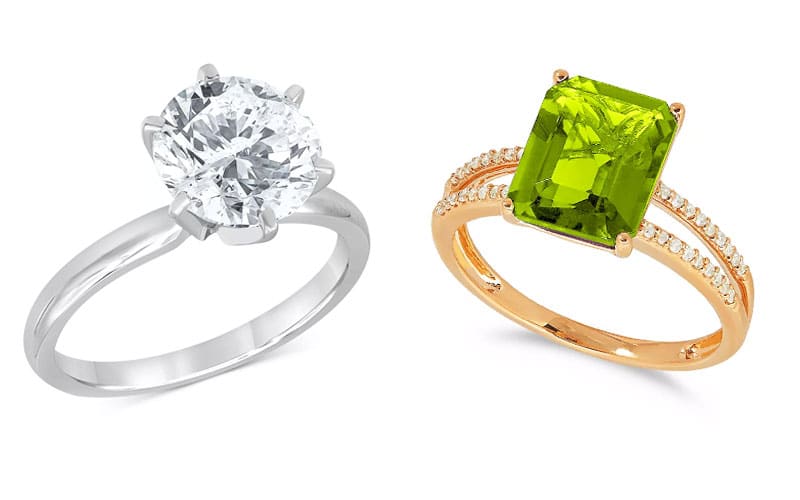
Peridot has a hardness of 6.5 to 7 on the Mohs scale, which makes it a fairly durable gemstone suitable for a variety of jewelry designs. However, it is softer than many other popular gemstones like diamond, sapphire, and ruby, so it requires careful handling to prevent scratching. The gemstone is usually cut in a faceted style to enhance its brilliance and is often shaped into rounds, ovals, marquises, and cushions.

The appearance of Peridot is quite distinctive due to its unique green color. The gemstone is also known for its double refraction. When you look closely through a Peridot, you can see two of each pavilion facet. This double image is a result of the gem’s crystal structure and is a key identifying characteristic of Peridot.
Myths and Legends
Peridot has a rich history filled with myths and legends. The ancient Egyptians revered Peridot and called it the ‘gem of the sun’. They believed that it protected its wearer from terrors of the night and evil spirits. It was also believed to bring the wearer power, influence, and a wonderful year. The Romans too admired this gemstone and they associated it with the sun. They believed that it had the power to ward off evil and nightmares. In Hawaiian folklore, Peridot symbolizes the tears of Pele, the goddess of fire and volcanoes.

In medieval times, people believed that Peridot had the power to break enchantments and to protect its wearer from the evil eye. The gemstone was also used in medicine in the Middle Ages. It was powdered and used to cure asthma and other respiratory issues.
Origins and History
The earliest known use of Peridot was in Egypt around 1500 BC. The Egyptians mined the gemstone on an island in the Red Sea, now known as St. John’s Island or Zabargad Island. That island was so rich in Peridot that it was often mistaken for emeralds by early miners. In the Middle Ages, Peridot was brought to Europe by the Crusaders and was used to decorate medieval churches.

The gemstone was also popular in the Ottoman Empire, where it was used in elaborate jewelry designs. Today, Peridot is mined in several countries around the world, including the United States, China, Pakistan, and Myanmar.
Peridot is “Out of this world!”
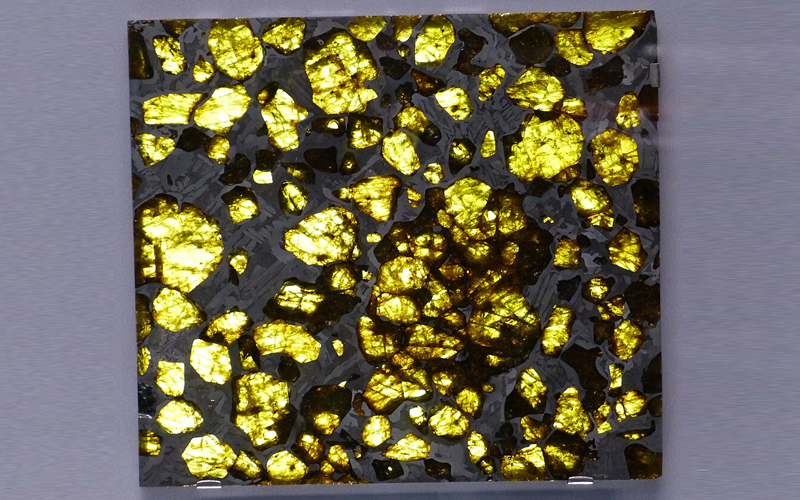
There is one more interesting fact to share about peridot. It one of the oldest known gemstones, with specimens dating back to 4.5 billion years found in meteorites. In fact, it is one of the few gemstones found in meteorites. Peridot is also found in lunar rocks and has been discovered on Mars. This makes it one of the few gemstones known in both our world and the extraterrestrial world.
The heaviest polished peridot weighs 311.80 carats. It was found on Egypt’s Zabargad Island, mentioned above. If you’re in Washington D.C. you can view it, along with a few other remarkable specimens at the Smithsonian’s National Museum of Natural History.
With its unique green color, rich history, and fascinating facts, Peridot truly is a gemstone like no other.