Geodes: Nature’s Hidden Treasures
Geodes are fascinating natural formations that are often referred to as nature’s hidden treasures due to their incredible beauty and the surprise they hold inside. They are essentially hollow rocks that are lined with crystals or mineral deposits. These geodes form over thousands to millions of years through geological processes.
How Geodes Form:
- Formation of the Cavity:
- Geodes usually begin as gas bubbles or cavities in volcanic rocks, limestone, or other sedimentary formations. These cavities may form from bubbles in lava flows, from pockets of gas in sedimentary layers, or from dissolved minerals leaving behind voids.
- Mineral Deposition:
- Over time, water rich in minerals (such as silica, calcite, or gypsum) seeps into the cavity. As the water evaporates, it leaves behind minerals that gradually build up, coating the interior of the cavity with crystals.
- The crystals grow from the inside out and can take thousands to millions of years to form, depending on the environmental conditions like temperature, pressure, and the type of minerals present.
- Crystal Growth:
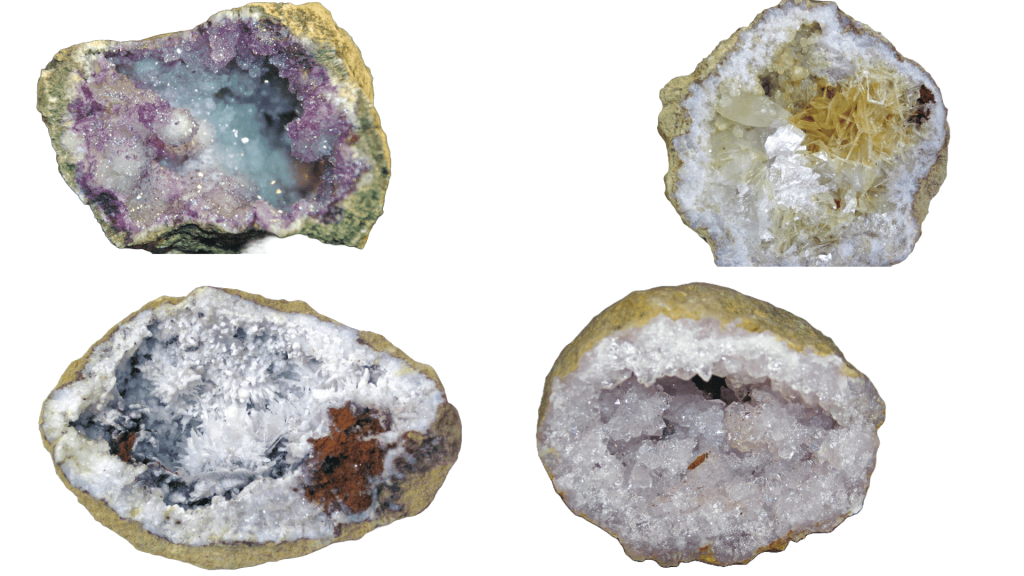
- The minerals that form inside the geode can vary, and they include crystals of quartz (clear, amethyst, citrine), calcite, celestite, fluorite, and more.
- The type of crystals that form inside a geode depends largely on the mineral-rich solutions that filled the cavity and the time it took for the crystals to grow.
Characteristics of Geodes:
- Exterior: The exterior of a geode is often rough, unremarkable, and can resemble an ordinary rock or nodule. However, it is the interior that holds the surprise.
- Interior: Once the geode is cracked or broken open (usually carefully to preserve its beauty), the interior reveals a stunning array of crystals that sparkle in the light. The size, color, and shape of the crystals can vary dramatically depending on the geode’s age and the minerals inside.
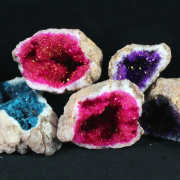
- Colors and Patterns: Geodes can contain crystals in a wide range of colors such as:
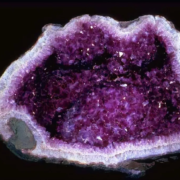
- Amethyst (purple)
- Citrine (yellow)
- Clear Quartz (colorless)
- Calcite (white, orange, pink)
- Celestite (blue)
- Fluorite (green, purple)
- Agate (banded patterns)
Famous Geode Locations:
- Mexico: Mexico is home to the famous Giant Crystal Caves in Naica, which contains enormous selenite crystals that have grown over 30 feet long.
- Brazil: Brazil is known for producing beautiful amethyst geodes, some of the largest in the world.
- United States: Many geodes can be found in the southwestern U.S., particularly in Arizona, and in Ohio, Kentucky, and Indiana.
- Uruguay: This country is famous for its large amethyst geodes with stunning deep purple crystals.
Uses and Collecting:
- Mineral Collecting: Geodes are highly prized by mineral collectors, as each geode is unique and offers a glimpse into the geological processes that shape our world.
- Jewelry and Crafts: Crystals from geodes can be used in jewelry making. Amethyst, quartz, and agate crystals, in particular, are popular for their beauty and metaphysical properties.
- Decorative Items: Polished geodes or crystal-filled rock specimens are often used as decorative items in homes and offices.
Geodes in Myth and Culture:
Throughout history, geodes have been regarded with fascination. Some cultures have viewed them as magical or mystical, believing that they held the secrets of the Earth within their hollow cores. Geodes have been considered symbols of mystery, hidden wisdom, and transformation.
Fun Fact:
Geodes can sometimes contain not only crystals but also tiny fossils, adding to their allure as hidden treasures of nature.
Geodes embody the beauty of nature’s hidden processes, revealing magnificent crystal structures that form over eons, making them a wonder to study, collect, and appreciate.